
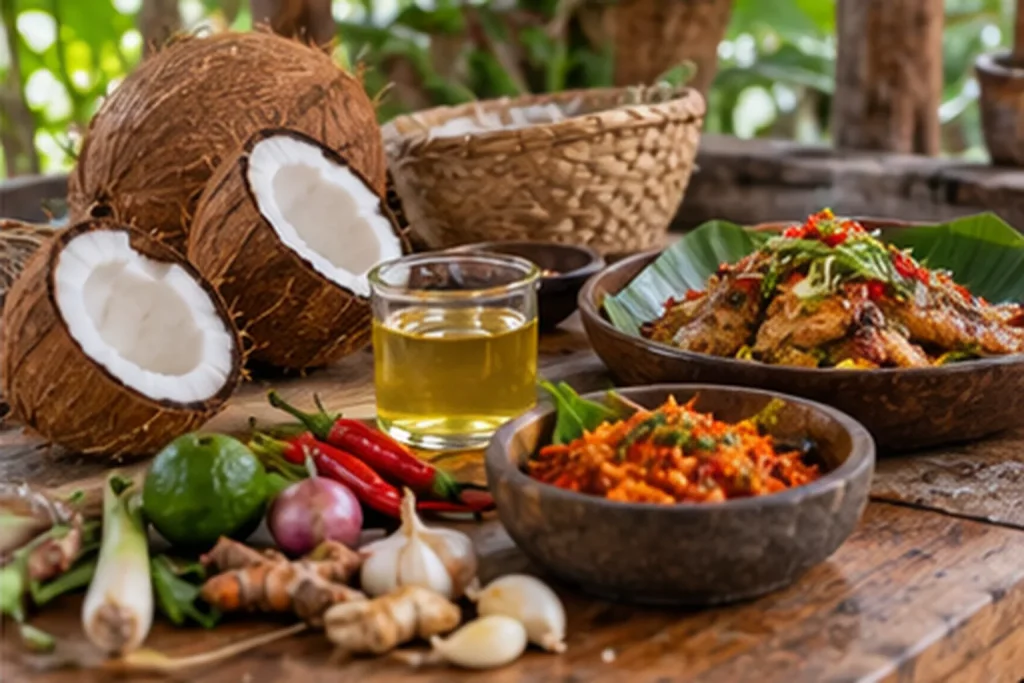
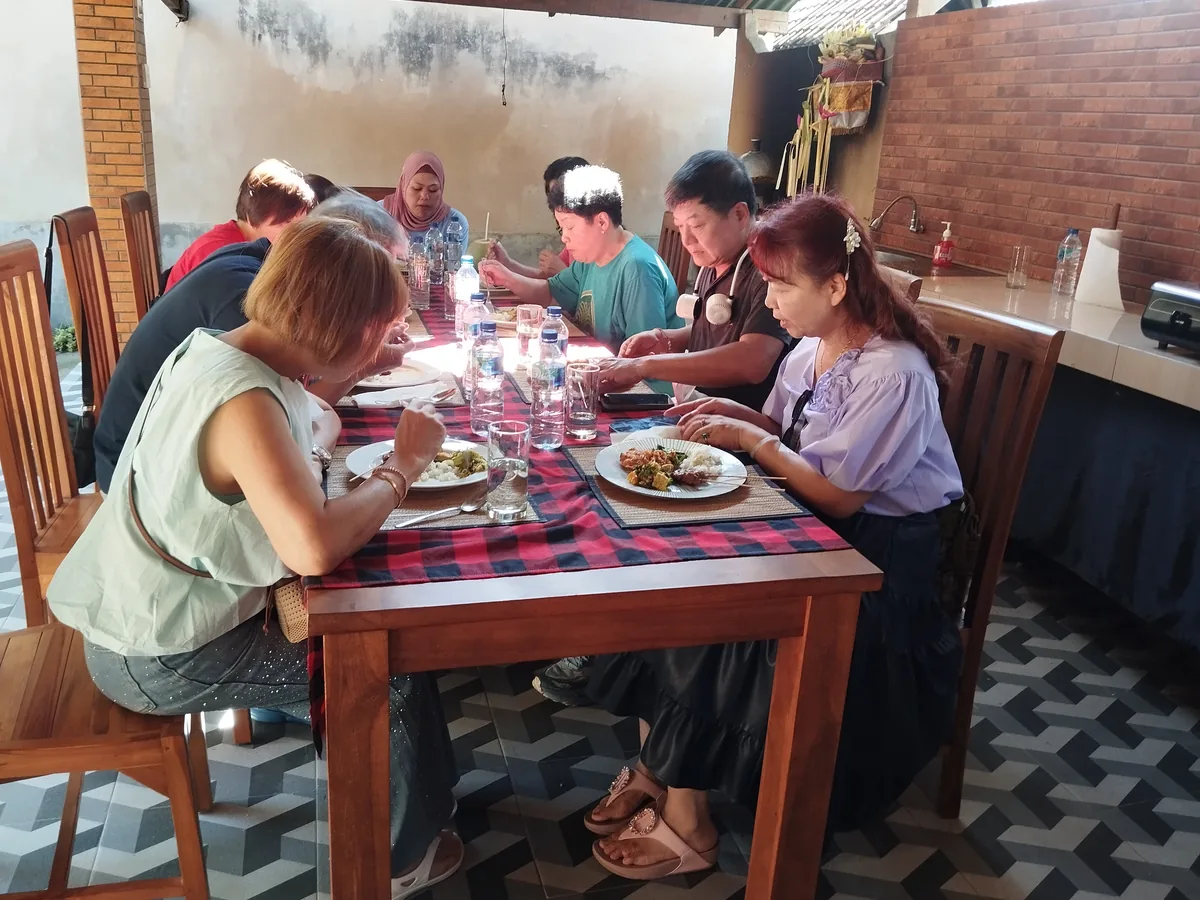
Traditional Bali coconut oil begins with a familiar ingredient, but the work behind it is easy to miss when oil arrives ready to pour. In some Balinese households, mature coconuts are opened, grated, pressed into coconut milk and gently heated until oil separates. The method takes patience and careful attention; it is part of a kitchen practice, not simply a shortcut to a bottle. When examining traditional bali coconut oil in the context of everyday kitchen work and guest planning in Gianyar and Ubud, separating specific ingredient names, preparation timing, and household customs prevents common misunderstandings before you shop or cook.
From mature coconut to milk
A traditional account of the process starts with the white flesh of mature coconuts. The flesh is grated, mixed with water and squeezed to extract coconut milk. This step takes more than one quick press: the aim is to draw out the rich liquid while keeping the grated coconut manageable. The milk then becomes the starting point for the pan.
Watch the separation, not the clock
Methods can differ by family, tools and the amount being made. A hand grater and a small pan tell a different story from a commercial line, and the process described in one village should not be treated as a rule for every Balinese kitchen. What connects the steps is attention to the coconut and to the separation that happens as the milk heats.
How the oil enters a meal
As coconut milk is heated, oil rises while the remaining solids settle. A cook watches the pan and adjusts the heat so the oil separates without browning the mixture. The floating oil is then collected. This is hands-on work: the cook judges the heat, watches the surface and decides when the separation is clear enough to gather.
That description explains the process, not a home recipe with guaranteed timing or yield. Coconut size, freshness, moisture and the pan all affect the result. If you try it at home, follow a tested recipe and food-handling guidance rather than relying on a fixed number of minutes.
Traditional coconut oil is used in some Balinese cooking for frying and as part of seasonings. Examples include a small amount in sambal matah, seasoning for sate lilit, and a hot dressing served with vegetables. Recipes are not identical: an ingredient’s role can change with the cook and the dish. Here, oil contributes aroma and texture alongside chilli, shallot and other seasonings.
These practices are best understood in context. Balinese food reflects household routines, local ingredients and occasions; one oil or one recipe cannot stand for the whole island. If you want to experience how ingredients are handled in a local kitchen, explore a Cooking Class Ubud while planning your visit.
How Traditional Balinese Coconut Oil: From Coconut to Kitchen Connects Market Observation, Kitchen Technique, and Practical Planning in Ubud
For travellers and home cooks researching traditional bali coconut oil, the biggest gap in general travel guides is that they treat Balinese food and daily life as a single uniform checklist rather than a living household system. In a traditional Balinese compound around Ubud, decisions about ingredients, prep sequence, and table pairing depend on whether a meal is prepared for a quiet family lunch, a morning market run, or a shared gathering. When you join an Ubud Cooking Class at Wayan’s Paon, every question around traditional bali coconut oil is answered through direct hands-on observation rather than abstract theory.
A second practical principle when evaluating traditional bali coconut oil is recognizing the boundary between what happens at the morning produce stalls, what happens at the stone mortar (ulekan), and how the final dishes are balanced on the plate. In our private sessions such as Coconut to Paon, your group works only with your own booking party and selects up to five dishes from the 53-dish menu (plus the foundational Base Genep spice paste), allowing you to test how each choice affects flavour, texture, and timing.
Comparative Reference Matrix: 10 Core Dimensions of Traditional Bali Coconut Oil
Before diving into each specialized subtopic in this family of guides, the table below summarizes how the ten focused questions around traditional bali coconut oil differ in scope, practical kitchen impact, and what you should verify before buying ingredients or confirming a menu in Ubud:
| Focus Topic / Keyword Owner | Specific Question Addressed | Key Practical Distinction in Ubud |
|---|---|---|
| 1. how coconut oil is made in bali | How Coconut Oil Is Made in Bali, Step by Step | How coconut oil is made in Bali depends on the producer, but a traditional household method follows a clear path: prepare the coconut, extra… |
| 2. coconut milk from fresh coconut | From Grated Coconut to Coconut Milk: The Pressing Stage | Coconut milk from fresh coconut is the middle stage that connects grated flesh to a traditional oil-making process. It is not the same as co… |
| 3. traditional coconut oil making process | The Slow Pan: What Happens as Coconut Milk Separates | The traditional coconut oil making process becomes most delicate once coconut milk reaches the pan. The cook must warm the liquid enough for… |
| 4. coconut oil in balinese cooking | Coconut Oil in Balinese Cooking: A Small Ingredient with a Clear Role | Coconut oil in Balinese cooking is best understood through the dish using it. In some traditional preparations, the oil is part of a seasoni… |
| 5. balinese dishes with coconut oil | Sambal Matah, Sate Lilit and Vegetables: Three Coconut Oil Uses | Balinese dishes with coconut oil show how one ingredient can play different parts in a meal. Traditional accounts mention the oil in sambal … |
| 6. fresh coconut for balinese cooking | Choosing a Fresh Coconut for a Balinese Kitchen | Fresh coconut for Balinese cooking should be chosen for the dish you plan to make. A coconut used for grated flesh or milk has a different j… |
| 7. coconut oil making demonstration | What to Notice in a Traditional Coconut Oil Demonstration | A coconut oil making demonstration becomes easier to follow when you know what to watch for. The finished oil is only the last part. The use… |
| 8. coconut oil making class in bali | A Coconut Oil Making Class in Bali: What to Pay Attention To | A coconut oil making class in Bali may introduce a traditional method before moving into the meal, but the schedule and participation vary b… |
| 9. cook with freshly made coconut oil | Cooking with Freshly Made Coconut Oil: Let the Dish Lead | To cook with freshly made coconut oil, start with a dish that calls for it and use a recipe you trust. Freshly prepared oil is not a reason … |
| 10. coconut oil in balinese food culture | Coconut Oil in Balinese Food Culture: Kitchen Knowledge Passed Along | Coconut oil in Balinese food culture tells a story about household work as much as flavor. In traditional production, local coconuts are gra… |
Deep-Dive Guide to the 10 Specialized Subtopics Within Traditional Bali Coconut Oil
Each of the ten companion articles in this topic family isolates one specific decision or ingredient question related to traditional bali coconut oil so that you never confuse a broad category label with a concrete culinary rule. Below is how each specialized guide fits into the wider picture:
1. How Coconut Oil Is Made in Bali, Step by Step
When narrowing your focus from traditional bali coconut oil to the specific question of how coconut oil is made in bali, the primary distinction is context and practical application. How coconut oil is made in Bali depends on the producer, but a traditional household method follows a clear path: prepare the coconut, extract its milk, heat the liquid and collect the separated oil. Each stage needs attention, especially the heating. The process is more useful to understand as a sequence than as a promise of a fixed yield or exact cooking time. By keeping this specific scope distinct from neighbouring topics, you avoid applying a general rule where a precise ingredient check or timing adjustment is required.
In practice at the market or in the paon, The white flesh is removed from mature coconuts and grated into small pieces. A hand grater makes the work visible and gives the cook control over the texture. The size of the grated coconut affects how it mixes with water and how easy it is to press. Clean tools and a tidy work surface matter throughout, just as they do for any fresh ingredient. Whether you are comparing options before booking your private session or taking notes to cook at home after your trip, treating how coconut oil is made in bali as its own step ensures your preparation remains accurate and stress-free.
2. From Grated Coconut to Coconut Milk: The Pressing Stage
When narrowing your focus from traditional bali coconut oil to the specific question of coconut milk from fresh coconut, the primary distinction is context and practical application. Coconut milk from fresh coconut is the middle stage that connects grated flesh to a traditional oil-making process. It is not the same as coconut water inside the fruit, and it is not oil. The milk is produced by working grated coconut with water and pressing out the liquid, which then becomes the part heated in the pan. By keeping this specific scope distinct from neighbouring topics, you avoid applying a general rule where a precise ingredient check or timing adjustment is required.
In practice at the market or in the paon, After the coconut is opened, the white flesh is separated from the hard shell and grated. Smaller, even pieces are easier to mix and squeeze than large chunks. The grating tool can be simple, but the cook still needs a stable position and a bowl that catches the coconut cleanly. This stage is practical kitchen work, so clean hands and tools are as important as the technique. Whether you are comparing options before booking your private session or taking notes to cook at home after your trip, treating coconut milk from fresh coconut as its own step ensures your preparation remains accurate and stress-free.
3. The Slow Pan: What Happens as Coconut Milk Separates
When narrowing your focus from traditional bali coconut oil to the specific question of traditional coconut oil making process, the primary distinction is context and practical application. The traditional coconut oil making process becomes most delicate once coconut milk reaches the pan. The cook must warm the liquid enough for oil to separate while watching for signs that the mixture is browning. The surface changes gradually; it is a stage for observation, not a task to leave unattended. By keeping this specific scope distinct from neighbouring topics, you avoid applying a general rule where a precise ingredient check or timing adjustment is required.
In practice at the market or in the paon, The milk entering the pan comes from grated coconut mixed with water and then pressed. As it heats, its water content reduces and the mixture separates. Traditional descriptions of Balinese production note oil collecting at the top while solid coconut material settles lower in the pan. A household batch and the equipment used can change how clearly those layers appear. Whether you are comparing options before booking your private session or taking notes to cook at home after your trip, treating traditional coconut oil making process as its own step ensures your preparation remains accurate and stress-free.
4. Coconut Oil in Balinese Cooking: A Small Ingredient with a Clear Role
When narrowing your focus from traditional bali coconut oil to the specific question of coconut oil in balinese cooking, the primary distinction is context and practical application. Coconut oil in Balinese cooking is best understood through the dish using it. In some traditional preparations, the oil is part of a seasoning or cooking method; in others, a recipe may use another oil or none at all. Bali’s kitchens are varied, so a single ingredient cannot define every meal across the island. By keeping this specific scope distinct from neighbouring topics, you avoid applying a general rule where a precise ingredient check or timing adjustment is required.
In practice at the market or in the paon, Some recipes combine coconut oil with sliced shallot, chilli or other aromatics. In that context, the oil helps carry the seasoning and contributes its own aroma and texture. A small amount can behave differently from a generous pour, so follow the proportions of the recipe rather than assuming more oil makes a dish more traditional. Whether you are comparing options before booking your private session or taking notes to cook at home after your trip, treating coconut oil in balinese cooking as its own step ensures your preparation remains accurate and stress-free.
5. Sambal Matah, Sate Lilit and Vegetables: Three Coconut Oil Uses
When narrowing your focus from traditional bali coconut oil to the specific question of balinese dishes with coconut oil, the primary distinction is context and practical application. Balinese dishes with coconut oil show how one ingredient can play different parts in a meal. Traditional accounts mention the oil in sambal matah, in seasoning for sate lilit and in a spicy vegetable preparation. Those examples are useful starting points, but household versions vary and recipes should not be treated as identical across Bali. By keeping this specific scope distinct from neighbouring topics, you avoid applying a general rule where a precise ingredient check or timing adjustment is required.
In practice at the market or in the paon, Sambal matah is known as a fresh, sliced sambal. In one traditional use, coconut oil is mixed with sliced onion or shallot and chilli. The oil joins the aromatics rather than turning the sambal into a cooked paste. The exact balance and additional ingredients can differ by cook, so a recipe should guide the proportions and handling. Whether you are comparing options before booking your private session or taking notes to cook at home after your trip, treating balinese dishes with coconut oil as its own step ensures your preparation remains accurate and stress-free.
6. Choosing a Fresh Coconut for a Balinese Kitchen
When narrowing your focus from traditional bali coconut oil to the specific question of fresh coconut for balinese cooking, the primary distinction is context and practical application. Fresh coconut for Balinese cooking should be chosen for the dish you plan to make. A coconut used for grated flesh or milk has a different job from young coconut served as a drink or dessert ingredient. Start with the recipe, then decide whether fresh, frozen or packaged coconut fits the method and the time you have. By keeping this specific scope distinct from neighbouring topics, you avoid applying a general rule where a precise ingredient check or timing adjustment is required.
In practice at the market or in the paon, Traditional oil-making methods begin with mature coconut flesh, which is grated and pressed with water to obtain milk. Other dishes may call for coconut in a different form. Check whether the recipe asks for mature flesh, coconut milk, grated coconut or a packaged product. These forms are not interchangeable without changing texture and flavor. Whether you are comparing options before booking your private session or taking notes to cook at home after your trip, treating fresh coconut for balinese cooking as its own step ensures your preparation remains accurate and stress-free.
7. What to Notice in a Traditional Coconut Oil Demonstration
When narrowing your focus from traditional bali coconut oil to the specific question of coconut oil making demonstration, the primary distinction is context and practical application. A coconut oil making demonstration becomes easier to follow when you know what to watch for. The finished oil is only the last part. The useful details are the texture of grated coconut, the way milk is pressed out, how the cook manages heat and the moment the oil separates from the solids. By keeping this specific scope distinct from neighbouring topics, you avoid applying a general rule where a precise ingredient check or timing adjustment is required.
In practice at the market or in the paon, Notice whether the cook uses mature coconut and how the flesh is removed and grated. The size and consistency of the pieces affect the next step. Pay attention to the tool as well: a manual grater gives a different view of the work from a machine. Keep a respectful distance from blades, flames and hot pans, and follow the host’s instructions around the station. Whether you are comparing options before booking your private session or taking notes to cook at home after your trip, treating coconut oil making demonstration as its own step ensures your preparation remains accurate and stress-free.
8. A Coconut Oil Making Class in Bali: What to Pay Attention To
When narrowing your focus from traditional bali coconut oil to the specific question of coconut oil making class in bali, the primary distinction is context and practical application. A coconut oil making class in Bali may introduce a traditional method before moving into the meal, but the schedule and participation vary by host. Before you book, check which steps are included, how the activity connects to the cooking session and what you will actually do. Once there, focus on the sequence and the cook’s decisions rather than expecting every batch to follow identical timing. By keeping this specific scope distinct from neighbouring topics, you avoid applying a general rule where a precise ingredient check or timing adjustment is required.
In practice at the market or in the paon, Start with the coconut itself. Notice how the flesh is grated, how water is added and how the milk is pressed out. When the liquid reaches the pan, observe the heat and how the oil gradually separates. Each stage explains the next; the finished oil makes more sense after you have watched the work that produced it. Whether you are comparing options before booking your private session or taking notes to cook at home after your trip, treating coconut oil making class in bali as its own step ensures your preparation remains accurate and stress-free.
9. Cooking with Freshly Made Coconut Oil: Let the Dish Lead
When narrowing your focus from traditional bali coconut oil to the specific question of cook with freshly made coconut oil, the primary distinction is context and practical application. To cook with freshly made coconut oil, start with a dish that calls for it and use a recipe you trust. Freshly prepared oil is not a reason to improvise storage or cooking rules. Its role may be to carry aromatics, season a sambal or support a cooking step; the recipe should tell you when and how much to use. When examining cook with freshly made coconut oil in the context of everyday kitchen work and guest planning in Gianyar and Ubud, separating specific ingredient names, preparation timing, and household customs prevents common misunderstandings before you shop or cook. By keeping this specific scope distinct from neighbouring topics, you avoid applying a general rule where a precise ingredient check or timing adjustment is required.
In practice at the market or in the paon, Traditional Balinese examples place coconut oil in some sambal matah, sate lilit seasoning and vegetable preparations. Each use is different. A fresh sambal may combine the oil with sliced aromatics, while a grilled mixture adds it earlier in the process. Choose one preparation and follow its method closely instead of adding oil to a dish simply to make it seem more traditional. Whether you are comparing options before booking your private session or taking notes to cook at home after your trip, treating cook with freshly made coconut oil as its own step ensures your preparation remains accurate and stress-free.
10. Coconut Oil in Balinese Food Culture: Kitchen Knowledge Passed Along
When narrowing your focus from traditional bali coconut oil to the specific question of coconut oil in balinese food culture, the primary distinction is context and practical application. Coconut oil in Balinese food culture tells a story about household work as much as flavor. In traditional production, local coconuts are grated, pressed into milk and heated until oil separates. That knowledge sits alongside the everyday decisions of choosing ingredients, watching a pan and knowing which dish needs a particular seasoning. By keeping this specific scope distinct from neighbouring topics, you avoid applying a general rule where a precise ingredient check or timing adjustment is required.
In practice at the market or in the paon, Making oil from coconut takes repeated hands-on steps. The fruit is opened, the flesh is grated and the milk is pressed out before the pan is heated. Traditional accounts describe this as a slower, small-scale practice carried out by families and local producers. Today, the availability of industrial cooking oils has changed how often some households make their own. The pattern is not the same everywhere, so it is better to speak of documented local practices than to generalize about every Balinese kitchen. Whether you are comparing options before booking your private session or taking notes to cook at home after your trip, treating coconut oil in balinese food culture as its own step ensures your preparation remains accurate and stress-free.
How to Apply These Notes When Planning Your Private Cooking Day at Wayan’s Paon
Bringing all ten facets of traditional bali coconut oil together reveals a consistent lesson about Balinese culinary culture: clarity comes from asking specific questions before the cooking begins. In a private household setting in Ubud, your host does not rely on factory-made pastes or rigid group schedules. Instead, fresh roots (galangal, turmeric, ginger, and aromatic kencur), shallots, garlic, lemongrass, salam leaves, and kaffir lime are proportioned for the exact five dishes your group chooses to cook.
If you have dietary requirements—such as vegetarian or vegan preparation without fermented shrimp paste (terasi), gluten-free substitutions using pure rice flour and palm sugar (Gula Aren), dairy-free coconut milk infusions, or nut-free spice pastes omitting candlenut (kemiri)—discussing them when you select your menu allows the kitchen to prepare dedicated mortars, cutting boards, and filtered drinking-water washing stations in advance.
Finally, use this pillar overview on traditional bali coconut oil alongside the ten focused cluster guides linked above whenever you want to verify a local Balinese term, compare morning market timing against afternoon kitchen sessions, or adapt a traditional Ubud technique for your own stove at home.