
Advanced Balinese cooking techniques are less about filling the table with more dishes and more about noticing why each step matters. A paste can be chopped or pounded to a different texture; a sambal can stay fresh and sharp or cook down; a wrapped dish needs enough time for its centre to soften. Those choices shape the finished meal. When examining advanced balinese cooking techniques in the context of everyday kitchen work and guest planning in Gianyar and Ubud, separating specific ingredient names, preparation timing, and household customs prevents common misunderstandings before you shop or cook.
Depth is not the same as quantity
A technique-focused session can keep a small menu and still leave room for close attention. Wayan’s current advanced format keeps a five-dish maximum, with selections confirmed for the booking group. The point is to work through the preparation, seasoning and cooking decisions behind the dishes rather than race through a long list. If a particular method matters to you, ask whether it can be included before settling on the menu.
Start before the pan gets hot
That distinction also helps at home. Choose one dish that asks for careful preparation, then build the rest of the meal around its timing. A long-cooked centrepiece, for example, needs a different plan from a quick sambal or a vegetable side. The cook can spend attention where it makes a visible difference.
Think in contrasts
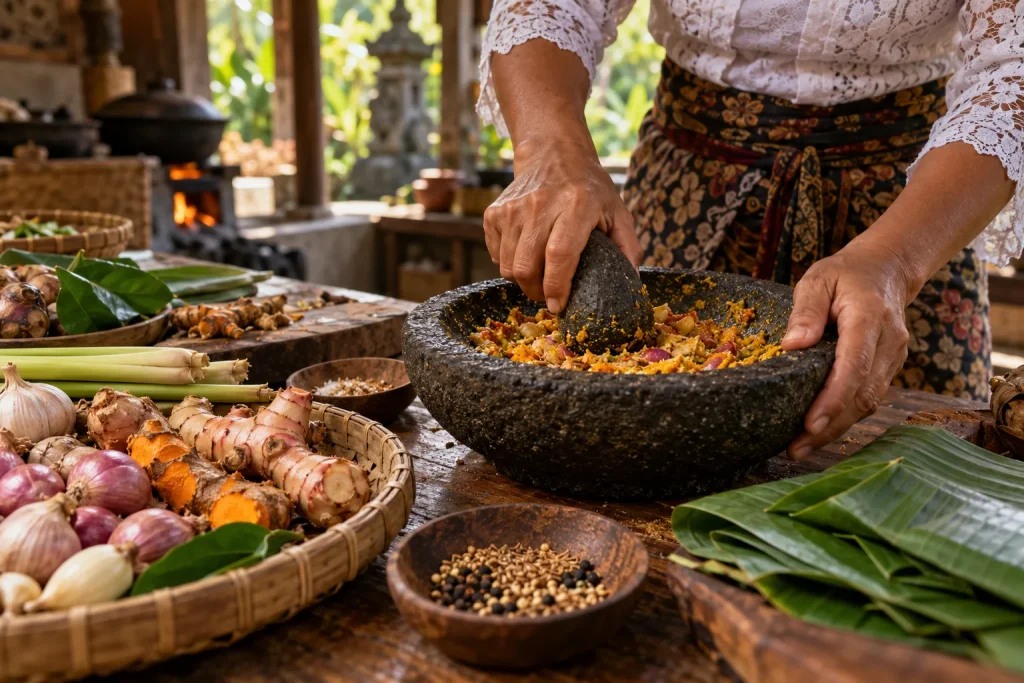
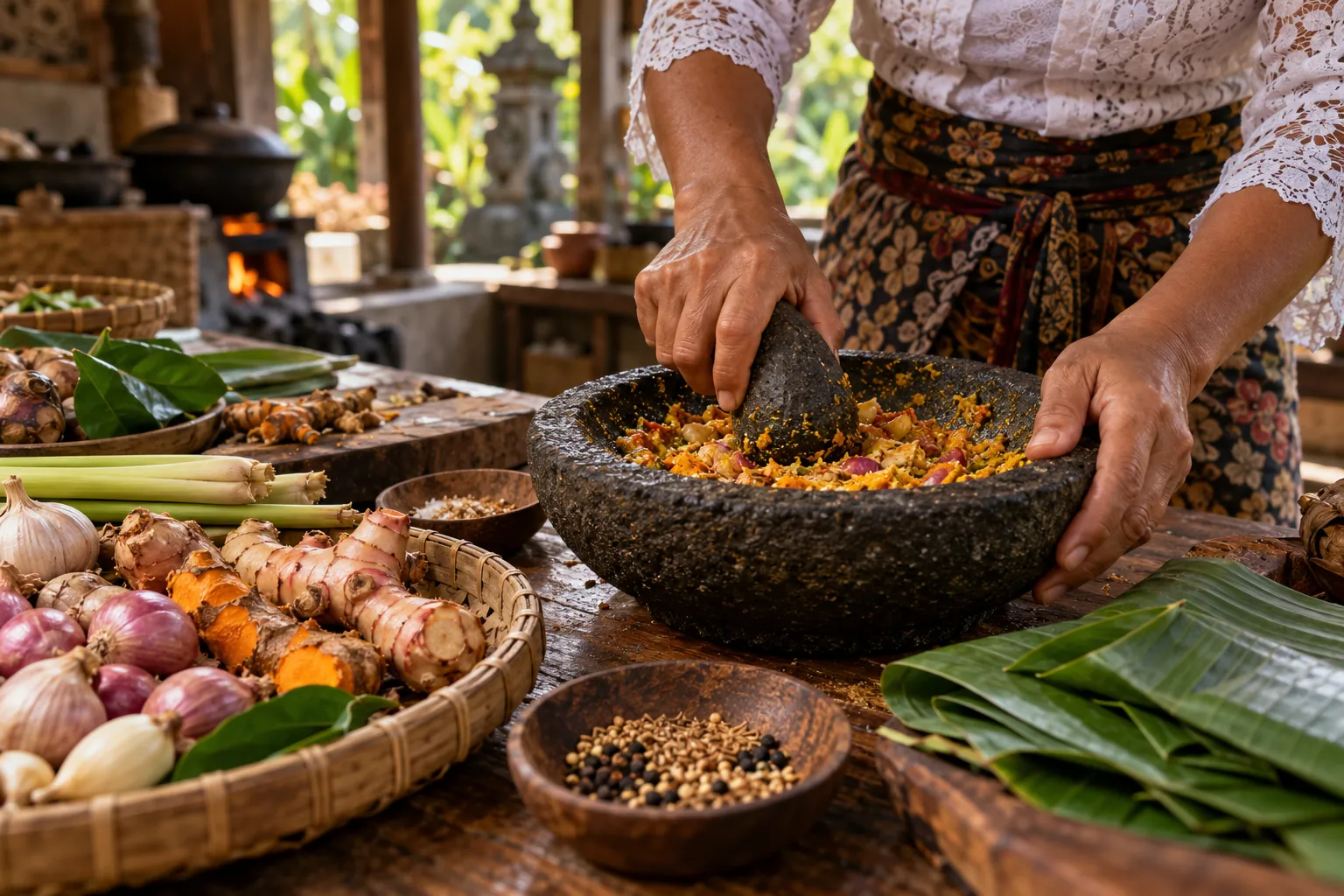
Preparation is part of the method. Sort the aromatics, remove tough outer layers, and cut firm roots into similar pieces before pounding or grinding. A mortar gives you direct control over texture, while a small blender can be practical when time is short. Neither tool guarantees a better result on its own. Stop when the paste suits the dish instead of chasing a perfectly smooth finish.
Use a class to ask better questions
Base Genep is a useful example because recipes vary between cooks and households. The balance of fresh aromatics and spices matters more than memorising one fixed list. Cook the paste gently enough to let it develop, and pay attention to its smell, colour and moisture as it changes. For the ingredient background, see the existing base genep bali guide.
A menu becomes easier to manage when the methods differ. Pair a slow preparation with something fresh, and avoid asking several dishes to do the same job. A raw sambal can bring brightness beside a rich dish; a leaf-wrapped preparation introduces a different texture and cooking rhythm. For one named example, the sambal matah bali guide explains that specific condiment.
Some advanced Balinese recipes to cook require longer planning than others. Betutu, Lawar and banana-leaf preparations appear among the technique-led choices on Wayan’s advanced menu page, but availability depends on the group’s confirmed selection. Check the advanced balinese cooking class ubud details with Wayan instead of assuming every dish runs in every session.
For a curious home cook, the useful questions are specific: how fine should this paste be, what tells you it is cooked through, and which step can be prepared ahead? A private, hands-on session gives your group room to discuss the method while preparing the chosen dishes together. Bring a note about the technique you want to practise and confirm the menu before the day.
Taste at more than one stage when the recipe allows it. A spice paste can smell raw and sharp at first, then become rounder as it cooks; a fresh sambal can change as salt draws moisture from its ingredients. These small comparisons make it easier to connect a cook’s instructions with what is happening in the pan. At home, repeat the tasting with a small spoonful and record the change. You will have a practical reference for the next time you adjust heat, texture or seasoning.
Once you have chosen the technique you want to explore, consider what makes a Balinese cooking class advanced and what experienced cooks can ask of the format. For local cooking details and current class information, visit Cooking Class Ubud.
How A Deeper Balinese Cooking Class for Curious Home Cooks Connects Market Observation, Kitchen Technique, and Practical Planning in Ubud
For travellers and home cooks researching advanced balinese cooking techniques, the biggest gap in general travel guides is that they treat Balinese food and daily life as a single uniform checklist rather than a living household system. In a traditional Balinese compound around Ubud, decisions about ingredients, prep sequence, and table pairing depend on whether a meal is prepared for a quiet family lunch, a morning market run, or a shared gathering. When you join an Ubud Cooking Class at Wayan’s Paon, every question around advanced balinese cooking techniques is answered through direct hands-on observation rather than abstract theory.
A second practical principle when evaluating advanced balinese cooking techniques is recognizing the boundary between what happens at the morning produce stalls, what happens at the stone mortar (ulekan), and how the final dishes are balanced on the plate. In our private sessions such as Private Paon Table, your group works only with your own booking party and selects up to five dishes from the 53-dish menu (plus the foundational Base Genep spice paste), allowing you to test how each choice affects flavour, texture, and timing.
Comparative Reference Matrix: 10 Core Dimensions of Advanced Balinese Cooking Techniques
Before diving into each specialized subtopic in this family of guides, the table below summarizes how the ten focused questions around advanced balinese cooking techniques differ in scope, practical kitchen impact, and what you should verify before buying ingredients or confirming a menu in Ubud:
| Focus Topic / Keyword Owner | Specific Question Addressed | Key Practical Distinction in Ubud |
|---|---|---|
| 1. what makes a balinese cooking class advanced | What Makes a Balinese Cooking Class Advanced? | What makes a Balinese cooking class advanced is usually the depth of work, not the number of plates. A longer menu can mean more chopping an… |
| 2. advanced base genep cooking technique | Base Genep by Hand: Building a More Complex Spice Paste | An advanced base genep cooking technique begins with preparation, not force. Evenly cut aromatics are easier to pound, and a steady rhythm g… |
| 3. advanced balinese sambal techniques | Working with More Than One Balinese Sambal | Advanced Balinese sambal techniques start with deciding what the condiment should do. One sambal might bring fresh bite; another may be cook… |
| 4. balinese cooking class for experienced cooks | How Experienced Cooks Can Get More from a Balinese Class | A Balinese cooking class for experienced cooks can be more rewarding when you arrive with a question rather than a list of dishes to collect… |
| 5. advanced balinese cooking menu | A Technique-Led Menu for an Advanced Balinese Cooking Session | An advanced Balinese cooking menu should be built around the methods you want to practise, not the longest list of dish names. Choose dishes… |
| 6. balinese cooking skills beyond beginner | Mortar, Knife and Heat: Where the Extra Practice Happens | Balinese cooking skills beyond beginner level are often small habits repeated with care. Cut ingredients evenly. Work a paste until it reach… |
| 7. hands on advanced cooking class ubud | Cooking Class or Demonstration? What Hands-On Means in Ubud | A hands on advanced cooking class Ubud should explain who handles each part of the meal. “Hands-on” can mean guests prepare ingredients and … |
| 8. advanced balinese recipes to cook | Choosing Dishes that Work Well in an Advanced Cooking Session | Choosing advanced Balinese recipes to cook is easier when you start with the method rather than the dish name. Do you want to practise build… |
| 9. who is an advanced cooking class for | Who Should Book an Advanced Balinese Cooking Class? | Who is an advanced cooking class for? It is for someone who wants to spend more time understanding how a dish is prepared, not simply collec… |
| 10. advanced balinese cooking workshop ubud | An Advanced Class for Learning the Work behind the Feast | An advanced Balinese cooking workshop Ubud guests choose should make the work behind the meal visible. A finished feast can look impressive,… |
Deep-Dive Guide to the 10 Specialized Subtopics Within Advanced Balinese Cooking Techniques
Each of the ten companion articles in this topic family isolates one specific decision or ingredient question related to advanced balinese cooking techniques so that you never confuse a broad category label with a concrete culinary rule. Below is how each specialized guide fits into the wider picture:
1. What Makes a Balinese Cooking Class Advanced?
When narrowing your focus from advanced balinese cooking techniques to the specific question of what makes a balinese cooking class advanced, the primary distinction is context and practical application. What makes a Balinese cooking class advanced is usually the depth of work, not the number of plates. A longer menu can mean more chopping and less time to understand each method. A focused session can spend time on spice balance, texture, heat and the reasons behind a cooking decision. By keeping this specific scope distinct from neighbouring topics, you avoid applying a general rule where a precise ingredient check or timing adjustment is required.
In practice at the market or in the paon, Ask what you will prepare yourself. A useful answer describes the work: chopping aromatics, pounding or grinding a paste, cooking it until its raw edge softens, checking seasoning, or managing a slow preparation. A menu that only lists dish names may not tell you how hands-on the session will be. Whether you are comparing options before booking your private session or taking notes to cook at home after your trip, treating what makes a balinese cooking class advanced as its own step ensures your preparation remains accurate and stress-free.
2. Base Genep by Hand: Building a More Complex Spice Paste
When narrowing your focus from advanced balinese cooking techniques to the specific question of advanced base genep cooking technique, the primary distinction is context and practical application. An advanced base genep cooking technique begins with preparation, not force. Evenly cut aromatics are easier to pound, and a steady rhythm gives you more control than pushing every ingredient into the mortar at once. The aim is a paste with a texture that suits the dish, not a featureless puree. By keeping this specific scope distinct from neighbouring topics, you avoid applying a general rule where a precise ingredient check or timing adjustment is required.
In practice at the market or in the paon, Recipes for Base Genep vary, so use the ingredient list for the dish you are making rather than treating one version as universal. Separate firm roots and fibrous pieces from softer ingredients. Cut the firm pieces smaller, and keep the rest ready nearby. This simple order makes the work more comfortable and helps the ingredients break down at a similar pace. Whether you are comparing options before booking your private session or taking notes to cook at home after your trip, treating advanced base genep cooking technique as its own step ensures your preparation remains accurate and stress-free.
3. Working with More Than One Balinese Sambal
When narrowing your focus from advanced balinese cooking techniques to the specific question of advanced balinese sambal techniques, the primary distinction is context and practical application. Advanced Balinese sambal techniques start with deciding what the condiment should do. One sambal might bring fresh bite; another may be cooked and fuller. Putting two bowls on the table is useful only when they add different things. A sharp raw sambal beside another equally sharp condiment can crowd the rest of the meal. By keeping this specific scope distinct from neighbouring topics, you avoid applying a general rule where a precise ingredient check or timing adjustment is required.
In practice at the market or in the paon, Look at the dish first. If the main preparation is rich or slow-cooked, a fresher condiment can lift it. If the main dish is light, a deeper cooked sambal may bring more weight. Chopped ingredients create a different mouthfeel from a paste; a coarse texture is not a mistake when it is the texture you want. Whether you are comparing options before booking your private session or taking notes to cook at home after your trip, treating advanced balinese sambal techniques as its own step ensures your preparation remains accurate and stress-free.
4. How Experienced Cooks Can Get More from a Balinese Class
When narrowing your focus from advanced balinese cooking techniques to the specific question of balinese cooking class for experienced cooks, the primary distinction is context and practical application. A Balinese cooking class for experienced cooks can be more rewarding when you arrive with a question rather than a list of dishes to collect. You may already know how to chop, season and manage a pan. The useful part is discovering what changes when a Balinese cook handles the same task: which ingredients are prepared together, how a paste is judged, and when a dish is ready to move on. By keeping this specific scope distinct from neighbouring topics, you avoid applying a general rule where a precise ingredient check or timing adjustment is required.
In practice at the market or in the paon, Before booking, think about one method you want to understand. It could be building a spice paste, balancing raw sambal, cooking a wrapped preparation, or managing the timing of a slower dish. A precise question gives the operator a chance to confirm whether the method fits the menu for your date. Whether you are comparing options before booking your private session or taking notes to cook at home after your trip, treating balinese cooking class for experienced cooks as its own step ensures your preparation remains accurate and stress-free.
5. A Technique-Led Menu for an Advanced Balinese Cooking Session
When narrowing your focus from advanced balinese cooking techniques to the specific question of advanced balinese cooking menu, the primary distinction is context and practical application. An advanced Balinese cooking menu should be built around the methods you want to practise, not the longest list of dish names. Choose dishes that make different demands on the cook. A spice paste, a fresh condiment, a slow preparation and a leaf-wrapped dish each create a different lesson, but the final selection has to fit the time and the group. By keeping this specific scope distinct from neighbouring topics, you avoid applying a general rule where a precise ingredient check or timing adjustment is required.
In practice at the market or in the paon, Decide whether the session should focus on seasoning, preparation, heat control or timing. If you want to understand a paste, choose a dish where the paste has a clear role. If you want to practise wrapping, ask about a preparation that uses banana leaf. A menu becomes more coherent when every choice supports the same goal. Whether you are comparing options before booking your private session or taking notes to cook at home after your trip, treating advanced balinese cooking menu as its own step ensures your preparation remains accurate and stress-free.
6. Mortar, Knife and Heat: Where the Extra Practice Happens
When narrowing your focus from advanced balinese cooking techniques to the specific question of balinese cooking skills beyond beginner, the primary distinction is context and practical application. Balinese cooking skills beyond beginner level are often small habits repeated with care. Cut ingredients evenly. Work a paste until it reaches the texture the dish needs. Keep the heat steady enough to cook aromatics without scorching them. None of these steps requires expensive equipment, but each rewards attention. By keeping this specific scope distinct from neighbouring topics, you avoid applying a general rule where a precise ingredient check or timing adjustment is required.
In practice at the market or in the paon, Before grinding or cooking, group ingredients by firmness. Cut hard roots into smaller, similar pieces and keep softer items aside until they are needed. This prevents a mortar from filling with large pieces that refuse to break down. A sharp knife and stable board are more useful than rushing through preparation. Whether you are comparing options before booking your private session or taking notes to cook at home after your trip, treating balinese cooking skills beyond beginner as its own step ensures your preparation remains accurate and stress-free.
7. Cooking Class or Demonstration? What Hands-On Means in Ubud
When narrowing your focus from advanced balinese cooking techniques to the specific question of hands on advanced cooking class ubud, the primary distinction is context and practical application. A hands on advanced cooking class Ubud should explain who handles each part of the meal. “Hands-on” can mean guests prepare ingredients and cook alongside an instructor; a demonstration usually means the instructor performs most of the steps while guests observe. The format matters because it changes what you can practise. By keeping this specific scope distinct from neighbouring topics, you avoid applying a general rule where a precise ingredient check or timing adjustment is required.
In practice at the market or in the paon, Before booking, ask which tasks are shared and which are demonstrated. Will guests chop aromatics, pound a paste, stir a pan, shape a preparation or taste for seasoning? The answer should describe the actual session rather than rely on a label. If you have a technique in mind, name it directly and confirm whether it fits the selected menu. Whether you are comparing options before booking your private session or taking notes to cook at home after your trip, treating hands on advanced cooking class ubud as its own step ensures your preparation remains accurate and stress-free.
8. Choosing Dishes that Work Well in an Advanced Cooking Session
When narrowing your focus from advanced balinese cooking techniques to the specific question of advanced balinese recipes to cook, the primary distinction is context and practical application. Choosing advanced Balinese recipes to cook is easier when you start with the method rather than the dish name. Do you want to practise building a spice paste, controlling a slower cook, balancing a raw sambal or wrapping food in banana leaf? Each choice asks for a different kind of attention. By keeping this specific scope distinct from neighbouring topics, you avoid applying a general rule where a precise ingredient check or timing adjustment is required.
In practice at the market or in the paon, List the dishes that interest you, then note which ones take longer and which can be prepared close to serving. A slow preparation needs a head start. A fresh condiment is usually best mixed near the end. If every dish reaches its most demanding step at once, the cook has too much to manage. Whether you are comparing options before booking your private session or taking notes to cook at home after your trip, treating advanced balinese recipes to cook as its own step ensures your preparation remains accurate and stress-free.
9. Who Should Book an Advanced Balinese Cooking Class?
When narrowing your focus from advanced balinese cooking techniques to the specific question of who is an advanced cooking class for, the primary distinction is context and practical application. Who is an advanced cooking class for? It is for someone who wants to spend more time understanding how a dish is prepared, not simply collect more recipes. That might be a returning cook who wants to compare methods, or a curious beginner who enjoys asking how texture, heat and seasoning change the result. When examining who is an advanced cooking class for in the context of everyday kitchen work and guest planning in Gianyar and Ubud, separating specific ingredient names, preparation timing, and household customs prevents common misunderstandings before you shop or cook. By keeping this specific scope distinct from neighbouring topics, you avoid applying a general rule where a precise ingredient check or timing adjustment is required.
In practice at the market or in the paon, Before choosing a class, consider whether you want to chop, pound, stir and taste under guidance. If you prefer to observe, a demonstration may suit you better. If you like doing the work and asking questions along the way, a private hands-on format could be a better fit. Whether you are comparing options before booking your private session or taking notes to cook at home after your trip, treating who is an advanced cooking class for as its own step ensures your preparation remains accurate and stress-free.
10. An Advanced Class for Learning the Work behind the Feast
When narrowing your focus from advanced balinese cooking techniques to the specific question of advanced balinese cooking workshop ubud, the primary distinction is context and practical application. An advanced Balinese cooking workshop Ubud guests choose should make the work behind the meal visible. A finished feast can look impressive, but the lesson is in how the paste is prepared, how heat is managed and why one dish takes longer than another. Ask how much of that work you will handle yourself. By keeping this specific scope distinct from neighbouring topics, you avoid applying a general rule where a precise ingredient check or timing adjustment is required.
In practice at the market or in the paon, A useful workshop lets you see the process from preparation to serving. Guests may work with aromatics, make a seasoning paste, prepare a condiment and learn how the cook handles a slower dish. The exact sequence depends on the menu, so ask which techniques are included rather than assuming they all come with a booking. Whether you are comparing options before booking your private session or taking notes to cook at home after your trip, treating advanced balinese cooking workshop ubud as its own step ensures your preparation remains accurate and stress-free.
How to Apply These Notes When Planning Your Private Cooking Day at Wayan’s Paon
Bringing all ten facets of advanced balinese cooking techniques together reveals a consistent lesson about Balinese culinary culture: clarity comes from asking specific questions before the cooking begins. In a private household setting in Ubud, your host does not rely on factory-made pastes or rigid group schedules. Instead, fresh roots (galangal, turmeric, ginger, and aromatic kencur), shallots, garlic, lemongrass, salam leaves, and kaffir lime are proportioned for the exact five dishes your group chooses to cook.
If you have dietary requirements—such as vegetarian or vegan preparation without fermented shrimp paste (terasi), gluten-free substitutions using pure rice flour and palm sugar (Gula Aren), dairy-free coconut milk infusions, or nut-free spice pastes omitting candlenut (kemiri)—discussing them when you select your menu allows the kitchen to prepare dedicated mortars, cutting boards, and filtered drinking-water washing stations in advance.
Finally, use this pillar overview on advanced balinese cooking techniques alongside the ten focused cluster guides linked above whenever you want to verify a local Balinese term, compare morning market timing against afternoon kitchen sessions, or adapt a traditional Ubud technique for your own stove at home.