
Ask what kind of rujak someone means and the answer matters. In Bali, one familiar version pairs sliced fruit with a savoury-spicy dressing made with pindang fish broth. Another puts edible seaweed at the centre of the bowl. They belong to the wider rujak family, but the ingredients, texture and questions to ask are different. When examining rujak in Bali in the context of everyday kitchen work and guest planning in Gianyar and Ubud, separating specific ingredient names, preparation timing, and household customs prevents common misunderstandings before you shop or cook.
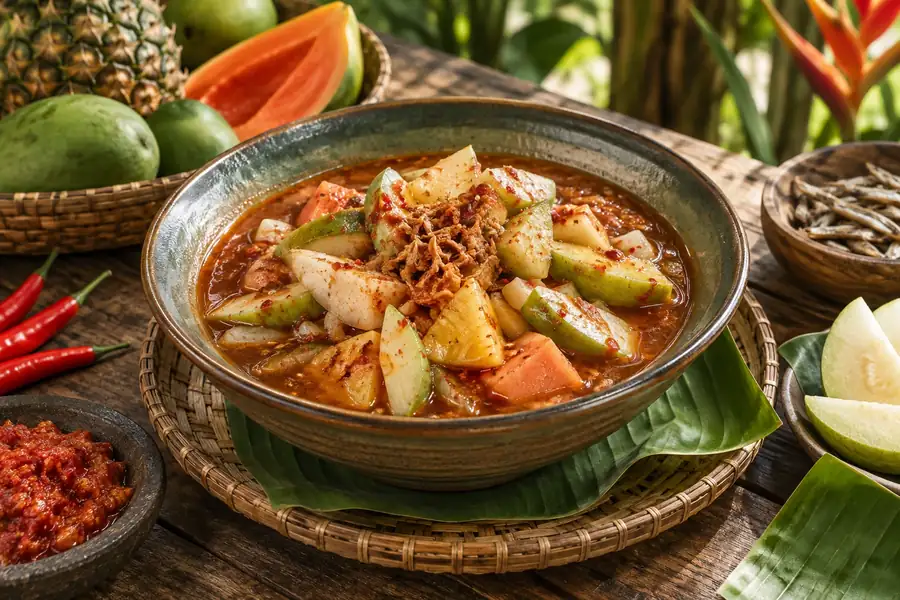
Fruit rujak with pindang broth
Rujak kuah pindang starts with fruit chosen for a mix of crispness and acidity: young mango, cucumber, jicama, kedondong, guava or firm papaya are common examples. The dressing brings fish broth together with chilli and seasonings such as salt, sugar and terasi; some cooks use petis as well. A spoonful should cling lightly to the fruit rather than drown it. The broth gives this style its savoury character, so it is not a vegetarian fruit salad by default.
Seaweed rujak and the importance of the ingredient
Rujak bulung takes its name from bulung, a Balinese word used for edible seaweed. Sea grapes can have tiny rounded branches that pop gently between the teeth, while other seaweeds feel firmer or more leaf-like. A seasoning may include pindang broth, chilli, lime, salt and shrimp paste, with grated coconut in some preparations. The variety available and the cook’s method can change the bowl, so a single recipe should not be presented as universal.
Which one should you try?
Choose the fruit version if you want tart, crunchy slices against a savoury sauce. Choose the seaweed version if you are curious about a briny ingredient and its texture. Both may contain fish broth or shrimp paste. If you avoid fish, shellfish or a particular seasoning, ask about the actual dressing before ordering; the visible fruit or seaweed does not tell the whole ingredient list.
Follow the details that interest you
These guides take one practical question at a time, from picking the fruit to handling seaweed and understanding the dressing.
For a hands-on introduction to Balinese ingredients and cooking, explore the Cooking Class Ubud experience and confirm current menu options directly with Wayan.
How Rujak in Bali: Fruit, Seaweed and Savoury Dressings Connects Market Observation, Kitchen Technique, and Practical Planning in Ubud
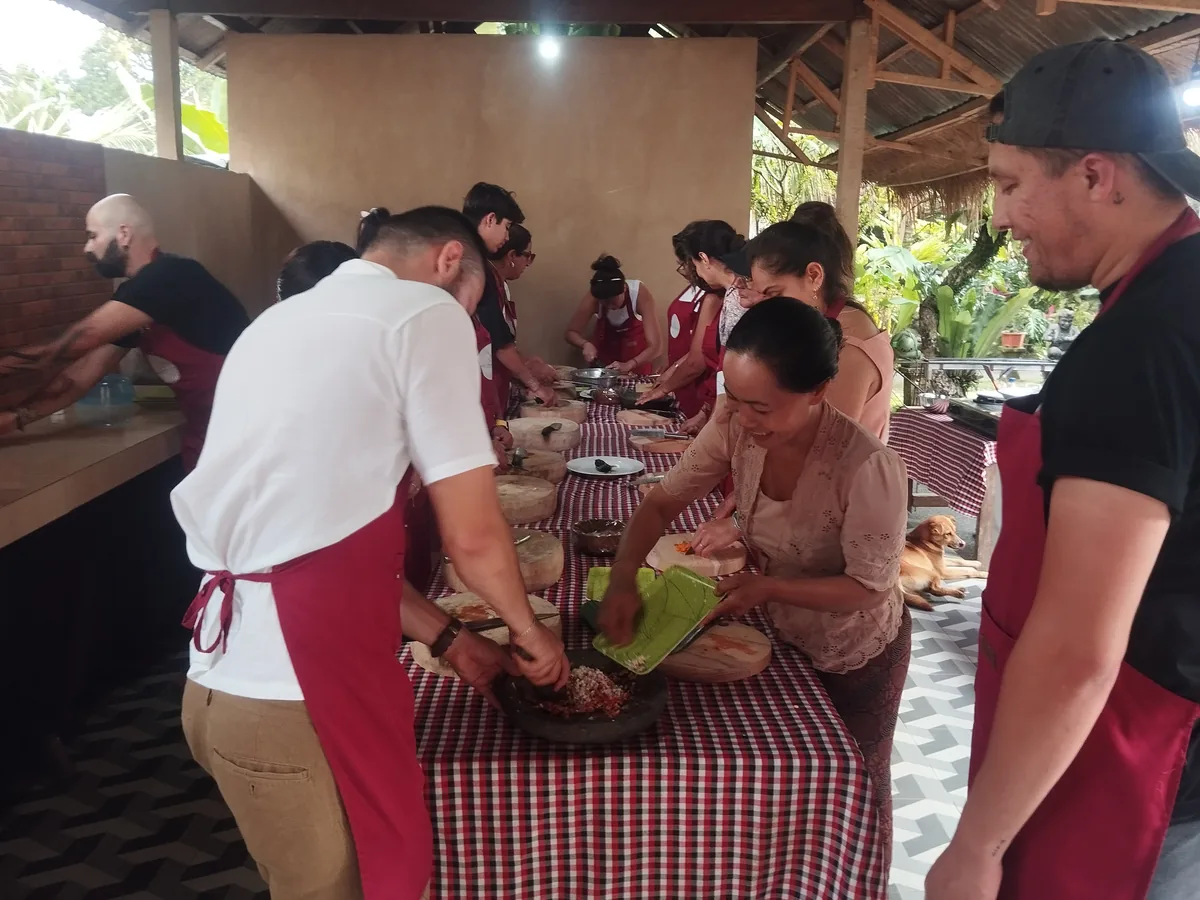
For travellers and home cooks researching rujak in Bali, the biggest gap in general travel guides is that they treat Balinese food and daily life as a single uniform checklist rather than a living household system. In a traditional Balinese compound around Ubud, decisions about ingredients, prep sequence, and table pairing depend on whether a meal is prepared for a quiet family lunch, a morning market run, or a shared gathering. When you join an Ubud Cooking Class at Wayan’s Paon, every question around rujak in Bali is answered through direct hands-on observation rather than abstract theory.
A second practical principle when evaluating rujak in Bali is recognizing the boundary between what happens at the morning produce stalls, what happens at the stone mortar (ulekan), and how the final dishes are balanced on the plate. In our private sessions such as Market to Paon, your group works only with your own booking party and selects up to five dishes from the 53-dish menu (plus the foundational Base Genep spice paste), allowing you to test how each choice affects flavour, texture, and timing.
Comparative Reference Matrix: 10 Core Dimensions of Rujak In Bali
Before diving into each specialized subtopic in this family of guides, the table below summarizes how the ten focused questions around rujak in Bali differ in scope, practical kitchen impact, and what you should verify before buying ingredients or confirming a menu in Ubud:
| Focus Topic / Keyword Owner | Specific Question Addressed | Key Practical Distinction in Ubud |
|---|---|---|
| 1. Balinese rujak vs fruit salad | Balinese Rujak vs Fruit Salad: What Changes? | A bowl of fruit can be called a salad, but that label does not explain the seasoning. The useful comparison is how the fruit is cut, dressed… |
| 2. rujak as a snack in Bali | Rujak as a Snack in Bali: When It Appears on the Table | Rujak is easy to picture as a quick snack: fruit, seaweed or another fresh ingredient with a vivid dressing. In Bali, rujak kuah pindang is … |
| 3. fruit for rujak kuah pindang | Choosing Fruit for Rujak Kuah Pindang: Texture, Ripeness and Balance | The dressing in rujak kuah pindang is salty, chilli-hot and savoury, so fruit choice is about more than colour. The best bowl usually has co… |
| 4. bulung boni in rujak bulung | Bulung Boni and the Texture of Rujak Bulung | In rujak bulung, seaweed is not a garnish hidden under the sauce. It is the ingredient that sets the rhythm of each bite. Bulung boni is oft… |
| 5. rujak bulung vs rujak kuah pindang | Fruit Rujak or Seaweed Rujak? A Guide to Two Bali Styles | Both dishes are called rujak, and both can bring a savoury dressing to a fresh ingredient. The clearest difference is what you bite into: sl… |
| 6. rujak kuah pindang dressing | What Goes into the Dressing for Rujak Kuah Pindang? | The name gives away the dressing’s defining feature: kuah pindang, a broth made by cooking fish. That broth is seasoned and spooned over cut… |
| 7. how to prepare rujak bulung | How to Prepare Seaweed for Rujak Bulung | Good rujak bulung begins before the seasoning reaches the bowl. Seaweed can carry grit, broken pieces or a tough central stem, and its handl… |
| 8. Balinese fruit rujak recipe | A Small-Batch Fruit Rujak Recipe for the Home Kitchen | This home-sized version keeps the idea simple: crisp fruit, a little fish broth and a seasoning that can be adjusted at the table. It follow… |
| 9. ingredients for Balinese rujak | Two Shopping Lists for Balinese Rujak: Fruit or Seaweed? | Before buying ingredients, decide which bowl you are making. Fruit rujak with pindang broth and rujak bulung share a savoury-spicy direction… |
| 10. substitutes for rujak bulung | Making Rujak Bulung Outside Bali: Which Seaweed Works? | Outside Bali, finding the exact seaweed used for rujak bulung may be harder than finding the seasoning. It is tempting to swap in any green … |
Deep-Dive Guide to the 10 Specialized Subtopics Within Rujak In Bali
Each of the ten companion articles in this topic family isolates one specific decision or ingredient question related to rujak in Bali so that you never confuse a broad category label with a concrete culinary rule. Below is how each specialized guide fits into the wider picture:
1. Balinese Rujak vs Fruit Salad: What Changes?
When narrowing your focus from rujak in Bali to the specific question of Balinese rujak vs fruit salad, the primary distinction is context and practical application. A bowl of fruit can be called a salad, but that label does not explain the seasoning. The useful comparison is how the fruit is cut, dressed and balanced. In Bali, rujak can be sharp, spicy and savoury; some local styles bring in fish broth or seaweed. Fruit salad is a broad label too, covering everything from plain cut fruit to bowls with their own dressings. By keeping this specific scope distinct from neighbouring topics, you avoid applying a general rule where a precise ingredient check or timing adjustment is required.
In practice at the market or in the paon, For rujak kuah pindang, the dressing starts from fish broth and is seasoned with chilli and other ingredients. The fruit is usually selected to hold its shape and provide tartness or crunch. In rujak bulung, seaweed replaces fruit as the main ingredient, with its own marine flavour and texture. Both examples show why “rujak” should not be treated as one fixed recipe. Whether you are comparing options before booking your private session or taking notes to cook at home after your trip, treating Balinese rujak vs fruit salad as its own step ensures your preparation remains accurate and stress-free.
2. Rujak as a Snack in Bali: When It Appears on the Table
When narrowing your focus from rujak in Bali to the specific question of rujak as a snack in Bali, the primary distinction is context and practical application. Rujak is easy to picture as a quick snack: fruit, seaweed or another fresh ingredient with a vivid dressing. In Bali, rujak kuah pindang is commonly described as a snack, while a cook may also place a rujak bowl at the start of a meal or alongside other dishes. The occasion depends on the household, vendor and menu rather than a single rule. By keeping this specific scope distinct from neighbouring topics, you avoid applying a general rule where a precise ingredient check or timing adjustment is required.
In practice at the market or in the paon, Tart fruit and chilli wake up the appetite. A savoury pindang dressing adds more weight than a sweet dip, so a modest portion can work as a starter before a richer dish. Seaweed rujak brings a briny note and a different chew; it can sit beside rice or cooked vegetables as part of a larger meal. These are serving possibilities, not a required sequence. Whether you are comparing options before booking your private session or taking notes to cook at home after your trip, treating rujak as a snack in Bali as its own step ensures your preparation remains accurate and stress-free.
3. Choosing Fruit for Rujak Kuah Pindang: Texture, Ripeness and Balance
When narrowing your focus from rujak in Bali to the specific question of fruit for rujak kuah pindang, the primary distinction is context and practical application. The dressing in rujak kuah pindang is salty, chilli-hot and savoury, so fruit choice is about more than colour. The best bowl usually has contrast: one tart fruit, one crisp one and enough mild flesh to soften the sharper bites. Local availability changes with season, and no fixed combination is the only correct one. By keeping this specific scope distinct from neighbouring topics, you avoid applying a general rule where a precise ingredient check or timing adjustment is required.
In practice at the market or in the paon, Young mango and kedondong bring a clean sour edge. Cucumber and jicama stay crisp and cool; firm papaya adds a softer, less acidic bite. Guava can be fragrant and crunchy, though its seeds and ripeness affect the feel. Start with two or three choices rather than slicing every fruit on the counter. A crowded bowl makes it harder to tell whether the broth and seasoning are balanced. Whether you are comparing options before booking your private session or taking notes to cook at home after your trip, treating fruit for rujak kuah pindang as its own step ensures your preparation remains accurate and stress-free.
4. Bulung Boni and the Texture of Rujak Bulung
When narrowing your focus from rujak in Bali to the specific question of bulung boni in rujak bulung, the primary distinction is context and practical application. In rujak bulung, seaweed is not a garnish hidden under the sauce. It is the ingredient that sets the rhythm of each bite. Bulung boni is often described as sea grapes: small rounded branches give it a delicate, popping feel, quite unlike a wide leaf or a thicker strand of seaweed. By keeping this specific scope distinct from neighbouring topics, you avoid applying a general rule where a precise ingredient check or timing adjustment is required.
In practice at the market or in the paon, Fresh sea grapes can feel crisp and juicy, with a mild ocean note. A seasoning built from chilli, lime and savoury broth sits around the branches rather than replacing their texture. If the seaweed is limp, heavily broken or buried under too much dressing, the contrast that makes the dish interesting is harder to notice. Whether you are comparing options before booking your private session or taking notes to cook at home after your trip, treating bulung boni in rujak bulung as its own step ensures your preparation remains accurate and stress-free.
5. Fruit Rujak or Seaweed Rujak? A Guide to Two Bali Styles
When narrowing your focus from rujak in Bali to the specific question of rujak bulung vs rujak kuah pindang, the primary distinction is context and practical application. Both dishes are called rujak, and both can bring a savoury dressing to a fresh ingredient. The clearest difference is what you bite into: sliced fruit in rujak kuah pindang, seaweed in rujak bulung. The distinction matters if you are choosing by texture, avoiding an ingredient or comparing a menu. By keeping this specific scope distinct from neighbouring topics, you avoid applying a general rule where a precise ingredient check or timing adjustment is required.
In practice at the market or in the paon, Rujak is a broad Indonesian food family, so the name does not point to one fixed recipe. In Bali, fruit and seaweed versions can both carry chilli and a savoury note, but the ingredient does not behave the same way. Fruit takes on the dressing quickly and gives back tart juice. Seaweed keeps its own marine character and needs enough space to remain distinct. Whether you are comparing options before booking your private session or taking notes to cook at home after your trip, treating rujak bulung vs rujak kuah pindang as its own step ensures your preparation remains accurate and stress-free.
6. What Goes into the Dressing for Rujak Kuah Pindang?
When narrowing your focus from rujak in Bali to the specific question of rujak kuah pindang dressing, the primary distinction is context and practical application. The name gives away the dressing’s defining feature: kuah pindang, a broth made by cooking fish. That broth is seasoned and spooned over cut fruit, giving rujak kuah pindang a savoury backbone that a sweet fruit dip does not have. It should taste bright and spicy, not simply fishy or salty. By keeping this specific scope distinct from neighbouring topics, you avoid applying a general rule where a precise ingredient check or timing adjustment is required.
In practice at the market or in the paon, Cooked fish broth is the base. Cooks may pound chilli with salt and sugar, then add terasi, a fermented shrimp paste. Some preparations include petis; others keep the seasoning simpler. The kind of fish, the strength of the broth and the amount of chilli all change the final result. Treat those as household or vendor choices rather than a single official formula. Whether you are comparing options before booking your private session or taking notes to cook at home after your trip, treating rujak kuah pindang dressing as its own step ensures your preparation remains accurate and stress-free.
7. How to Prepare Seaweed for Rujak Bulung
When narrowing your focus from rujak in Bali to the specific question of how to prepare rujak bulung, the primary distinction is context and practical application. Good rujak bulung begins before the seasoning reaches the bowl. Seaweed can carry grit, broken pieces or a tough central stem, and its handling depends on the variety. Start with seaweed sold for eating and identified by a reliable food supplier; never collect an unknown sea plant and assume it is edible. By keeping this specific scope distinct from neighbouring topics, you avoid applying a general rule where a precise ingredient check or timing adjustment is required.
In practice at the market or in the paon, Rujak bulung is not improved by covering the seaweed in sauce. Add the chilli and savoury dressing in small amounts, turn the seaweed gently and taste. If you use fresh sea grapes, vigorous stirring can break the delicate branches. A little lime can sharpen the flavour, while coconut may add a softer note in some versions. Let the specific seaweed guide the method instead of applying one set of instructions to every type called bulung. Whether you are comparing options before booking your private session or taking notes to cook at home after your trip, treating how to prepare rujak bulung as its own step ensures your preparation remains accurate and stress-free.
8. A Small-Batch Fruit Rujak Recipe for the Home Kitchen
When narrowing your focus from rujak in Bali to the specific question of Balinese fruit rujak recipe, the primary distinction is context and practical application. This home-sized version keeps the idea simple: crisp fruit, a little fish broth and a seasoning that can be adjusted at the table. It follows the savoury direction of Balinese rujak kuah pindang. The broth contains fish, and the seasoning may include shrimp paste, so it is not suitable as a vegetarian recipe without a different dish entirely. By keeping this specific scope distinct from neighbouring topics, you avoid applying a general rule where a precise ingredient check or timing adjustment is required.
In practice at the market or in the paon, If you have never made the dressing before, mix half the chilli and seasoning first, then add more after tasting. The fruit should remain the main texture, not disappear under a bowlful of liquid. Keep the broth separate while you prepare the fruit, use clean utensils, and do not return a spoon that has touched raw fish to the finished dish. Whether you are comparing options before booking your private session or taking notes to cook at home after your trip, treating Balinese fruit rujak recipe as its own step ensures your preparation remains accurate and stress-free.
9. Two Shopping Lists for Balinese Rujak: Fruit or Seaweed?
When narrowing your focus from rujak in Bali to the specific question of ingredients for Balinese rujak, the primary distinction is context and practical application. Before buying ingredients, decide which bowl you are making. Fruit rujak with pindang broth and rujak bulung share a savoury-spicy direction, but one is built around fruit and the other around seaweed. A shopping list that mixes the two without a plan can leave you with the wrong texture or an unclear dressing. When examining ingredients for Balinese rujak in the context of everyday kitchen work and guest planning in Gianyar and Ubud, separating specific ingredient names, preparation timing, and household customs prevents common misunderstandings before you shop or cook. By keeping this specific scope distinct from neighbouring topics, you avoid applying a general rule where a precise ingredient check or timing adjustment is required.
In practice at the market or in the paon, Check what is actually available and decide whether the bowl should lean tart, mild or hot. Buy only the fruit you can use while it is firm, and keep the seaweed in its correct storage condition until prep. If you are cooking for someone with an allergy or a strict dietary requirement, read the seasoning labels and ask the fish seller or cook about the broth before you buy. The sauce can determine the dish’s suitability as much as the main ingredient does. Whether you are comparing options before booking your private session or taking notes to cook at home after your trip, treating ingredients for Balinese rujak as its own step ensures your preparation remains accurate and stress-free.
10. Making Rujak Bulung Outside Bali: Which Seaweed Works?
When narrowing your focus from rujak in Bali to the specific question of substitutes for rujak bulung, the primary distinction is context and practical application. Outside Bali, finding the exact seaweed used for rujak bulung may be harder than finding the seasoning. It is tempting to swap in any green sea vegetable, but similar colour does not mean similar flavour, texture or handling. The honest substitute question starts with identification. By keeping this specific scope distinct from neighbouring topics, you avoid applying a general rule where a precise ingredient check or timing adjustment is required.
In practice at the market or in the paon, Bulung is used for more than one edible seaweed. Sea grapes have small rounded branches and a crisp, juicy bite; other seaweeds can be firmer, flatter or more fibrous. Some familiar Balinese names include bulung boni, bulung putih, bulung anggur and bulung sangu, but local usage varies. The names do not make every variety a direct one-for-one replacement in rujak bulung. Whether you are comparing options before booking your private session or taking notes to cook at home after your trip, treating substitutes for rujak bulung as its own step ensures your preparation remains accurate and stress-free.
How to Apply These Notes When Planning Your Private Cooking Day at Wayan’s Paon
Bringing all ten facets of rujak in Bali together reveals a consistent lesson about Balinese culinary culture: clarity comes from asking specific questions before the cooking begins. In a private household setting in Ubud, your host does not rely on factory-made pastes or rigid group schedules. Instead, fresh roots (galangal, turmeric, ginger, and aromatic kencur), shallots, garlic, lemongrass, salam leaves, and kaffir lime are proportioned for the exact five dishes your group chooses to cook.
If you have dietary requirements—such as vegetarian or vegan preparation without fermented shrimp paste (terasi), gluten-free substitutions using pure rice flour and palm sugar (Gula Aren), dairy-free coconut milk infusions, or nut-free spice pastes omitting candlenut (kemiri)—discussing them when you select your menu allows the kitchen to prepare dedicated mortars, cutting boards, and filtered drinking-water washing stations in advance.
Finally, use this pillar overview on rujak in Bali alongside the ten focused cluster guides linked above whenever you want to verify a local Balinese term, compare morning market timing against afternoon kitchen sessions, or adapt a traditional Ubud technique for your own stove at home.