FOOD & CULTURE
Its place in Balinese food culture
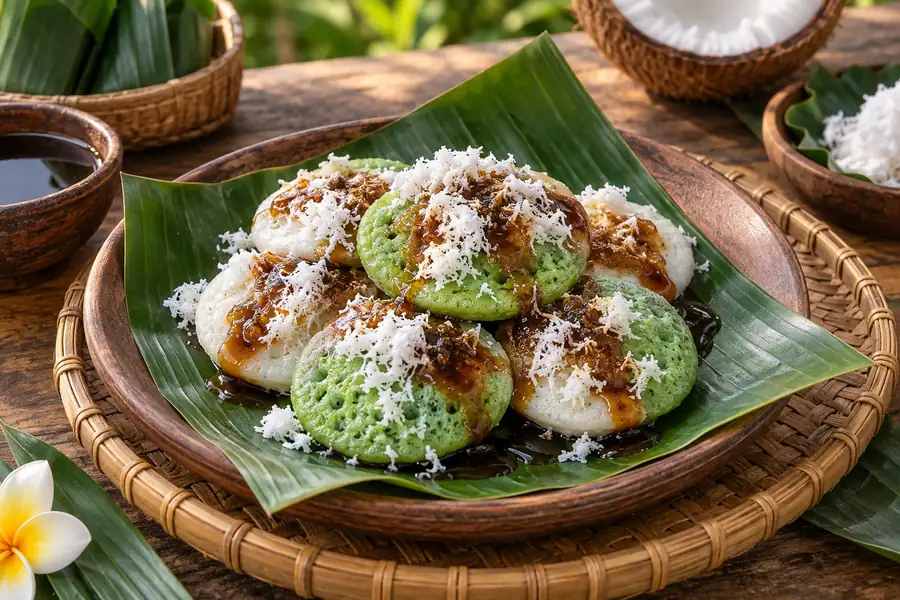
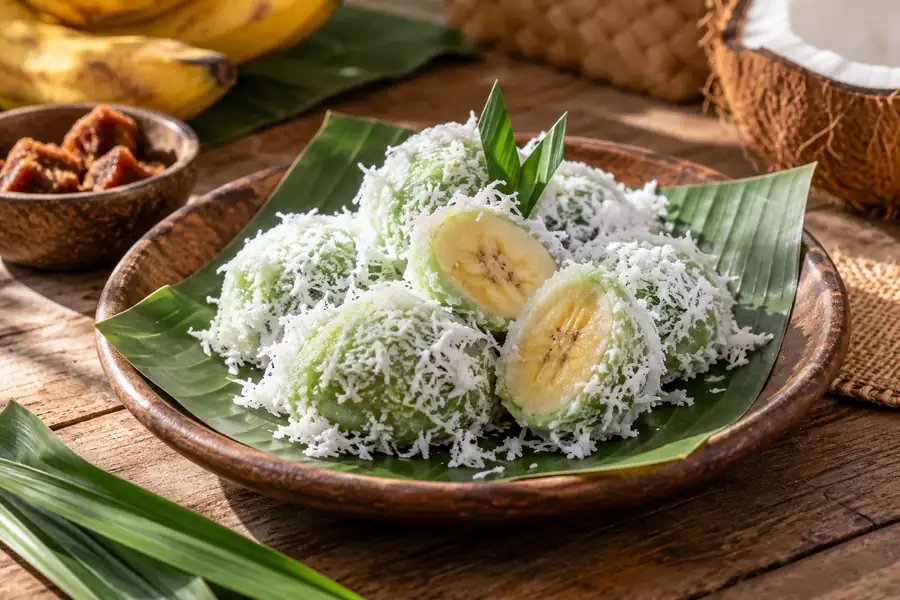
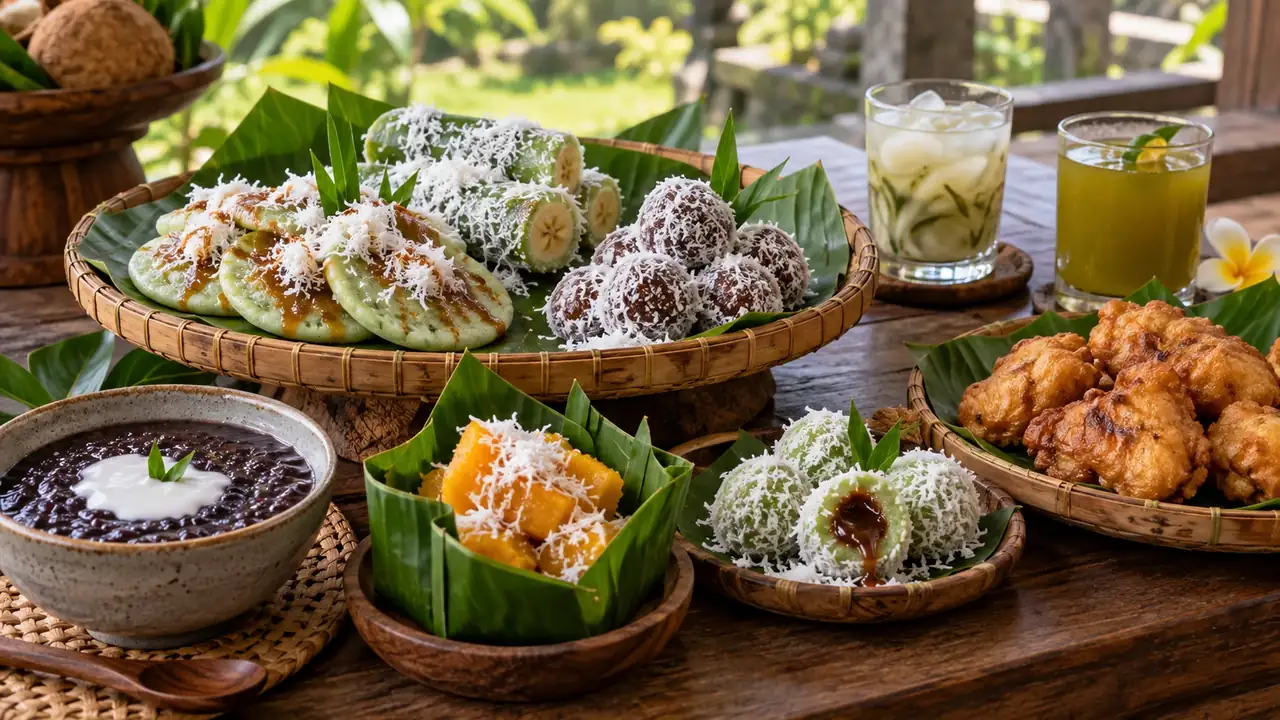
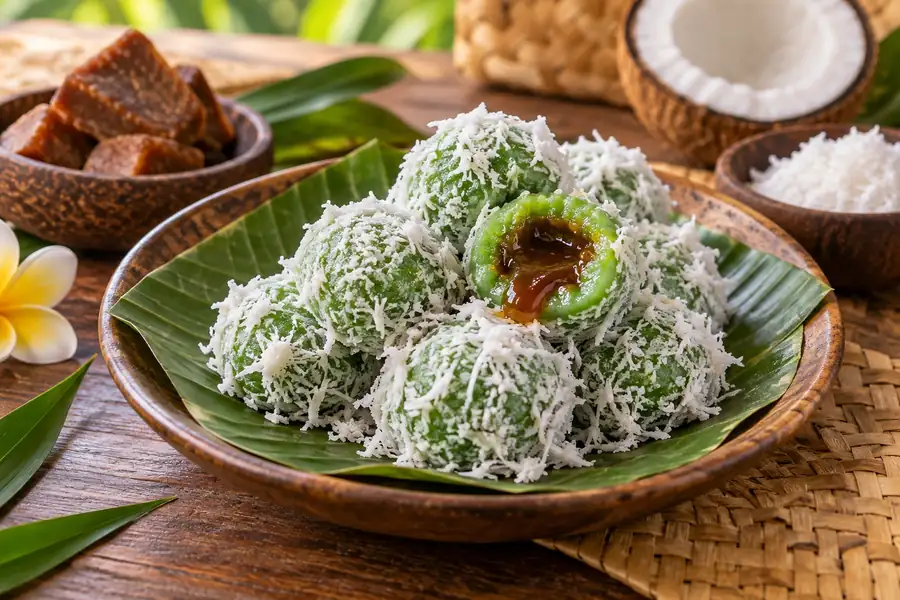
Kelepon belongs to Bali's market-sweet repertoire. A rice-based exterior surrounds a palm-sugar filling and is finished with grated coconut; spelling and shape vary by locality.
What it tastes like
The soft, chewy outside contrasts with the sweet centre and textured coconut. The filling can be hot just after cooking, so allow it to cool appropriately before tasting.
Traditional technique and what you learn
Practise closing the dough around a modest amount of filling without leaving cracks. Consistent size and a sealed surface matter more than an elaborate shape, because the sugar should remain inside.
How it works in your private class
Choose kelepon if your group enjoys shaping and filling by hand. It provides a focused sweet-making skill after a menu of chopping, grilling or preparing vegetables.
Dietary and ingredient notes
Check coconut, colour or flavour additions and flour blends. Rice-based does not mean every ingredient or shared preparation surface is suitable for all dietary requirements.
Food references
These references support the food context. Class details and availability are confirmed directly with Wayan’s Paon.