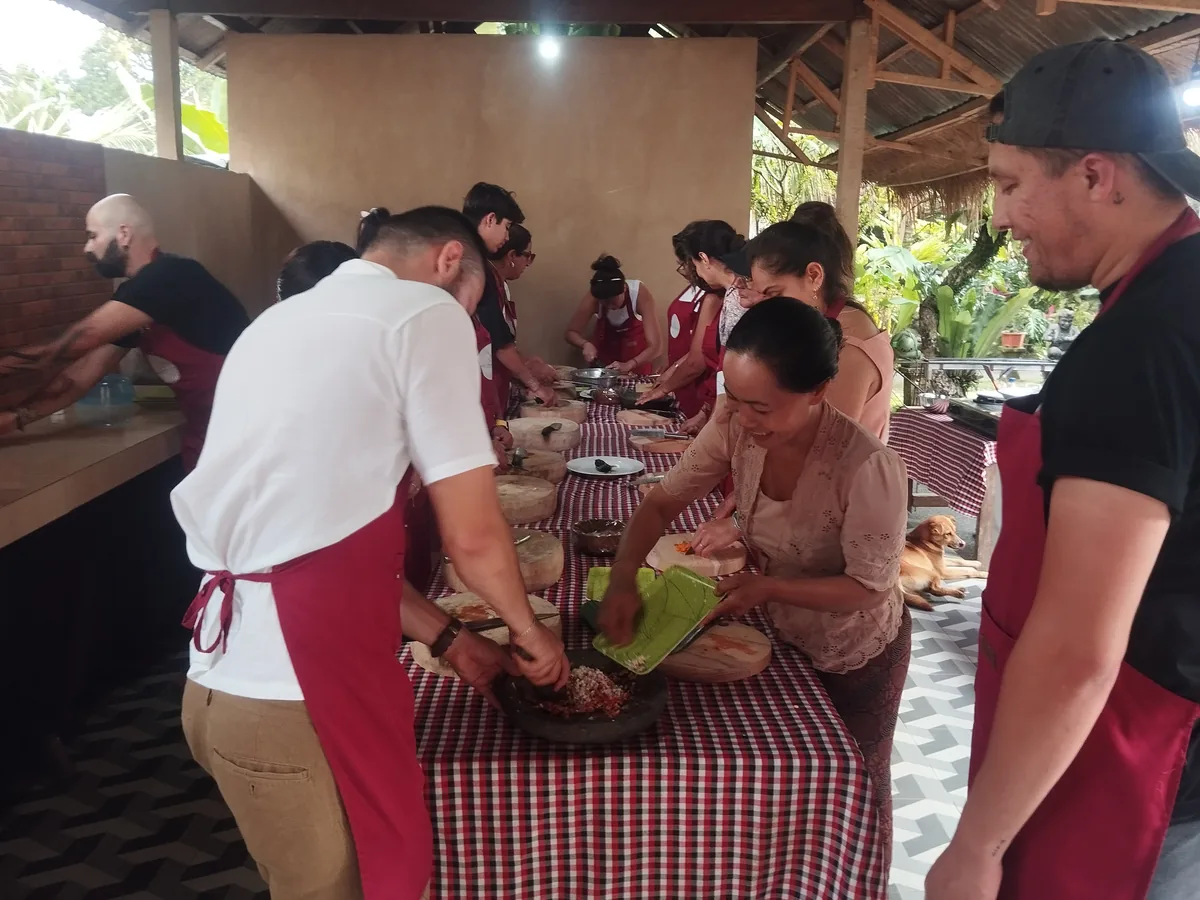
FOOD & CULTURE
Its place in Balinese food culture
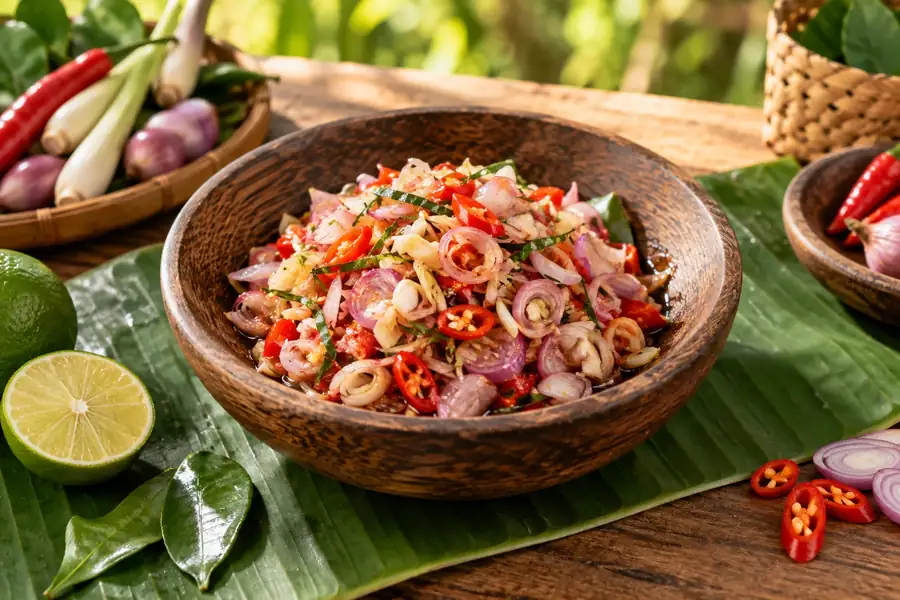
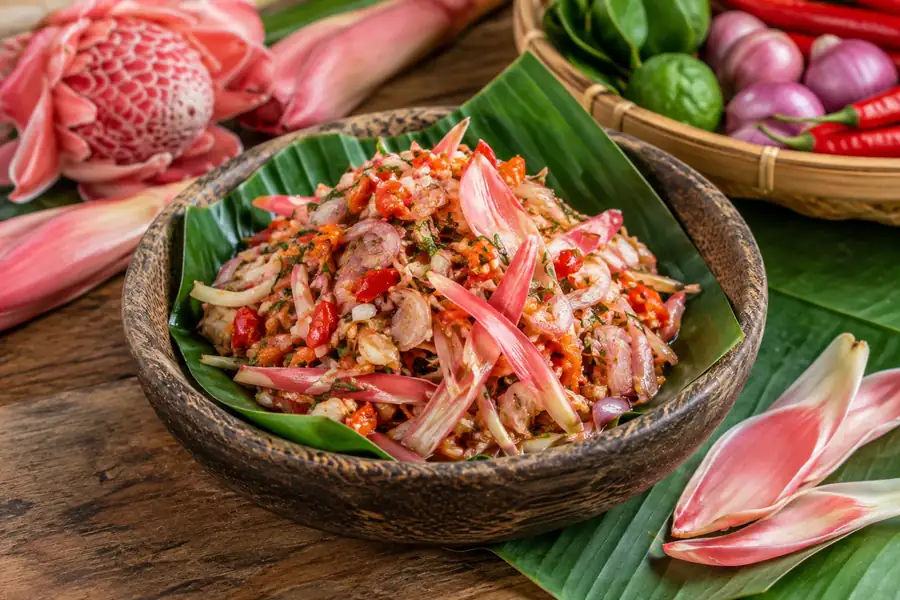
Bongkot sambal uses the tender part of torch ginger. The young stem has its own culinary role; it should not automatically be confused with a flower garnish.
What it tastes like
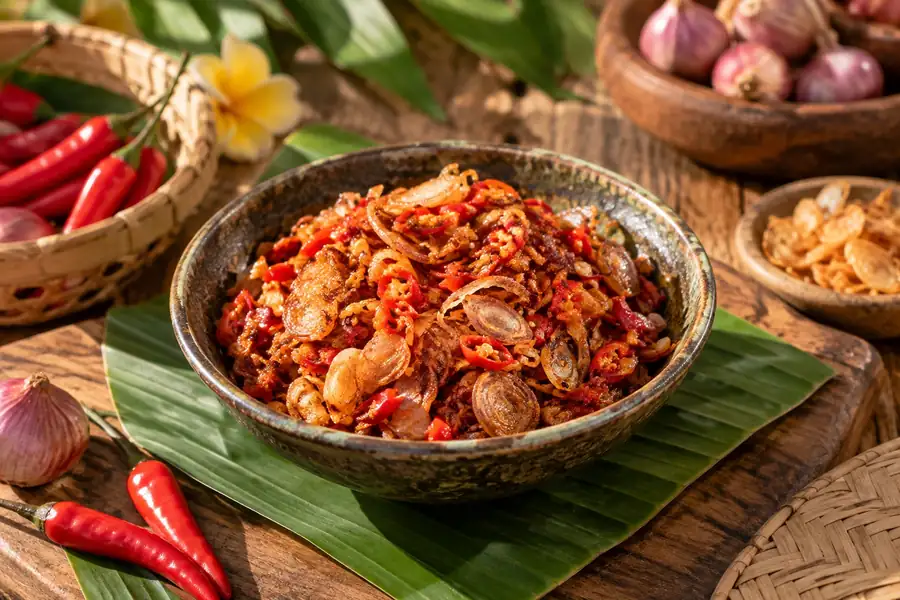
The attraction is its distinctive fragrant bite alongside chilli and shallot. It brings a different aromatic direction from lemongrass-based sambal matah.
Traditional technique and what you learn
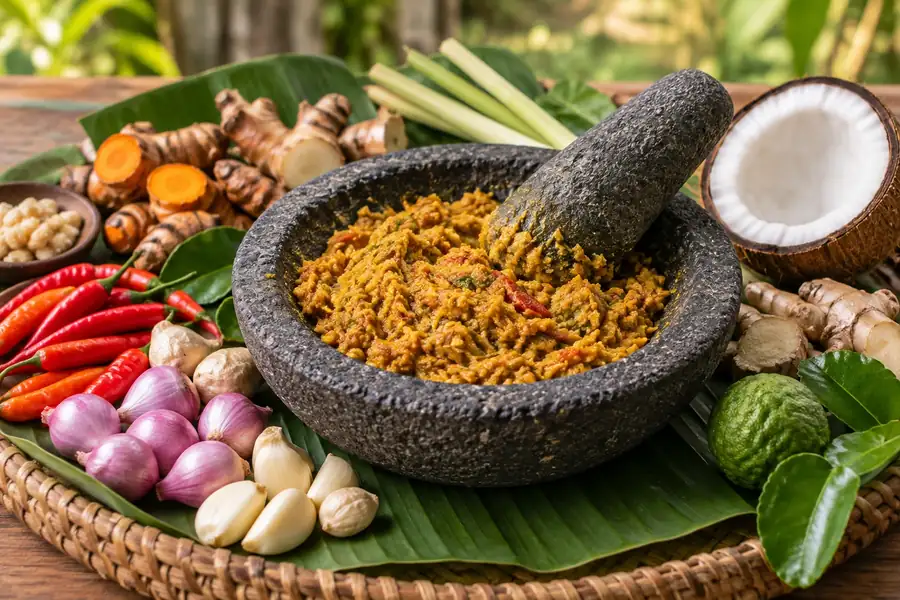
Identify the usable tender part before slicing. The lesson is in ingredient selection and balancing an assertive aromatic, rather than adding a large amount simply because it smells interesting.
How it works in your private class
Request bongkot when you want to explore an ingredient you may not cook with at home. Its availability is confirmed with the menu; combine it with a simpler rice and protein selection.
Dietary and ingredient notes
Common versions include shrimp paste. A plant-based request needs an agreed substitution or omission, and the complete seasoning must be checked for shellfish-sensitive guests.
Food references
These references support the food context. Class details and availability are confirmed directly with Wayan’s Paon.