FOOD & CULTURE
Its place in Balinese food culture
Tlengis is the rich residue from traditional coconut-oil production. It is not simply another name for freshly grated coconut, which explains this dish's connection with the oil-making process.
What it tastes like
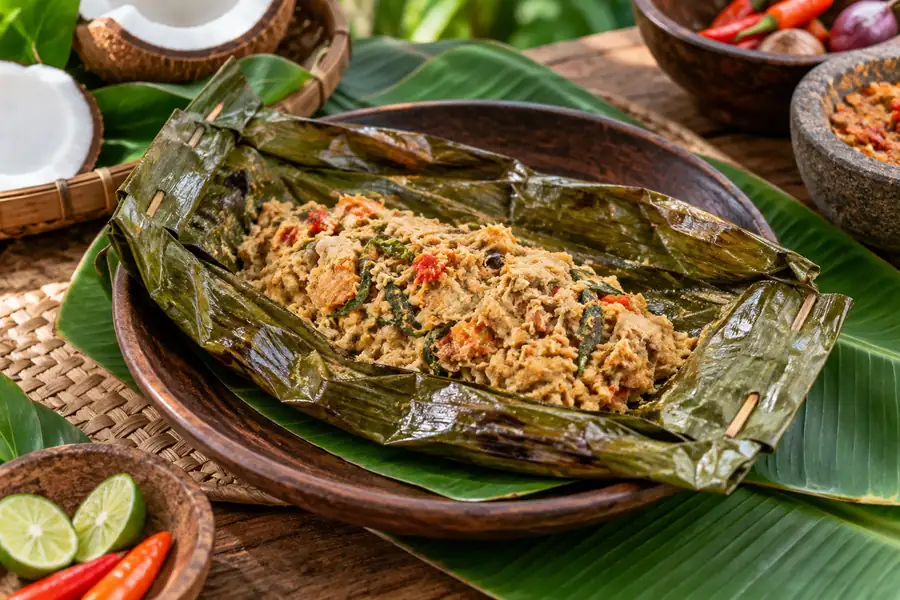
The coconut component brings a concentrated savoury richness. Aromatic seasoning and the leaf parcel turn a by-product into a distinct prepared dish rather than a garnish.
Traditional technique and what you learn
The useful lesson begins by identifying tlengis and where it comes from. Then work with the seasoned mixture and banana-leaf wrapper, observing how enclosed cooking affects the texture.
How it works in your private class
Request this if interested in the link between ingredients and food processes. It is especially relevant to a coconut-focused experience, but availability depends on access to the proper tlengis ingredient.
Dietary and ingredient notes
Coconut is central. Check whether the spice mixture includes shrimp paste or other animal ingredients; a coconut-based filling is not automatically a vegan finished dish.
Food references
These references support the food context. Class details and availability are confirmed directly with Wayan’s Paon.