
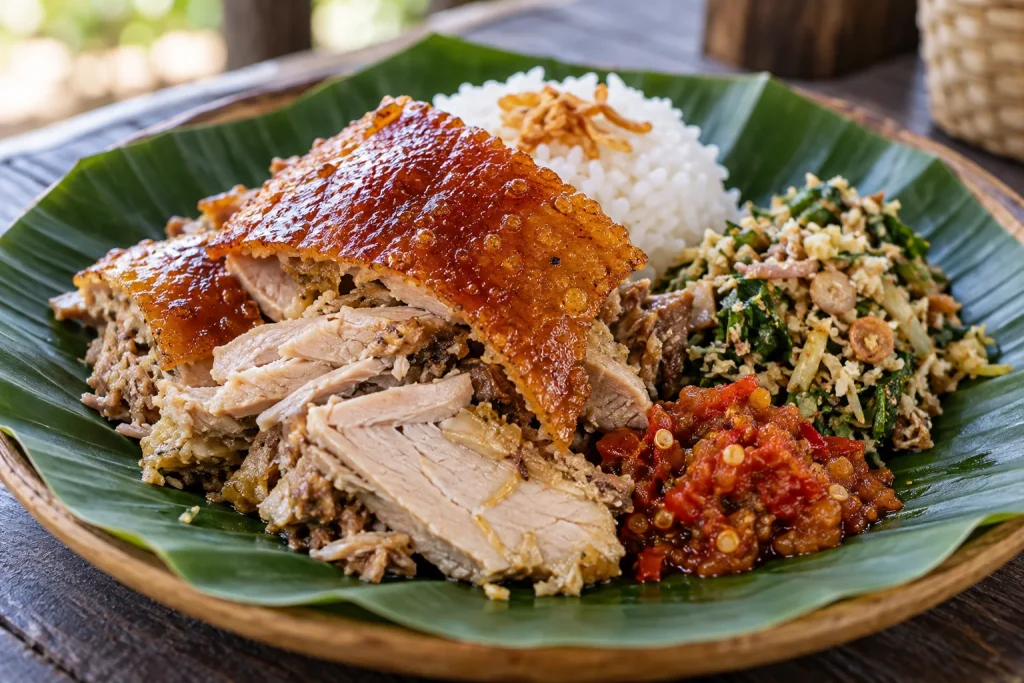
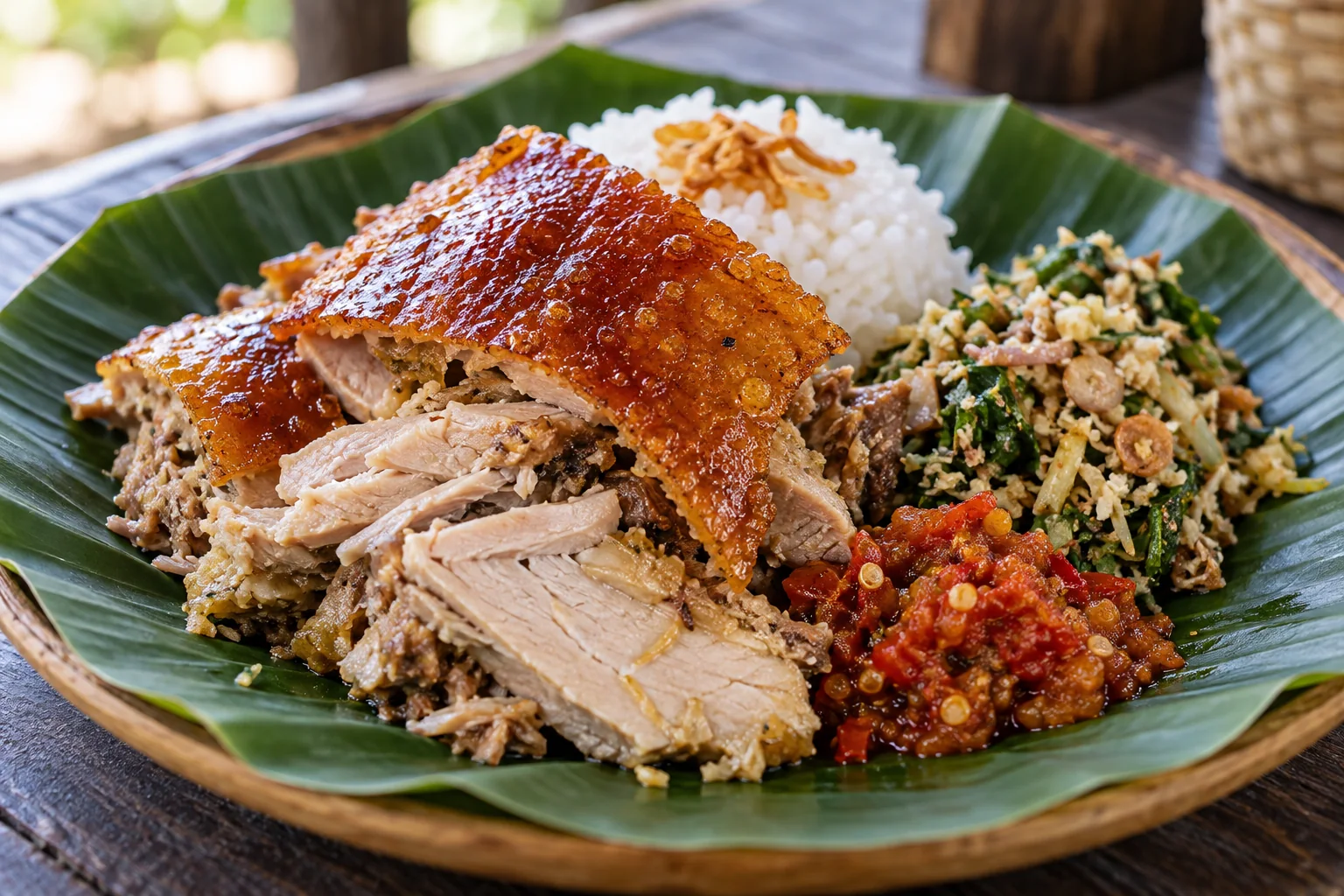
Balinese babi guling is known for its whole-animal roast and the contrast between browned skin and seasoned meat. The cooking method asks for time and steady turning; the result is then carved or served in portions. Rice, vegetables, lawar or sambal may accompany it, but no single plate should be treated as a standard across Bali.
A whole roast takes patience
A traditional description of be guling explains a piglet seasoned with Balinese spice paste and roasted while turning over heat. The turning helps expose different surfaces to the fire. A cook has to manage the distance and pace so the skin browns without leaving the meat underdone. The exact stuffing and seasoning belong to the recipe being followed.
Babi guling also appears beyond ceremonial settings today. Its history and its current place on menus can both be true, but they describe different contexts. Avoid reducing the dish to one occasion or claiming every version is prepared for the same purpose. The strongest explanation keeps the roast method at the centre and labels cultural examples carefully.
Look for texture, not only colour
Crisp skin is a cue people often seek, while the meat beneath should remain tender enough to eat comfortably. A glossy brown surface alone cannot tell you how the centre was cooked. If you are ordering, notice whether the skin is brittle or chewy and whether the meat has rested before cutting. The contrast changes with heat, cut and time.
The seasoning can be applied in more than one way, including inside the cavity or over the surface. Base genep often appears in descriptions of the roast, but individual cooks have their own balance. Do not assume a single ingredient list from the dish name. If an ingredient matters for allergy or preference, ask the person preparing the food.
Sides are part of the experience, not a fixed formula
Some servings bring rice with vegetable sides, chilli or another pork preparation. Lawar is one possible companion, but its ingredients and version vary. A plate at one seller may not match the plate at another, and portions can change during the day. Ask what is included before ordering if you need a particular side or serving size.
For the local ordering angle, read babi guling in ubud. The comparison with urutan babi bali is also useful: one is carved roast, while the other is a pork sausage prepared in a casing. Both fit the wider pork-dishes guide without becoming the same dish.
Keep the class connection accurate
This food guide explains a Balinese dish; it does not say that Wayan’s Paon serves or teaches babi guling. The current menu is the authority for a particular class date, and availability can change. A reader who wants a hands-on cooking experience should ask what is actually planned rather than infer it from an article about local food.
Check the current details on the Cooking Class Ubud homepage before making plans. The wider balinese pork dish guide compares roast, sausage, satay and ribs. This page stays focused on the spit-roast, its texture and the way accompaniments can differ from one serving to another.