
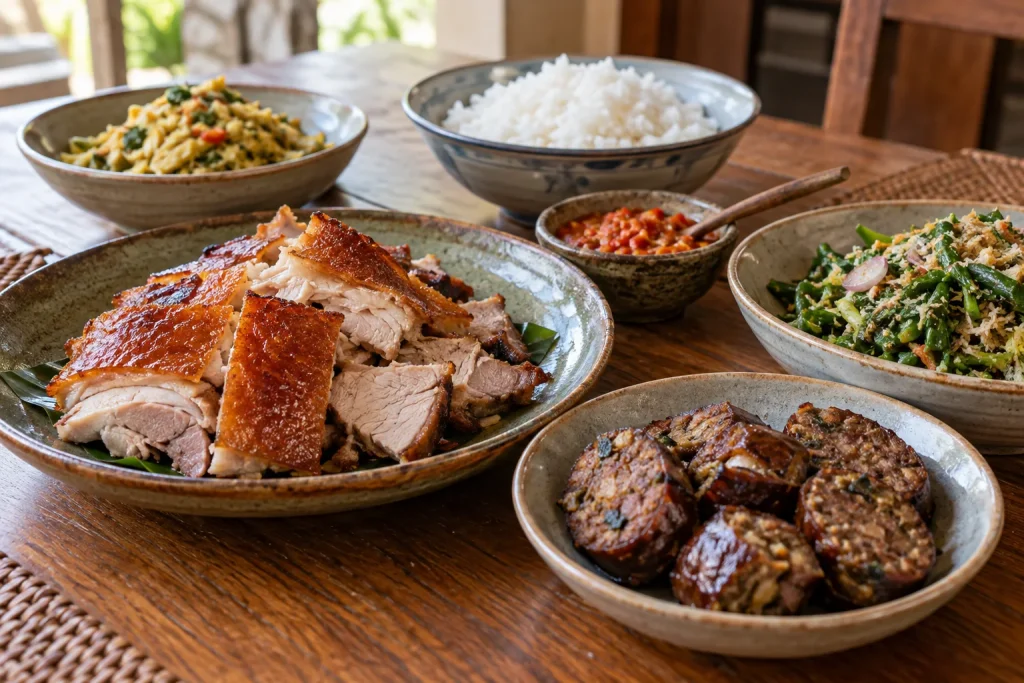
Balinese pork dishes for Galungan should be described through specific accounts, not as a fixed menu for every family. One local report about a household’s celebration listed lawar, urutan and be balung, with some sausage kept for Kuningan. That example offers context, while leaving room for regional, family and personal differences.
A menu report is an example, not a rule
An account of a family meal can show how food is prepared for a particular celebration, but it cannot speak for all households. Ingredients, budget, region and family practice shape the table. Some people may prepare pork dishes; others may choose different foods. A cultural article should identify the account it draws on and avoid saying every Balinese person celebrates in the same way.
Galungan and Kuningan have religious meaning as well as family and community settings. A food guide can explain a reported meal without turning sacred practice into a tourist checklist. Keep the writing respectful, use the names of dishes accurately, and avoid suggesting that a visitor should observe or photograph rituals without invitation.
Notice the different roles of each dish
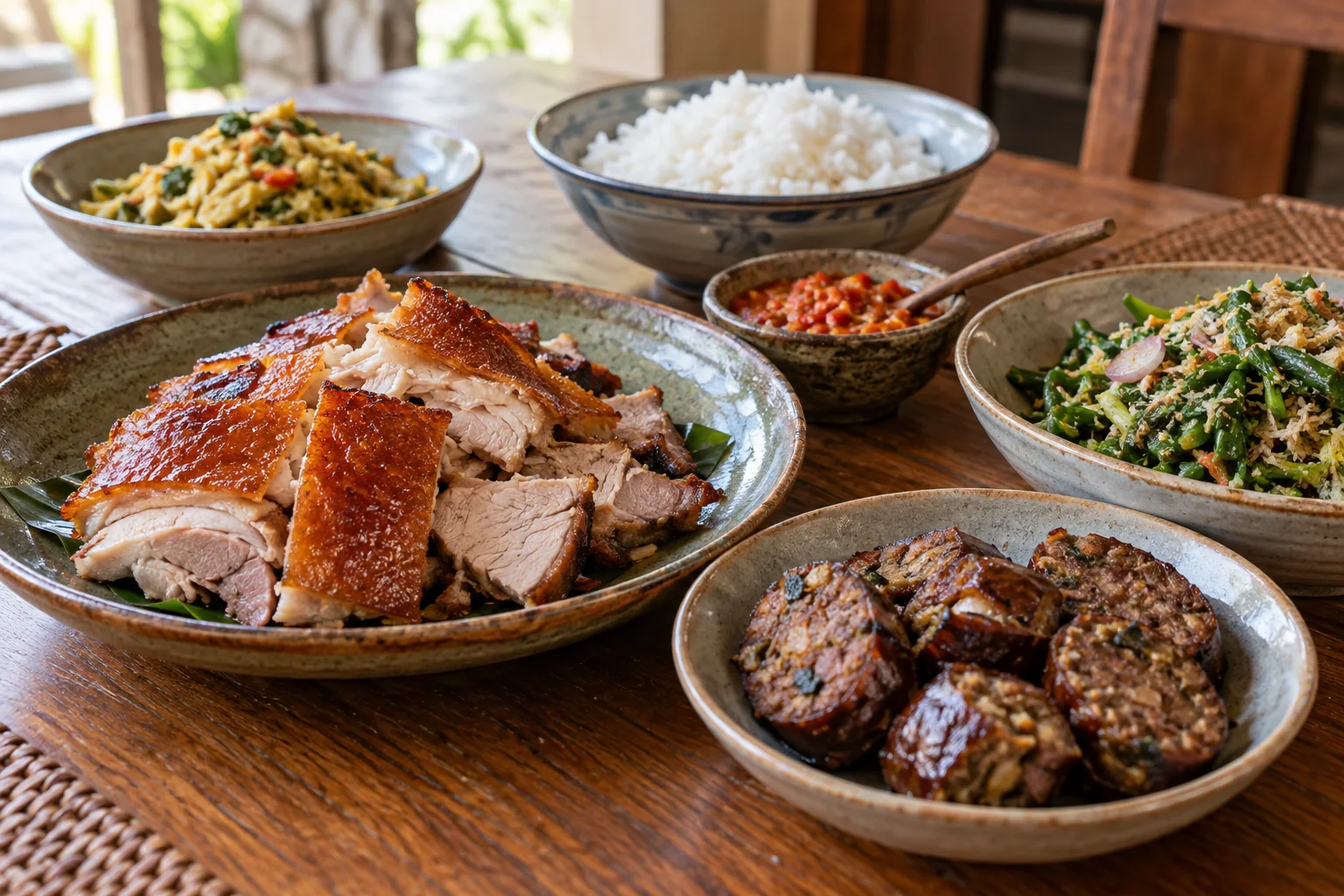
The reported menu named lawar, sausage and a soup or broth dish. The existing lawar babi bali page describes cooked pork with vegetables, coconut and Balinese seasoning, without raw blood. urutan babi bali is a sausage, and the live menu allows a fried or dried finish.
Those dishes contribute different textures and use different parts of a meal. The source account mentioned that some dried urutan was kept until Kuningan, but that detail belongs to the household described. Do not convert it into advice for storing food safely or a universal practice; storage conditions and current food-safety guidance need their own source.
Ask which household or place the story describes
If you are interviewing a cook or family member, ask what they prepare and whether it changes from one year to another. A question about the actual household is more respectful than asking someone to confirm a stereotype. It also creates a clearer article because the source, menu and location can be named instead of blended into a broad claim.
Outside a family setting, restaurant menus may reflect commercial availability rather than a ceremonial meal. A dish being sold during a holiday does not tell you that it appears in every ritual or every home. Keep those contexts separate when you explain why a visitor might see pork dishes in Bali at different times of year.
Read the example beside the broader food guide
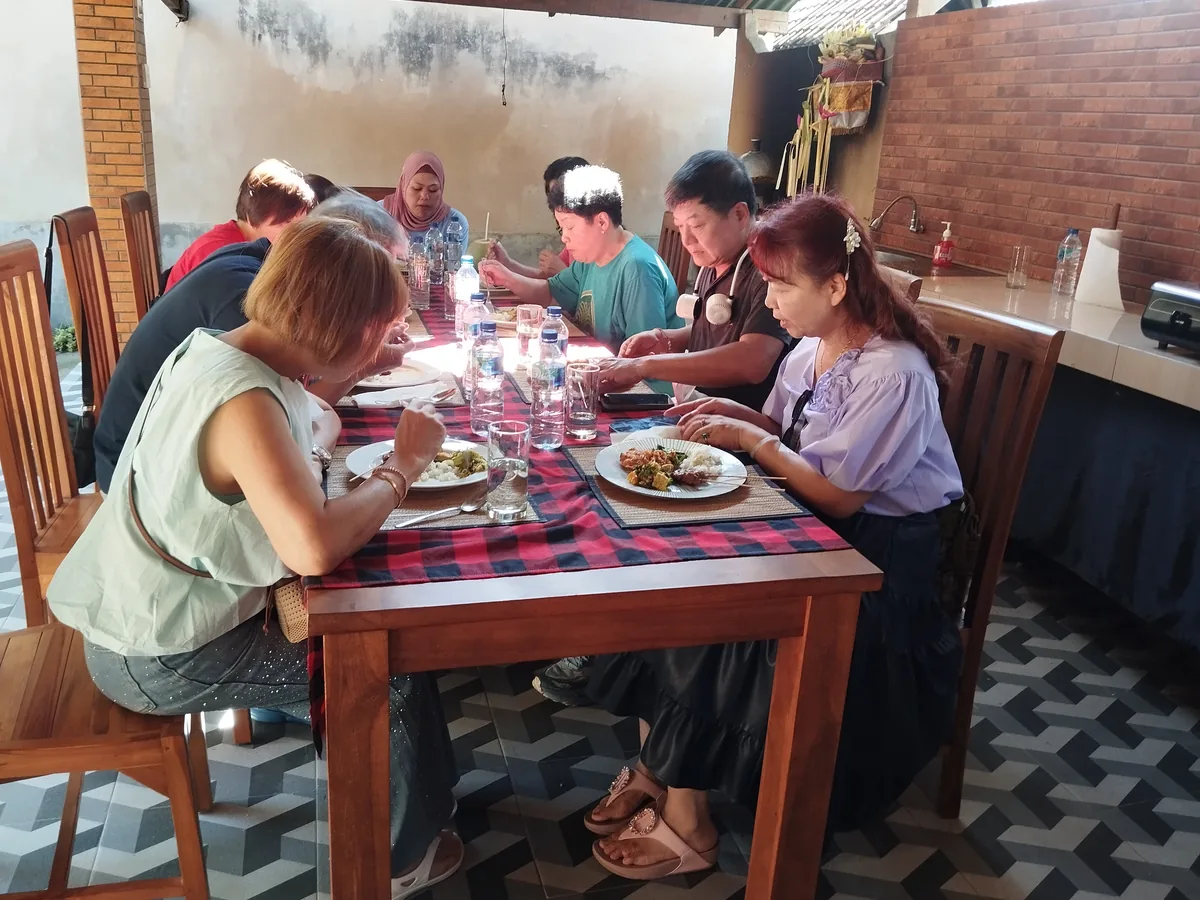
The balinese pork dish page explains roast pork, satay, sausage and ribs as culinary preparations. This Galungan article adds a carefully bounded cultural example rather than claiming every dish belongs on every holiday table. For present-day class details in Ubud, check the Cooking Class Ubud homepage and ask what the menu includes.
A strong cultural explanation says what it knows and where its limit lies. Here, the limit is clear: one reported household menu helps illustrate a possible selection, not the whole of Balinese family life. Keep the distinction in the headline, introduction and captions whenever the article is updated or adapted for another audience.