
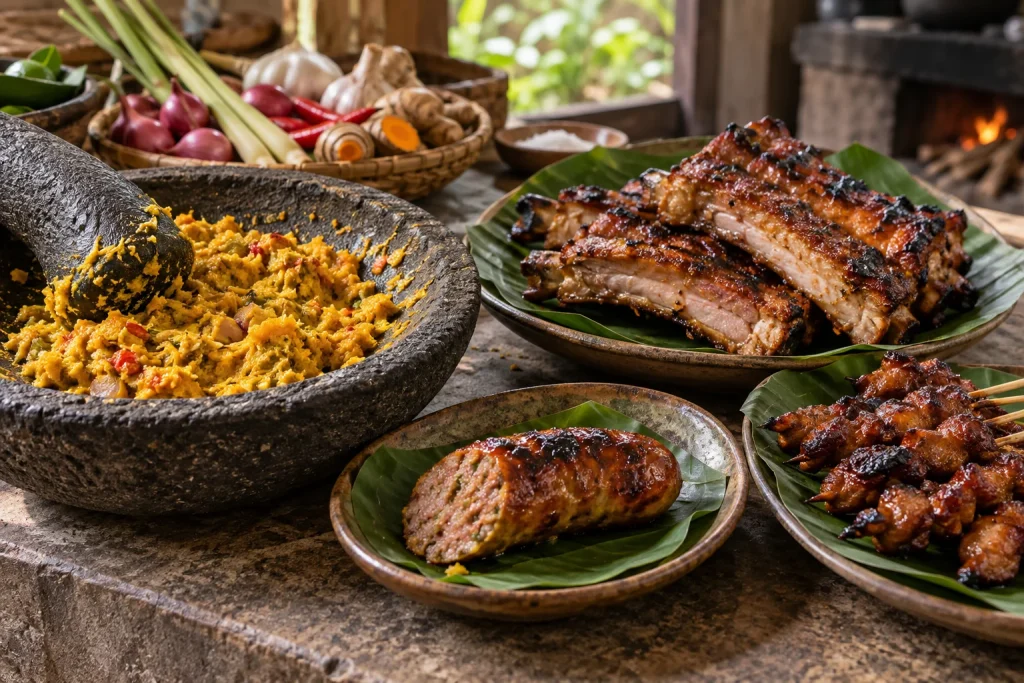
Base genep pork dishes do not all taste or cook alike just because the paste is part of the description. A spice mixture can season a roast, be incorporated into sausage or coat ribs before grilling. The cut, amount of paste, cooking time and heat change its role. This guide compares those uses without assigning one fixed recipe to every cook.
A paste is a starting point, not the whole dish
The existing base genep bali page is the owner for the spice mixture itself. A separate dish guide should explain what happens when that paste meets a particular cut. How finely it is ground, how much oil or liquid is used and when it is added can all change the final aroma and texture.
A paste that seasons meat inside a roast has a different job from one spread over a rib. In a sausage, the seasoning is distributed through the filling. That does not mean every preparation uses the same ratio or ingredients. Keep the source recipe with the dish being discussed and avoid combining several versions into an invented universal formula.
Compare roast, sausage and ribs
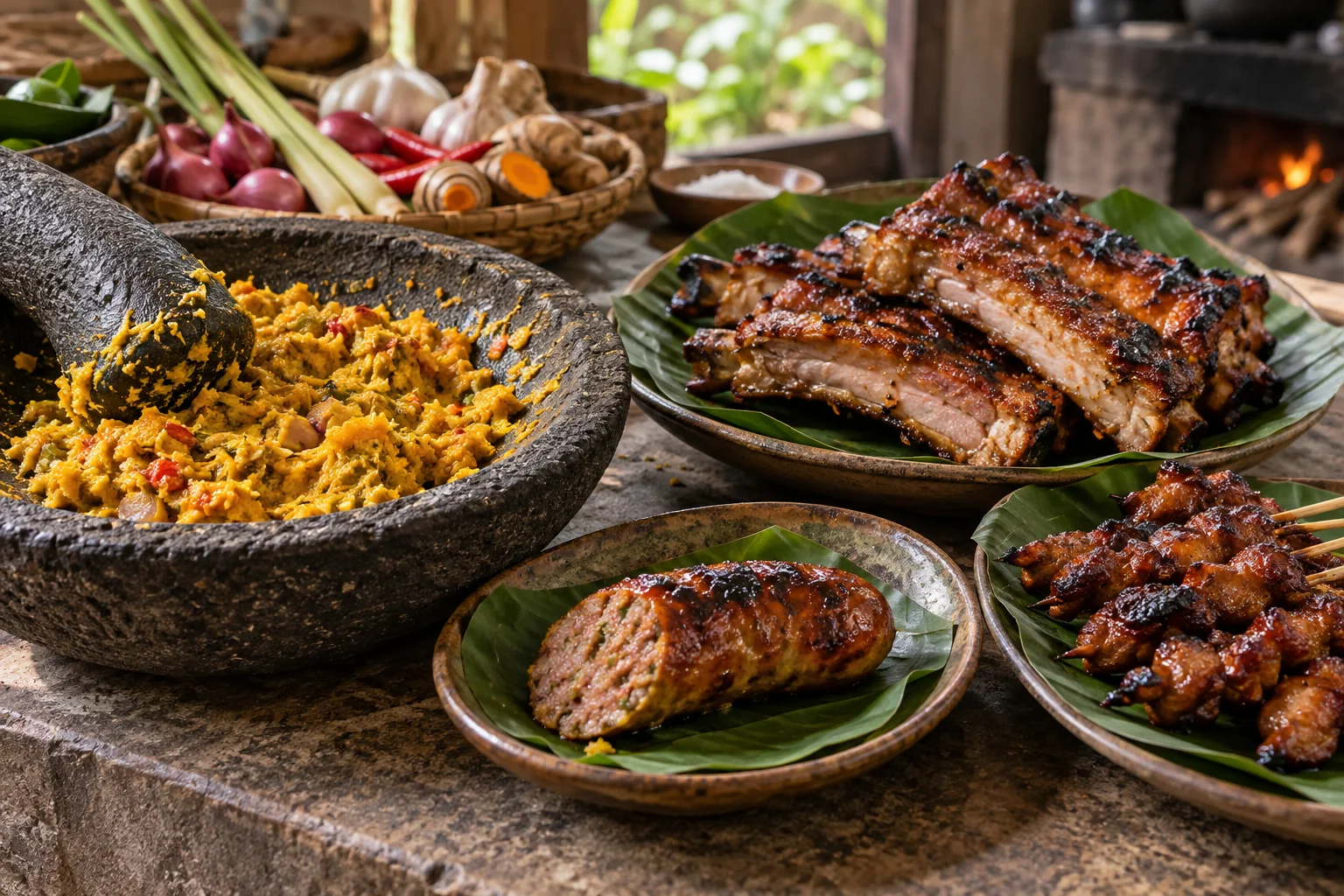
For the roast, balinese babi guling describes a whole animal seasoned and turned over heat. In urutan babi bali, the menu describes seasoned pork in a natural casing, fried or dried. The paste is carried differently in those two shapes, so the bite and moisture change.
The live iga bakar base genep bali description specifies ribs coated with Base Genep and coconut oil, then grilled over coconut husk. That surface coating meets direct heat, so the cook manages browning as the thicker meat cooks. These examples come from separate menu owners; they are not three steps in one recipe.
Let the cut guide the heat
A whole roast needs steady turning over a longer cook, while sausage needs the casing and filling to finish together. Ribs require attention near the bone and to the seasoning on the exterior. The cook adjusts distance, time and turning to the food in front of them. A recipe’s time is a guide; visible texture and safe doneness still matter.
The seasoning can scorch if a sweet or finely ground paste sits over fierce direct heat. Moving the food to a cooler zone can protect the surface while the interior catches up. Each method has a different heat challenge, which is why a reader should not transfer a rib method directly to sausage or assume that a roast needs the same timing.
Use the ingredient page and dish pages together
When you want to learn about the aromatics, follow the Base Genep owner. When you want to understand a menu dish, read its preparation page. That separation keeps the ingredient keyword from competing with every recipe that uses it and gives the reader a clearer next step depending on whether they are researching a paste or a finished meal.
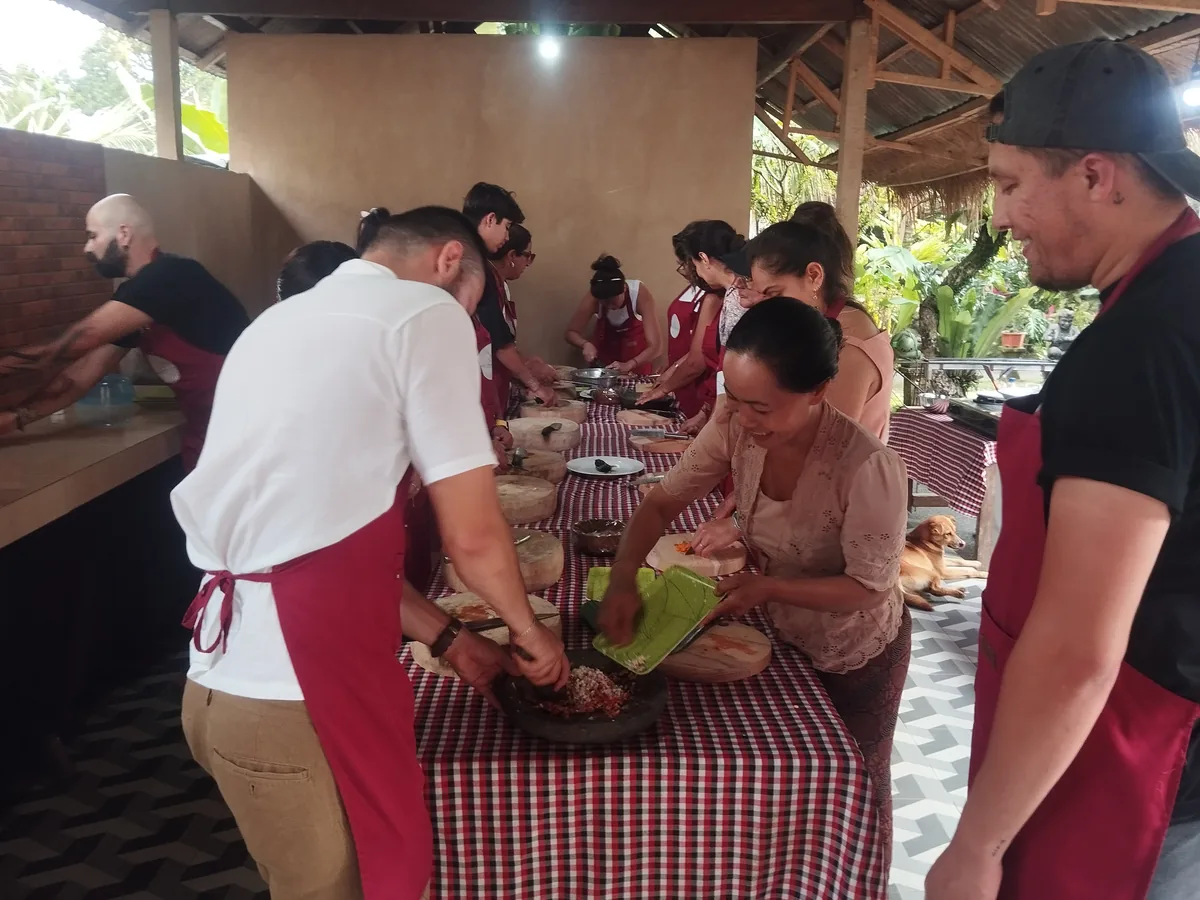
The balinese pork dish guide connects these pork preparations with satay and accompaniments. For current hands-on class options in Ubud, see the Cooking Class Ubud homepage and confirm what the cook plans to prepare. This editorial comparison does not claim that every class or household uses Base Genep in the same way.