
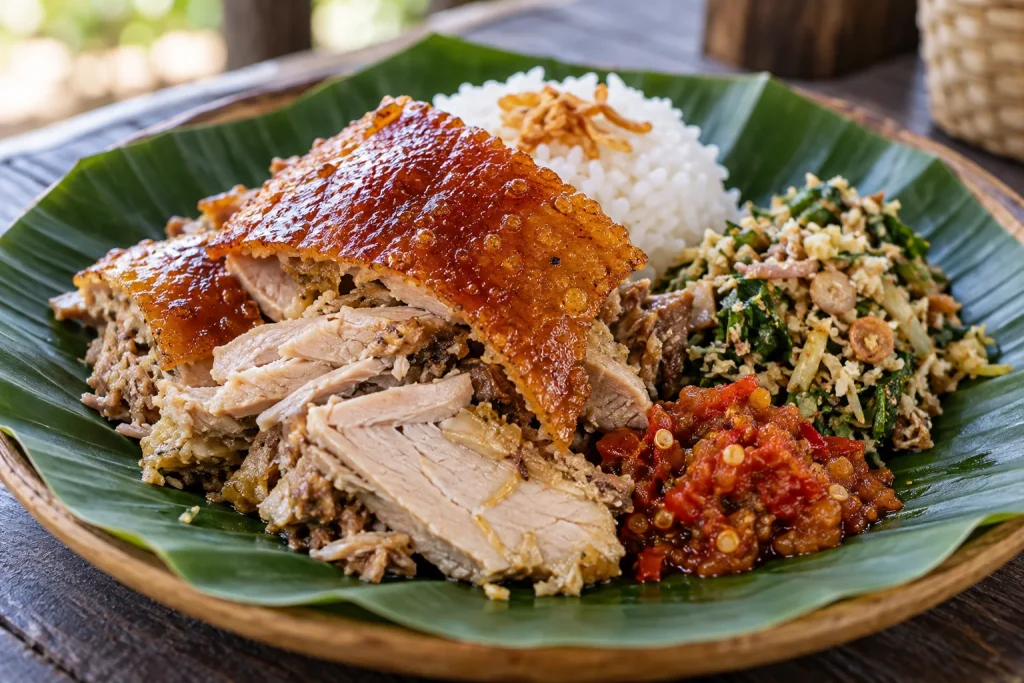

A short Bali food list is less useful than a plan for tasting different things. On a first trip, choose a rice-based meal, one grilled preparation and one dish wrapped or cooked under cover. The point is not to complete a checklist. It is to notice how texture, seasoning and serving style change from one meal to another. When examining bali food to try in the context of everyday kitchen work and guest planning in Gianyar and Ubud, separating specific ingredient names, preparation timing, and household customs prevents common misunderstandings before you shop or cook.
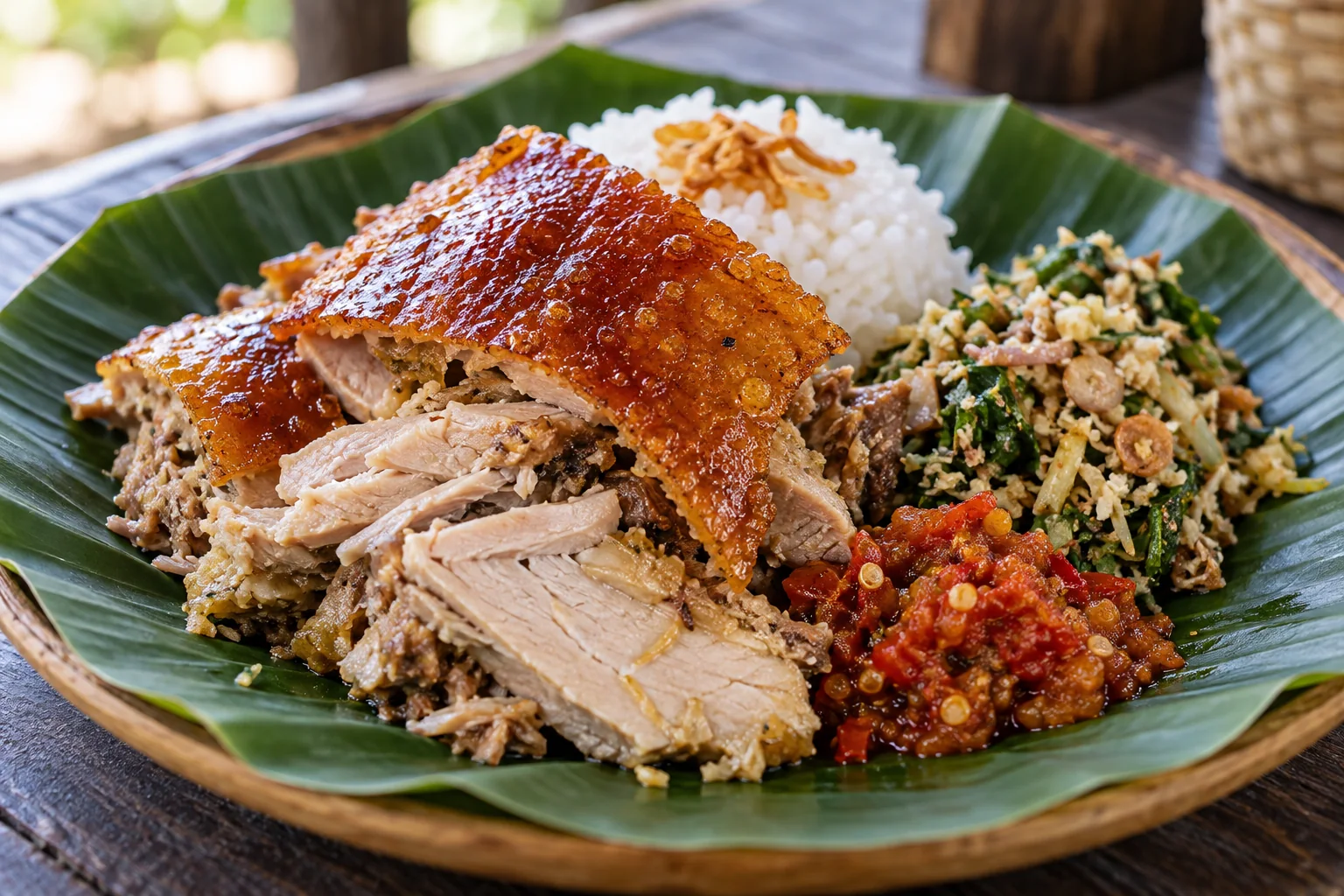
Choose one plate with several parts
A mixed rice plate is a convenient first introduction because it may bring a staple, vegetables and a few savoury sides together. The exact combination is the cook’s choice, so ask what is on the plate before ordering. If you have a restriction, check each component and the seasoning rather than only the main item.
Add a different texture next
Some well-known dishes are pork-based, while others may use chicken, fish or vegetables. A photograph or short menu label cannot confirm the ingredients. Say what you do not eat and ask for the preparation details in plain language.
Ask about heat before the first bite
Sate lilit offers a grilled option with a different shape and texture from roast meat or a rice plate. Betutu is associated with a slower, covered preparation. A vegetable side with coconut or a sweet rice-based snack can add another texture without repeating the same main dish.
Order one unfamiliar item at a time if you are travelling with a group. Share a taste only when everyone is comfortable with the ingredients and the serving arrangement. This keeps the meal relaxed and makes it easier to remember which preparation you liked.
Chilli may be cooked into a spice base or served as a separate sambal, and the balance varies. Ask which parts are hot and whether the condiment can be left aside. Do not assume that a dish is mild because its name sounds familiar.
If learning the preparation sounds more appealing than sampling several dishes, check the current cooking classes ubud details and ask which menu options are available.
How Bali Food to Try on a First Trip, from Rice Plates to Leaf Wraps Connects Market Observation, Kitchen Technique, and Practical Planning in Ubud
For travellers and home cooks researching bali food to try, the biggest gap in general travel guides is that they treat Balinese food and daily life as a single uniform checklist rather than a living household system. In a traditional Balinese compound around Ubud, decisions about ingredients, prep sequence, and table pairing depend on whether a meal is prepared for a quiet family lunch, a morning market run, or a shared gathering. When you join an Ubud Cooking Class at Wayan’s Paon, every question around bali food to try is answered through direct hands-on observation rather than abstract theory.
A second practical principle when evaluating bali food to try is recognizing the boundary between what happens at the morning produce stalls, what happens at the stone mortar (ulekan), and how the final dishes are balanced on the plate. In our private sessions such as Private Paon Table, your group works only with your own booking party and selects up to five dishes from the 53-dish menu (plus the foundational Base Genep spice paste), allowing you to test how each choice affects flavour, texture, and timing.
Comparative Reference Matrix: 10 Core Dimensions of Bali Food To Try
Before diving into each specialized subtopic in this family of guides, the table below summarizes how the ten focused questions around bali food to try differ in scope, practical kitchen impact, and what you should verify before buying ingredients or confirming a menu in Ubud:
| Focus Topic / Keyword Owner | Specific Question Addressed | Key Practical Distinction in Ubud |
|---|---|---|
| 1. what food is ubud famous for | What Food Is Ubud Famous For? Follow the Local Plate | Ask what food Ubud is famous for and you may hear several answers, not one dish with an official claim to the town. The meals visitors encou… |
| 2. balinese food for first time visitors | A First-Timer’s Guide to Ordering a Balinese Meal | Ordering a Balinese meal for the first time is less awkward when you start with what you want to know, not with a perfect pronunciation. Ask… |
| 3. how spicy is balinese food | How Spicy Is Balinese Food? Ask What Goes into the Dish | How spicy is Balinese food? There is no single answer for the island or even for every version of one dish. Heat depends on the cook, the re… |
| 4. mild balinese food for tourists | Balinese Food for Travelers Who Prefer a Milder Plate | Travellers looking for mild Balinese food should choose by preparation, not by a promise that a dish is always gentle. A rice plate may incl… |
| 5. balinese warung food guide | At a Warung, What Might Come with a Balinese Rice Plate? | A warung is not a single menu format. At one place, a rice plate may arrive with a few set sides; at another, you may point to items at the … |
| 6. balinese vs indonesian food | Balinese Food and Indonesian Food: Where the Bali Plate Fits | Balinese food and Indonesian food are not two equal, separate categories. Balinese cooking is one regional tradition within a country whose … |
| 7. balinese food flavor guide | A Balinese Food Flavor Guide for Choosing Your First Dish | A useful Balinese food flavor guide begins with what you can notice, not with a fixed label for each dish. Look for aroma from fresh or cook… |
| 8. what to eat in bali | What to Eat in Bali: A First-Trip Guide to Local Dishes | A first visit to Bali can make the food list feel longer than the holiday. Start with a more useful question than “Which dish is the most au… |
| 9. famous balinese food | Famous Balinese Food, from the Fire to the Spice Paste | The phrase famous Balinese food often produces a long list. A better way to remember the dishes is to notice what happens in the kitchen: so… |
| 10. balinese food ubud | Balinese Food in Ubud: How to Read a Dish Name | A menu in Ubud may use a Balinese dish name without explaining the ingredients or the way it is served. A little vocabulary helps, but it sh… |
Deep-Dive Guide to the 10 Specialized Subtopics Within Bali Food To Try
Each of the ten companion articles in this topic family isolates one specific decision or ingredient question related to bali food to try so that you never confuse a broad category label with a concrete culinary rule. Below is how each specialized guide fits into the wider picture:
1. What Food Is Ubud Famous For? Follow the Local Plate
When narrowing your focus from bali food to try to the specific question of what food is ubud famous for, the primary distinction is context and practical application. Ask what food Ubud is famous for and you may hear several answers, not one dish with an official claim to the town. The meals visitors encounter reflect Ubud’s place in Gianyar, the cooks working nearby and the mix of daily dining with food prepared for particular occasions. A useful guide is to look at the plate and the cooking method, then ask where a recipe comes from. When examining what food is ubud famous for in the context of everyday kitchen work and guest planning in Gianyar and Ubud, separating specific ingredient names, preparation timing, and household customs prevents common misunderstandings before you shop or cook. By keeping this specific scope distinct from neighbouring topics, you avoid applying a general rule where a precise ingredient check or timing adjustment is required.
In practice at the market or in the paon, A rice meal can bring together a main, vegetables and seasoning; grilled satay gives you a different texture; and a wrapped or slow-cooked dish shows another way ingredients are handled. Names such as lawar or betutu appear in broader Balinese food conversations, but a menu in Ubud may serve one version, several versions or none that day. Whether you are comparing options before booking your private session or taking notes to cook at home after your trip, treating what food is ubud famous for as its own step ensures your preparation remains accurate and stress-free.
2. A First-Timer’s Guide to Ordering a Balinese Meal
When narrowing your focus from bali food to try to the specific question of balinese food for first time visitors, the primary distinction is context and practical application. Ordering a Balinese meal for the first time is less awkward when you start with what you want to know, not with a perfect pronunciation. Ask how the dish is served, what comes with it and whether a condiment is separate. Staff can usually point out the options, but the menu and the day’s preparation determine what is available. By keeping this specific scope distinct from neighbouring topics, you avoid applying a general rule where a precise ingredient check or timing adjustment is required.
In practice at the market or in the paon, If you want variety, ask whether the rice meal comes with several sides or whether you choose them one by one. If you want one main dish, ask what portion it includes and whether rice is part of the order. A display counter can make choosing easier, but do not assume everything in view is included in the same price or plate. Whether you are comparing options before booking your private session or taking notes to cook at home after your trip, treating balinese food for first time visitors as its own step ensures your preparation remains accurate and stress-free.
3. How Spicy Is Balinese Food? Ask What Goes into the Dish
When narrowing your focus from bali food to try to the specific question of how spicy is balinese food, the primary distinction is context and practical application. How spicy is Balinese food? There is no single answer for the island or even for every version of one dish. Heat depends on the cook, the recipe and where chilli enters the meal. A plate may have chilli in its cooked seasoning, a separate sambal on the side, both or neither. By keeping this specific scope distinct from neighbouring topics, you avoid applying a general rule where a precise ingredient check or timing adjustment is required.
In practice at the market or in the paon, Ask whether chilli is cooked into the base or served as a condiment. A separate sambal can often be left aside, but removing a topping will not make a dish mild if chilli is already in the paste or broth. When ordering several components, ask about each one rather than applying a single answer to the whole plate. Whether you are comparing options before booking your private session or taking notes to cook at home after your trip, treating how spicy is balinese food as its own step ensures your preparation remains accurate and stress-free.
4. Balinese Food for Travelers Who Prefer a Milder Plate
When narrowing your focus from bali food to try to the specific question of mild balinese food for tourists, the primary distinction is context and practical application. Travellers looking for mild Balinese food should choose by preparation, not by a promise that a dish is always gentle. A rice plate may include several separately seasoned items. The sambal could be on the side, while a cooked spice base may already contain chilli. Ask what is in the part you plan to eat. By keeping this specific scope distinct from neighbouring topics, you avoid applying a general rule where a precise ingredient check or timing adjustment is required.
In practice at the market or in the paon, Start with rice and ask which vegetable or protein dishes are prepared without chilli in the base. If you prefer a low-heat meal, request sambal separately and check the broth, dressing and seasoning paste as well. A dish can look simple and still have chilli or another ingredient mixed in. Whether you are comparing options before booking your private session or taking notes to cook at home after your trip, treating mild balinese food for tourists as its own step ensures your preparation remains accurate and stress-free.
5. At a Warung, What Might Come with a Balinese Rice Plate?
When narrowing your focus from bali food to try to the specific question of balinese warung food guide, the primary distinction is context and practical application. A warung is not a single menu format. At one place, a rice plate may arrive with a few set sides; at another, you may point to items at the counter or order them separately. The cook, the dishes ready that day and the serving style all affect what appears beside the rice. By keeping this specific scope distinct from neighbouring topics, you avoid applying a general rule where a precise ingredient check or timing adjustment is required.
In practice at the market or in the paon, Before ordering, ask whether rice comes with the main, which sides are included and whether the portions are fixed or selected. You may see vegetables, a seasoned coconut mixture, soup, satay or sambal, but those are examples rather than a promise about every warung. A set plate is not automatically the same as nasi campur. Whether you are comparing options before booking your private session or taking notes to cook at home after your trip, treating balinese warung food guide as its own step ensures your preparation remains accurate and stress-free.
6. Balinese Food and Indonesian Food: Where the Bali Plate Fits
When narrowing your focus from bali food to try to the specific question of balinese vs indonesian food, the primary distinction is context and practical application. Balinese food and Indonesian food are not two equal, separate categories. Balinese cooking is one regional tradition within a country whose islands, communities and kitchens have their own ingredients and methods. Comparing them is most useful when you name the particular dish or technique rather than treating either side as uniform. By keeping this specific scope distinct from neighbouring topics, you avoid applying a general rule where a precise ingredient check or timing adjustment is required.
In practice at the market or in the paon, Rice, grilled foods, spice mixtures and sambal appear in many Indonesian meals, though the ingredients and balance change by region and cook. Shared words do not mean identical recipes. The way a seasoning is pounded, cooked or served can be as revealing as the ingredient list. Whether you are comparing options before booking your private session or taking notes to cook at home after your trip, treating balinese vs indonesian food as its own step ensures your preparation remains accurate and stress-free.
7. A Balinese Food Flavor Guide for Choosing Your First Dish
When narrowing your focus from bali food to try to the specific question of balinese food flavor guide, the primary distinction is context and practical application. A useful Balinese food flavor guide begins with what you can notice, not with a fixed label for each dish. Look for aroma from fresh or cooked seasoning, texture from vegetables or coconut, and heat from chilli in the dish or a side sambal. These clues help you choose, but they cannot replace an ingredient check. By keeping this specific scope distinct from neighbouring topics, you avoid applying a general rule where a precise ingredient check or timing adjustment is required.
In practice at the market or in the paon, A dish may smell of lemongrass, ginger, galangal, turmeric, shallot or garlic before you taste it. Some preparations use a cooked spice paste, while others rely on fresher aromatics mixed closer to serving. The same ingredients can feel different after pounding, frying, wrapping or grilling. Whether you are comparing options before booking your private session or taking notes to cook at home after your trip, treating balinese food flavor guide as its own step ensures your preparation remains accurate and stress-free.
8. What to Eat in Bali: A First-Trip Guide to Local Dishes
When narrowing your focus from bali food to try to the specific question of what to eat in bali, the primary distinction is context and practical application. A first visit to Bali can make the food list feel longer than the holiday. Start with a more useful question than “Which dish is the most authentic?” Ask what kind of meal you want: a rice plate with a few sides, something grilled, a leaf-wrapped preparation or a sweet to finish. Those choices reveal more than a checklist does, because recipes and serving styles change between cooks and places. By keeping this specific scope distinct from neighbouring topics, you avoid applying a general rule where a precise ingredient check or timing adjustment is required.
In practice at the market or in the paon, Rice is a familiar centre for many meals, but the rest of the plate can vary. A mixed rice serving may bring several small portions together; a grilled satay gives you one seasoned element to try; and a wrapped or slow-cooked dish puts more attention on the cooking method. Lawar, vegetables, coconut and sambal can appear as sides, though their ingredients are not identical everywhere. Whether you are comparing options before booking your private session or taking notes to cook at home after your trip, treating what to eat in bali as its own step ensures your preparation remains accurate and stress-free.
9. Famous Balinese Food, from the Fire to the Spice Paste
When narrowing your focus from bali food to try to the specific question of famous balinese food, the primary distinction is context and practical application. The phrase famous Balinese food often produces a long list. A better way to remember the dishes is to notice what happens in the kitchen: some are roasted, some are wrapped and cooked slowly, while others are grilled or assembled from several components. The cooking method gives a visitor a practical clue about texture and how the dish may arrive at the table. By keeping this specific scope distinct from neighbouring topics, you avoid applying a general rule where a precise ingredient check or timing adjustment is required.
In practice at the market or in the paon, Babi guling is a roast-pork preparation; ayam or bebek betutu points to a spiced, covered cook; and sate lilit is shaped around a skewer before grilling. Each name suggests a different technique, but the cook, ingredients and occasion still matter. Do not assume every version has the same heat or side dishes. Whether you are comparing options before booking your private session or taking notes to cook at home after your trip, treating famous balinese food as its own step ensures your preparation remains accurate and stress-free.
10. Balinese Food in Ubud: How to Read a Dish Name
When narrowing your focus from bali food to try to the specific question of balinese food ubud, the primary distinction is context and practical application. A menu in Ubud may use a Balinese dish name without explaining the ingredients or the way it is served. A little vocabulary helps, but it should not replace asking the cook. Recipes differ, and the same name can cover more than one household or restaurant version. By keeping this specific scope distinct from neighbouring topics, you avoid applying a general rule where a precise ingredient check or timing adjustment is required.
In practice at the market or in the paon, Sate lilit describes a shaped satay; betutu points toward a spiced, slow or covered preparation; and nasi campur signals rice served with a selection of accompaniments. Lawar refers to a seasoned mixture whose ingredients vary. Those labels tell you where to begin, not whether a dish contains a particular protein, sauce or level of chilli. Whether you are comparing options before booking your private session or taking notes to cook at home after your trip, treating balinese food ubud as its own step ensures your preparation remains accurate and stress-free.
How to Apply These Notes When Planning Your Private Cooking Day at Wayan’s Paon
Bringing all ten facets of bali food to try together reveals a consistent lesson about Balinese culinary culture: clarity comes from asking specific questions before the cooking begins. In a private household setting in Ubud, your host does not rely on factory-made pastes or rigid group schedules. Instead, fresh roots (galangal, turmeric, ginger, and aromatic kencur), shallots, garlic, lemongrass, salam leaves, and kaffir lime are proportioned for the exact five dishes your group chooses to cook.
If you have dietary requirements—such as vegetarian or vegan preparation without fermented shrimp paste (terasi), gluten-free substitutions using pure rice flour and palm sugar (Gula Aren), dairy-free coconut milk infusions, or nut-free spice pastes omitting candlenut (kemiri)—discussing them when you select your menu allows the kitchen to prepare dedicated mortars, cutting boards, and filtered drinking-water washing stations in advance.
Finally, use this pillar overview on bali food to try alongside the ten focused cluster guides linked above whenever you want to verify a local Balinese term, compare morning market timing against afternoon kitchen sessions, or adapt a traditional Ubud technique for your own stove at home.