
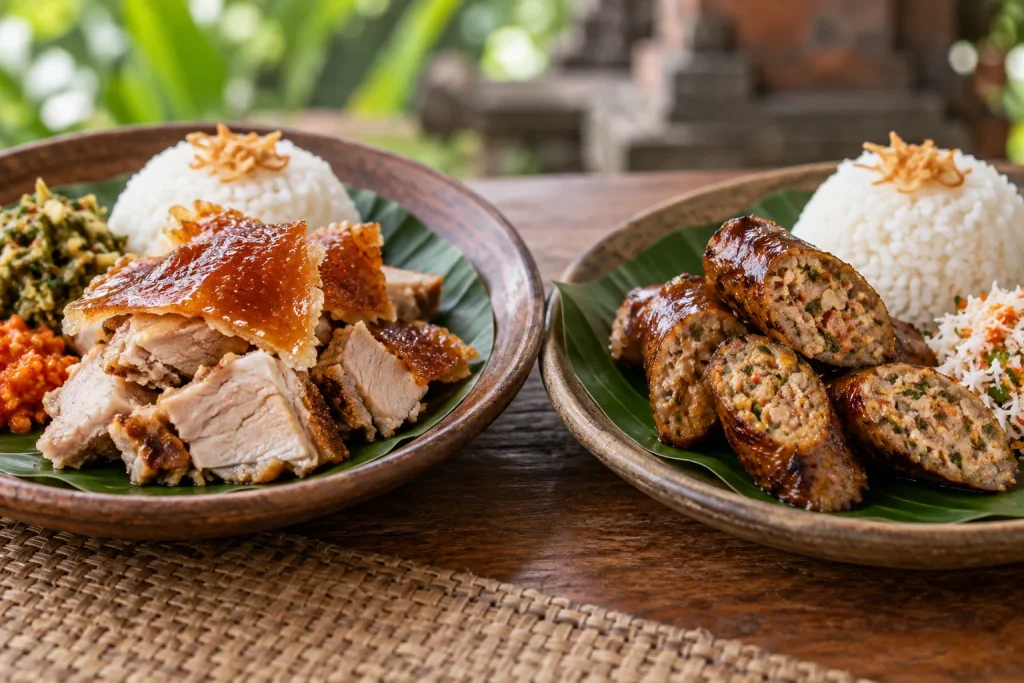
Babi guling vs urutan babi is a comparison of two formats, not a contest over which one is better. One is cut from a whole roast; the other is seasoned pork held in a natural casing. Their shape, texture and cooking steps change what a diner notices first and how each dish fits on a plate.
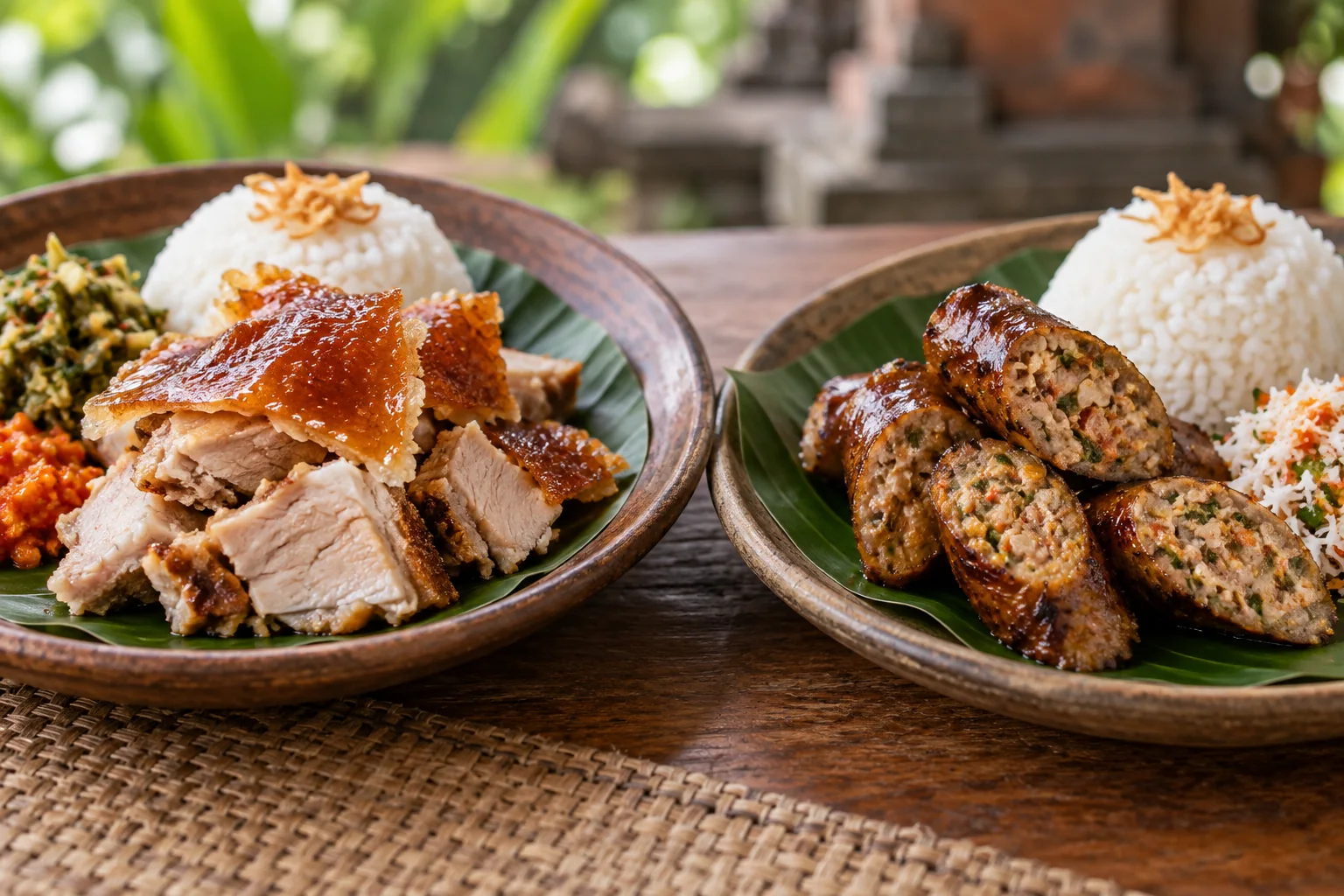
One turns over the fire; one is formed in a casing
balinese babi guling begins as a whole-animal roast seasoned and turned over heat. Urutan uses pork packed into a casing and, in the live Wayan’s Paon description, is fried or dried before serving. Those methods create different surfaces and different ways of portioning the meat.
The roast gives a cook several textures to carve, including skin and meat from different parts. A sausage presents a more even slice. Neither description tells you the exact spice blend, because that depends on the recipe. The useful distinction is the cooking form; ingredient details should come from the person or source describing that particular batch.
Compare the texture on the plate
Babi guling may offer crisp skin and tender meat, while urutan can be firm or juicy depending on whether it was fried or dried. A photo will not always show the difference in moisture. If you are choosing at a counter, ask how the sausage was finished and whether the roast has just been carved. Those details answer a more useful question than asking which dish is universally best.
The accompaniments also shift. Rice, sambal or vegetables may appear with either dish, but a side is not guaranteed by the name alone. Portion size, freshness and the cook’s seasoning affect the experience. Treat the two pages as separate owners and use this comparison only to decide which preparation sounds right for your meal.
Choose by the kind of meal you want
For a roast-focused meal, look at whether you want crisp skin and carved portions. For a compact, sliceable item, ask about urutan’s fried or dried finish. If texture matters, a small serving of each may make the contrast clearer than a written description. There is no need to rank them; they answer different preferences and can appear in different contexts.
Return to the broader balinese pork dish guide to compare both with grilled satay and ribs. For current menu or class availability, use the Cooking Class Ubud homepage and confirm what is planned for your date. The pages for balinese babi guling and urutan babi bali keep the individual dish details in one place.
Keep cultural and menu claims specific
Roast pork has ceremonial histories as well as present-day commercial servings. Urutan has its own preparation and may be made or stored differently by different cooks. Avoid turning those facts into a blanket claim about every Balinese household or every seller. A careful comparison names the source and setting whenever it talks about an occasion or technique.
This page is a guide to deciding between the two preparations. It does not promise that either appears in a particular class or restaurant on a particular day. Ask about the current menu and recipe if you need exact ingredients, serving sizes or availability before ordering.