
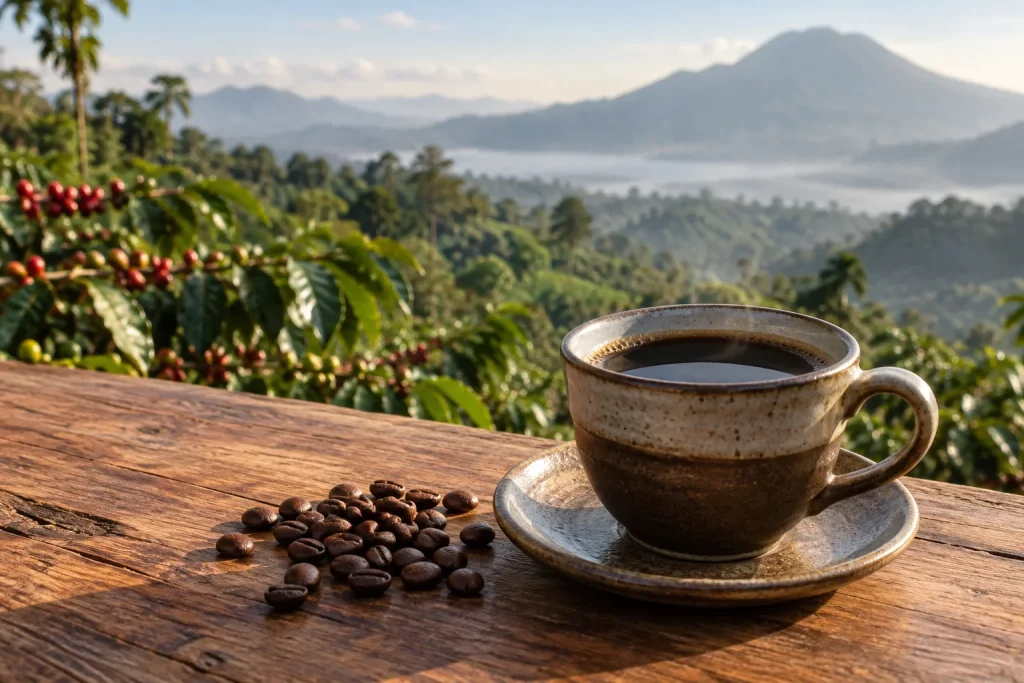
Bali coffee is not one flavour, one farm or one way of drinking it. A cup in Ubud might come from the island’s highlands, arrive as a careful pour-over, or sit beside a simple local snack. The useful questions change with the setting: where were the beans grown, how were they processed, and what does the person serving them actually know about the lot? When examining bali coffee in the context of everyday kitchen work and guest planning in Gianyar and Ubud, separating specific ingredient names, preparation timing, and household customs prevents common misunderstandings before you shop or cook.
Start with origin, not a promise about taste
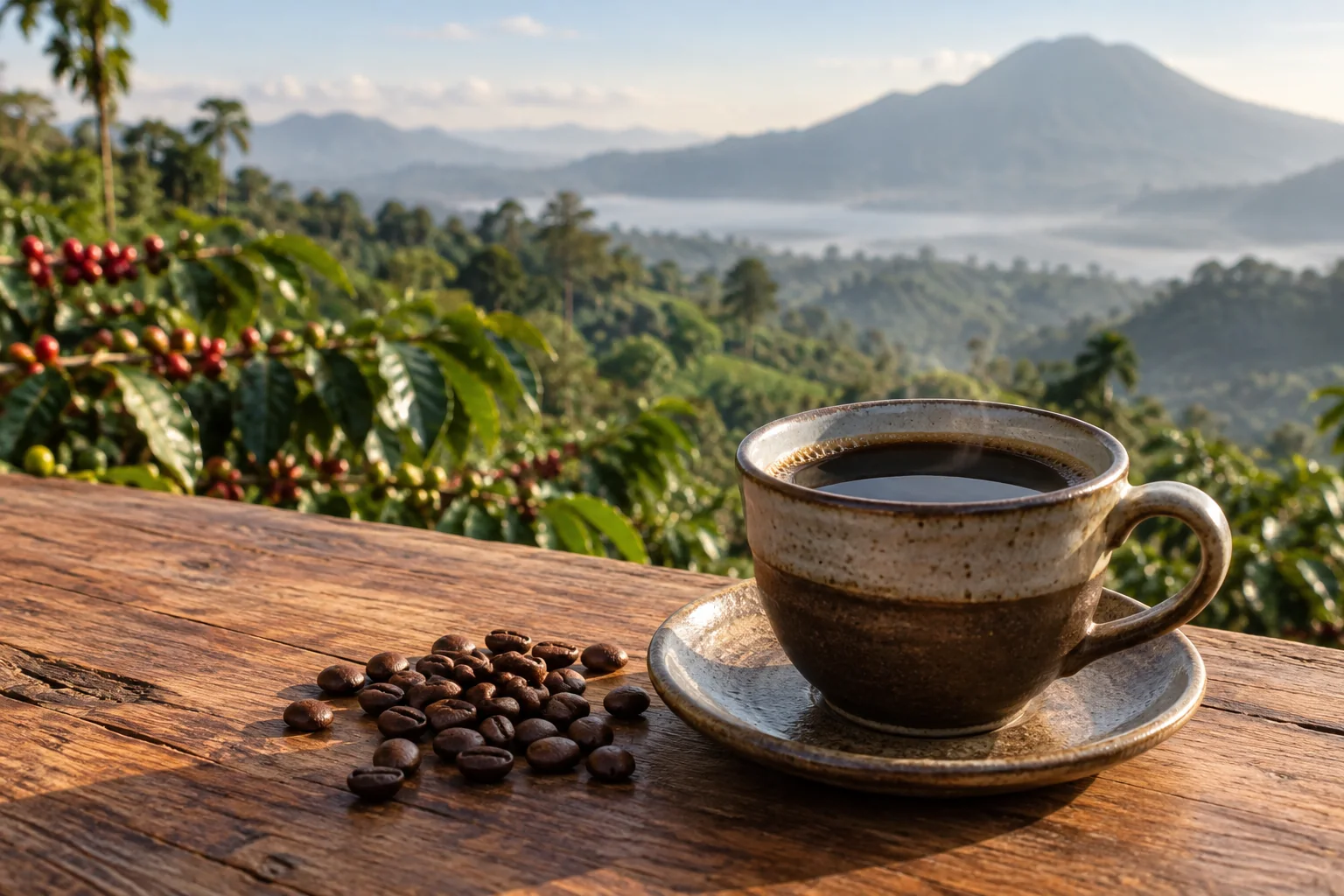
Kintamani is the island’s best-known Arabica origin and has a registered geographical indication. That name connects the coffee to a defined growing area and production rules; it does not promise that every bag tastes identical. Harvest, processing, storage and roast all change what reaches the cup. Citrus or fruit notes may appear in a tasting description, but they are clues to a particular coffee, not a guarantee printed by geography.
Keep the luwak conversation separate
A plantation visit can make the path from cherry to cup easier to picture. Look for a clear explanation of where the beans came from and which steps happened on site. A tasting flight can show how roast or brewing changes flavour, but a tasting alone cannot verify a farm, certification or animal-welfare claim.
Choose a cup or a bag with better questions
Kopi luwak is coffee made from beans that have passed through a civet’s digestive tract and are later collected, cleaned and roasted. In Bali it is often presented as a novelty tasting. The animal behind the story matters: a label that says wild-sourced is a claim to check, not independent proof of how the civet lived or how the beans were collected.
Make room for food as well as coffee
A separate Bali study of tourist plantations raised serious welfare concerns. That evidence is a reason to ask careful questions, not a basis for claiming that every producer has identical conditions. If a seller cannot explain sourcing plainly, skipping the tasting is a reasonable choice.
At a café, ask whether the menu names the origin, roast date or brewing method. When buying beans, look for a region, a recent roast date and a bag size you can finish while the coffee is fresh. Whole beans keep their aroma better than pre-ground coffee when stored sealed, cool and dry. A clear label is more useful than a long list of tasting adjectives.
The companion guides in this batch separate the practical questions: Kintamani’s origin label, what a plantation visit can teach, choosing beans, civet welfare, brewing, processing and price. Use the detail that matches the decision in front of you rather than treating every cup as a claim about all Bali coffee.
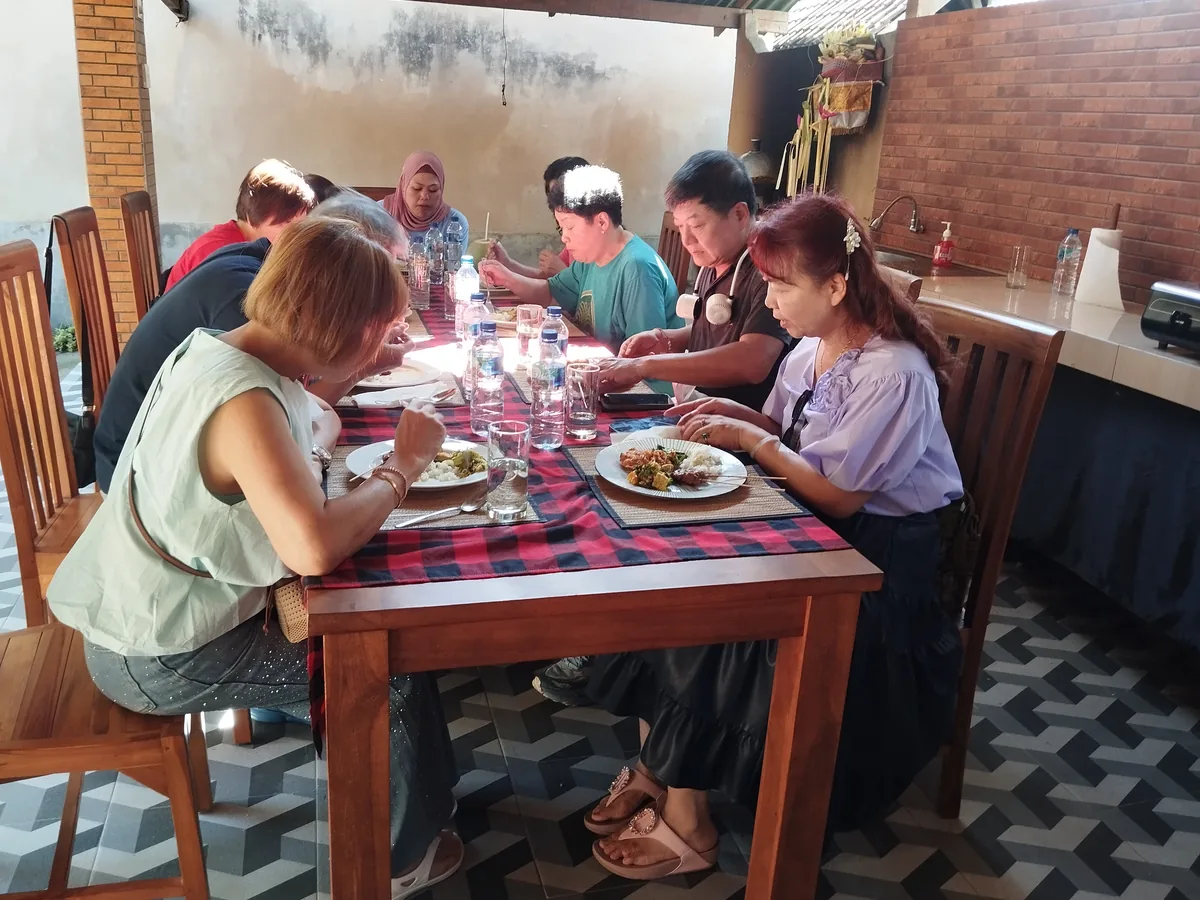
Coffee can be one stop in a day built around Ubud’s food, markets and cooking. A cooking session is a different activity from a plantation visit or café tasting, so check its own menu and format before planning around a particular drink. For that separate food experience, see Cooking Class Ubud.
The most satisfying cup is often the one you can place in context: a named origin, a preparation you understand and an honest answer about what remains unknown. That makes Bali coffee easier to enjoy without asking a single bean to stand for the whole island.
How Bali Coffee, from Kintamani Beans to a Cup in Ubud Connects Market Observation, Kitchen Technique, and Practical Planning in Ubud
For travellers and home cooks researching bali coffee, the biggest gap in general travel guides is that they treat Balinese food and daily life as a single uniform checklist rather than a living household system. In a traditional Balinese compound around Ubud, decisions about ingredients, prep sequence, and table pairing depend on whether a meal is prepared for a quiet family lunch, a morning market run, or a shared gathering. When you join an Ubud Cooking Class at Wayan’s Paon, every question around bali coffee is answered through direct hands-on observation rather than abstract theory.
A second practical principle when evaluating bali coffee is recognizing the boundary between what happens at the morning produce stalls, what happens at the stone mortar (ulekan), and how the final dishes are balanced on the plate. In our private sessions such as Private Paon Table, your group works only with your own booking party and selects up to five dishes from the 53-dish menu (plus the foundational Base Genep spice paste), allowing you to test how each choice affects flavour, texture, and timing.
Comparative Reference Matrix: 10 Core Dimensions of Bali Coffee
Before diving into each specialized subtopic in this family of guides, the table below summarizes how the ten focused questions around bali coffee differ in scope, practical kitchen impact, and what you should verify before buying ingredients or confirming a menu in Ubud:
| Focus Topic / Keyword Owner | Specific Question Addressed | Key Practical Distinction in Ubud |
|---|---|---|
| 1. kintamani coffee | Kintamani Coffee and the Highlands Behind Its Arabica | Kintamani coffee is tied to a highland growing area in Bali, not to a single roast or flavour profile. The origin is known for Arabica and h… |
| 2. coffee plantation tour bali | Coffee Plantation Tour Bali: What to Look For on a Visit | A coffee plantation tour in Bali can be more than a tasting stop if the visit explains how the coffee was grown and handled. If you are comp… |
| 3. coffee in ubud | Coffee in Ubud beyond the Plantation Stop | Coffee in Ubud can mean a quick espresso between walks, a slow brew with a snack, or a tasting that introduces beans from Bali and beyond. T… |
| 4. bali coffee beans | Bali Coffee Beans: How to Choose a Bag to Bring Home | A bag labelled “Bali coffee beans” can describe a specific highland origin or simply use the island as a broad selling point. Before buying,… |
| 5. luwak coffee bali | Luwak Coffee Bali: What Buyers Should Ask Before Tasting | Luwak coffee Bali is often introduced as a rare tasting, but the story behind the beans matters as much as the cup. Kopi luwak is made from … |
| 6. kopi luwak animal welfare bali | Kopi Luwak Animal Welfare Bali: What One Study Found | For travellers searching “kopi luwak animal welfare Bali,” the most useful starting point is evidence about how civets are kept, not a tasti… |
| 7. kintamani coffee geographical indication | Kintamani Coffee Geographical Indication: What the Label Means | The phrase “Kintamani coffee geographical indication” points to a label tied to origin, not a promise that every cup tastes the same. Indone… |
| 8. balinese coffee brewing method | Balinese Coffee Brewing Method: A Simple Cup, with a Caveat | A search for “Balinese coffee brewing method” can suggest there is one fixed recipe used across the island. There is not. Kopi tubruk is a f… |
| 9. bali coffee processing | Bali Coffee Processing, from Ripe Cherry to Roast | Bali coffee processing begins with a ripe cherry and ends well before a barista grinds the beans. The steps between those points influence t… |
| 10. bali coffee price | Bali Coffee Price: Why a Cup and a Bag Cost Differently | A Bali coffee price is not one number. A café cup includes preparation and service; a retail bag reflects its weight, roast, packaging and s… |
Deep-Dive Guide to the 10 Specialized Subtopics Within Bali Coffee
Each of the ten companion articles in this topic family isolates one specific decision or ingredient question related to bali coffee so that you never confuse a broad category label with a concrete culinary rule. Below is how each specialized guide fits into the wider picture:
1. Kintamani Coffee and the Highlands Behind Its Arabica
When narrowing your focus from bali coffee to the specific question of kintamani coffee, the primary distinction is context and practical application. Kintamani coffee is tied to a highland growing area in Bali, not to a single roast or flavour profile. The origin is known for Arabica and has a registered geographical indication, which gives buyers something more concrete to look for than a generic “Bali” label. When examining kintamani coffee in the context of everyday kitchen work and guest planning in Gianyar and Ubud, separating specific ingredient names, preparation timing, and household customs prevents common misunderstandings before you shop or cook. By keeping this specific scope distinct from neighbouring topics, you avoid applying a general rule where a precise ingredient check or timing adjustment is required.
In practice at the market or in the paon, The geographical-indication record connects Kopi Arabika Kintamani Bali with a defined production area and product specification. A FAO guide describes coffee from the area above 900 metres and outlines a fully washed process in its code of practice. Those details help explain what the origin label is intended to represent; they do not mean every café cup or souvenir bag has been independently verified. Whether you are comparing options before booking your private session or taking notes to cook at home after your trip, treating kintamani coffee as its own step ensures your preparation remains accurate and stress-free.
2. Coffee Plantation Tour Bali: What to Look For on a Visit
When narrowing your focus from bali coffee to the specific question of coffee plantation tour bali, the primary distinction is context and practical application. A coffee plantation tour in Bali can be more than a tasting stop if the visit explains how the coffee was grown and handled. If you are comparing options under the phrase “coffee plantation tour Bali,” focus on the evidence the visit offers. The best questions are practical: which origin is in the cup, what processing took place, and which parts of the visit are demonstrations rather than farm work happening that day? By keeping this specific scope distinct from neighbouring topics, you avoid applying a general rule where a precise ingredient check or timing adjustment is required.
In practice at the market or in the paon, A visitor may see coffee plants, drying equipment and a tasting table in one place, but that does not automatically mean the beans were grown and processed there. Ask whether the coffee being poured comes from the property, a named nearby area or another Indonesian origin. A straightforward answer helps you understand what the visit represents. Whether you are comparing options before booking your private session or taking notes to cook at home after your trip, treating coffee plantation tour bali as its own step ensures your preparation remains accurate and stress-free.
3. Coffee in Ubud beyond the Plantation Stop
When narrowing your focus from bali coffee to the specific question of coffee in ubud, the primary distinction is context and practical application. Coffee in Ubud can mean a quick espresso between walks, a slow brew with a snack, or a tasting that introduces beans from Bali and beyond. The useful choice is not always the café with the longest menu; it is the cup whose origin and preparation match what you want to try. By keeping this specific scope distinct from neighbouring topics, you avoid applying a general rule where a precise ingredient check or timing adjustment is required.
In practice at the market or in the paon, If you want to taste Bali-grown coffee, ask whether the menu names Kintamani or another local source. If you prefer a familiar drink, ask which espresso or milk options are available. A café may serve beans from several regions, and a Bali address does not mean every coffee on the menu was grown on the island. Whether you are comparing options before booking your private session or taking notes to cook at home after your trip, treating coffee in ubud as its own step ensures your preparation remains accurate and stress-free.
4. Bali Coffee Beans: How to Choose a Bag to Bring Home
When narrowing your focus from bali coffee to the specific question of bali coffee beans, the primary distinction is context and practical application. A bag labelled “Bali coffee beans” can describe a specific highland origin or simply use the island as a broad selling point. Before buying, look for the details that help you brew the coffee well after the trip: where it came from, when it was roasted, and whether it is whole or ground. By keeping this specific scope distinct from neighbouring topics, you avoid applying a general rule where a precise ingredient check or timing adjustment is required.
In practice at the market or in the paon, A useful label names a region or producer and gives a roast date. If it names Kintamani, check whether the bag explains the origin or geographical indication rather than relying only on a scenic picture. Processing words such as washed or natural describe different post-harvest choices; they are not a quality ranking by themselves. Whether you are comparing options before booking your private session or taking notes to cook at home after your trip, treating bali coffee beans as its own step ensures your preparation remains accurate and stress-free.
5. Luwak Coffee Bali: What Buyers Should Ask Before Tasting
When narrowing your focus from bali coffee to the specific question of luwak coffee bali, the primary distinction is context and practical application. Luwak coffee Bali is often introduced as a rare tasting, but the story behind the beans matters as much as the cup. Kopi luwak is made from coffee cherries eaten by civets; the beans are later collected, cleaned, dried and roasted. A tasting can explain the process, yet it cannot verify the source on its own. By keeping this specific scope distinct from neighbouring topics, you avoid applying a general rule where a precise ingredient check or timing adjustment is required.
In practice at the market or in the paon, The unusual processing method is why kopi luwak attracts attention. The civet eats ripe cherries and the beans pass through its digestive system before being collected. Producers then clean and process the beans for roasting. Claims that this creates a superior flavour are not a substitute for a fair comparison with other coffees. Whether you are comparing options before booking your private session or taking notes to cook at home after your trip, treating luwak coffee bali as its own step ensures your preparation remains accurate and stress-free.
6. Kopi Luwak Animal Welfare Bali: What One Study Found
When narrowing your focus from bali coffee to the specific question of kopi luwak animal welfare bali, the primary distinction is context and practical application. For travellers searching “kopi luwak animal welfare Bali,” the most useful starting point is evidence about how civets are kept, not a tasting note. A study by Lewis-Whelan and colleagues examined tourist coffee plantations in Bali and reported welfare problems among the animals they observed. By keeping this specific scope distinct from neighbouring topics, you avoid applying a general rule where a precise ingredient check or timing adjustment is required.
In practice at the market or in the paon, The researchers assessed 29 tourist plantations and reported that the welfare standards they observed did not meet Indonesian legal requirements. Their paper also described civets in plantation settings and markets. The findings are important because they challenge the idea that a tourism display automatically offers a harmless look at coffee production. Whether you are comparing options before booking your private session or taking notes to cook at home after your trip, treating kopi luwak animal welfare bali as its own step ensures your preparation remains accurate and stress-free.
7. Kintamani Coffee Geographical Indication: What the Label Means
When narrowing your focus from bali coffee to the specific question of kintamani coffee geographical indication, the primary distinction is context and practical application. The phrase “Kintamani coffee geographical indication” points to a label tied to origin, not a promise that every cup tastes the same. Indonesia’s official registry lists Kopi Arabika Kintamani Bali as a registered geographical indication. The designation helps distinguish a product associated with a defined place and specification. By keeping this specific scope distinct from neighbouring topics, you avoid applying a general rule where a precise ingredient check or timing adjustment is required.
In practice at the market or in the paon, A geographical indication connects a product’s name with a place and qualities or reputation associated with that place. For Kintamani Arabica, the origin record and code of practice set boundaries for how the product is described and produced. The label is useful when a buyer wants more than a generic “Bali” claim. Whether you are comparing options before booking your private session or taking notes to cook at home after your trip, treating kintamani coffee geographical indication as its own step ensures your preparation remains accurate and stress-free.
8. Balinese Coffee Brewing Method: A Simple Cup, with a Caveat
When narrowing your focus from bali coffee to the specific question of balinese coffee brewing method, the primary distinction is context and practical application. A search for “Balinese coffee brewing method” can suggest there is one fixed recipe used across the island. There is not. Kopi tubruk is a familiar Indonesian way to make coffee by adding hot water to grounds and letting them settle; it is not unique to Bali, and household habits vary. By keeping this specific scope distinct from neighbouring topics, you avoid applying a general rule where a precise ingredient check or timing adjustment is required.
In practice at the market or in the paon, Use freshly ground coffee in a heat-safe cup, pour in hot water, stir once and let the grounds settle before drinking. Start with a modest amount and adjust the strength to your taste on the next cup. The method needs no filter, which is part of its simplicity, but the sediment is meant to remain at the bottom rather than be swallowed with each sip. Whether you are comparing options before booking your private session or taking notes to cook at home after your trip, treating balinese coffee brewing method as its own step ensures your preparation remains accurate and stress-free.
9. Bali Coffee Processing, from Ripe Cherry to Roast
When narrowing your focus from bali coffee to the specific question of bali coffee processing, the primary distinction is context and practical application. Bali coffee processing begins with a ripe cherry and ends well before a barista grinds the beans. The steps between those points influence the coffee, but they vary by origin and producer. Kintamani’s geographical-indication specification describes a washed Arabica process; it is a useful example, not a template for every farm on the island. By keeping this specific scope distinct from neighbouring topics, you avoid applying a general rule where a precise ingredient check or timing adjustment is required.
In practice at the market or in the paon, Coffee cherries are picked when ripe, then sorted to remove fruit that is unripe, damaged or otherwise unsuitable. The Kintamani code of practice described in a FAO guide includes sorting red cherries and removing floating fruit before pulping. These steps help a producer begin with a more consistent lot. Whether you are comparing options before booking your private session or taking notes to cook at home after your trip, treating bali coffee processing as its own step ensures your preparation remains accurate and stress-free.
10. Bali Coffee Price: Why a Cup and a Bag Cost Differently
When narrowing your focus from bali coffee to the specific question of bali coffee price, the primary distinction is context and practical application. A Bali coffee price is not one number. A café cup includes preparation and service; a retail bag reflects its weight, roast, packaging and supply chain. Even two bags with the same island name can differ in origin and freshness, so compare what you are actually buying before deciding whether the cost makes sense. By keeping this specific scope distinct from neighbouring topics, you avoid applying a general rule where a precise ingredient check or timing adjustment is required.
In practice at the market or in the paon, A small espresso and a slow single-origin brew take different amounts of time and equipment to prepare. Milk, add-ons and the setting also affect a menu price. If the café names Kintamani or another origin, ask whether that coffee is used for the drink you ordered or only offered as a separate filter option. Whether you are comparing options before booking your private session or taking notes to cook at home after your trip, treating bali coffee price as its own step ensures your preparation remains accurate and stress-free.
How to Apply These Notes When Planning Your Private Cooking Day at Wayan’s Paon
Bringing all ten facets of bali coffee together reveals a consistent lesson about Balinese culinary culture: clarity comes from asking specific questions before the cooking begins. In a private household setting in Ubud, your host does not rely on factory-made pastes or rigid group schedules. Instead, fresh roots (galangal, turmeric, ginger, and aromatic kencur), shallots, garlic, lemongrass, salam leaves, and kaffir lime are proportioned for the exact five dishes your group chooses to cook.
If you have dietary requirements—such as vegetarian or vegan preparation without fermented shrimp paste (terasi), gluten-free substitutions using pure rice flour and palm sugar (Gula Aren), dairy-free coconut milk infusions, or nut-free spice pastes omitting candlenut (kemiri)—discussing them when you select your menu allows the kitchen to prepare dedicated mortars, cutting boards, and filtered drinking-water washing stations in advance.
Finally, use this pillar overview on bali coffee alongside the ten focused cluster guides linked above whenever you want to verify a local Balinese term, compare morning market timing against afternoon kitchen sessions, or adapt a traditional Ubud technique for your own stove at home.