
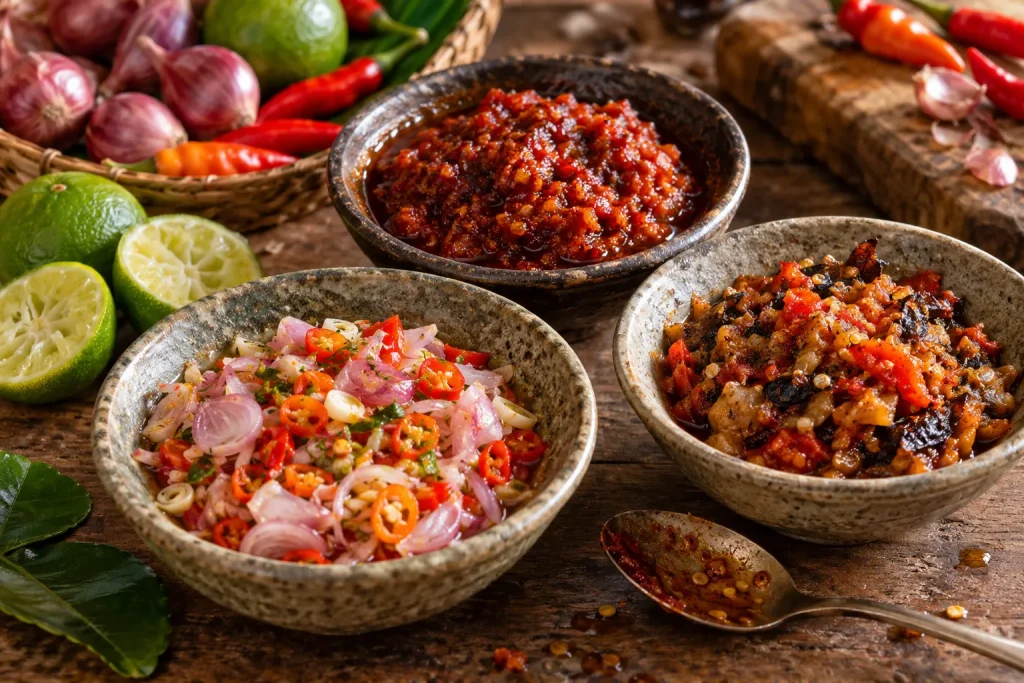
Three small bowls can all be called sambal and still do very different things on a plate. Sambal matah is known for freshly cut aromatics; sambal embe gets its character from fried shallots; sambal bongkot brings the distinctive fragrance of torch ginger. A kitchen may adjust ingredients or technique, so these names are useful starting points rather than promises of one fixed recipe. When examining balinese sambal varieties in the context of everyday kitchen work and guest planning in Gianyar and Ubud, separating specific ingredient names, preparation timing, and household customs prevents common misunderstandings before you shop or cook.
Start with texture, not a heat ranking
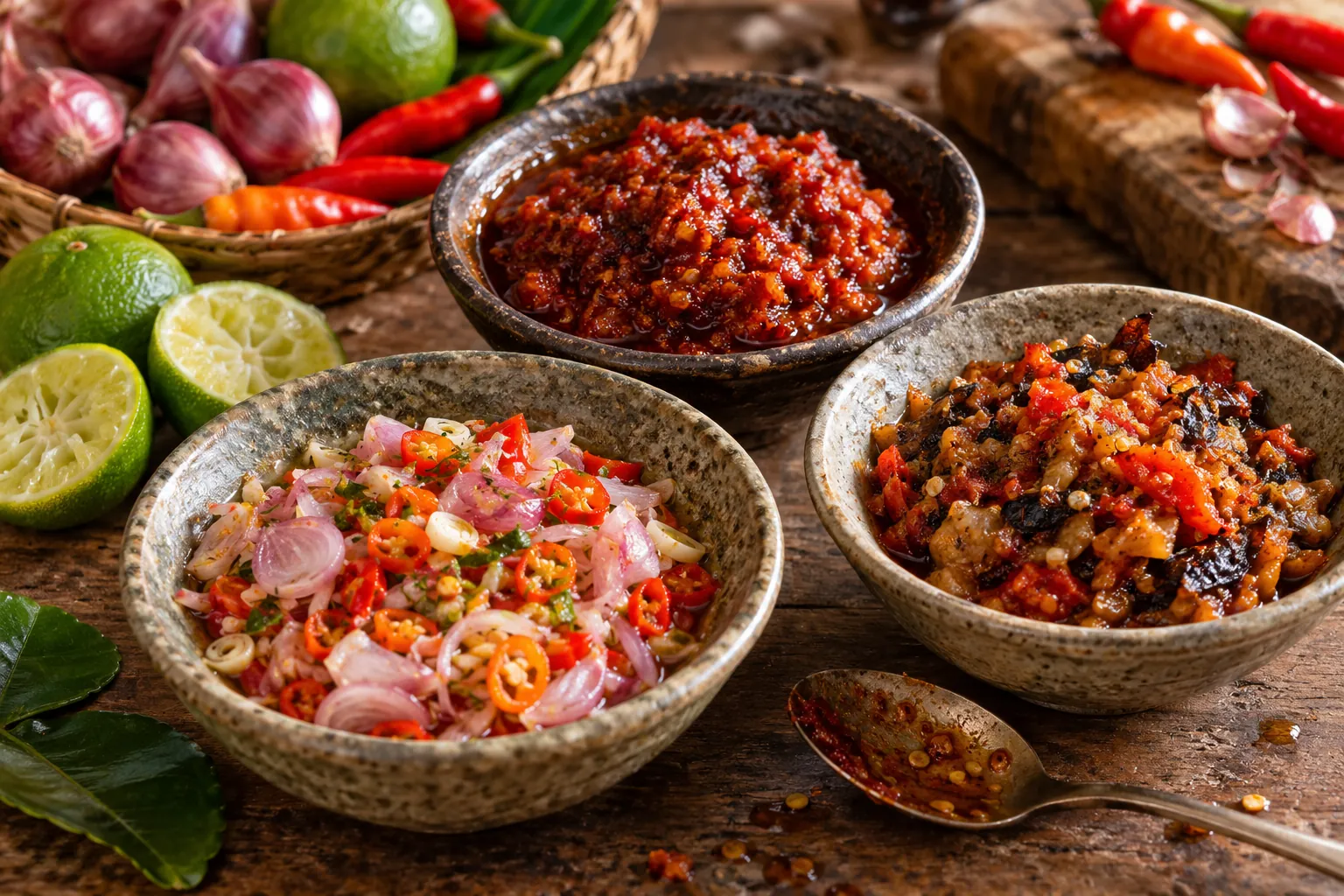
Matah has a crisp, juicy bite when the shallot, chilli and aromatics are cut evenly and dressed shortly before serving. Embe is more about the contrast between fragrant oil and browned shallot pieces. Bongkot is defined by the clean, citrus-like lift of young torch ginger; depending on the cook, it may be sliced and dressed or briefly warmed. Chilli can appear in all three, but heat alone will not tell you which bowl you are tasting.
Choose the bowl for the food beside it
For the dish introductions, read sambal matah bali, sambal embe / mbe bali and sambal bongkot bali. Those pages cover the named dishes; the focused articles below explain cutting, frying, pairing and serving choices.
Follow the question you actually have
Fresh matah can brighten grilled fish or a plain rice plate without adding another cooked component. Embe brings a savoury, crisp note that can sit comfortably beside rice, vegetables or a more substantial main. Bongkot is worth choosing when you want ginger-flower fragrance to stand out. If a plate already has a powerful sauce, serve sambal in a separate bowl so each person can decide how much to add.
These guides separate practical questions from the broad dish names: how to cut matah, how to protect fried shallots from scorching, what bongkot contributes, and how to serve the sambals together. Ingredients and methods vary among cooks. Ask about shrimp paste, fish sauce or other ingredients directly when they matter to your meal, rather than inferring them from a dish name. To learn more about Balinese ingredients with a local cook in Ubud, see the Cooking Class Ubud experience.
How Three Balinese Sambals and the Different Jobs They Do Connects Market Observation, Kitchen Technique, and Practical Planning in Ubud
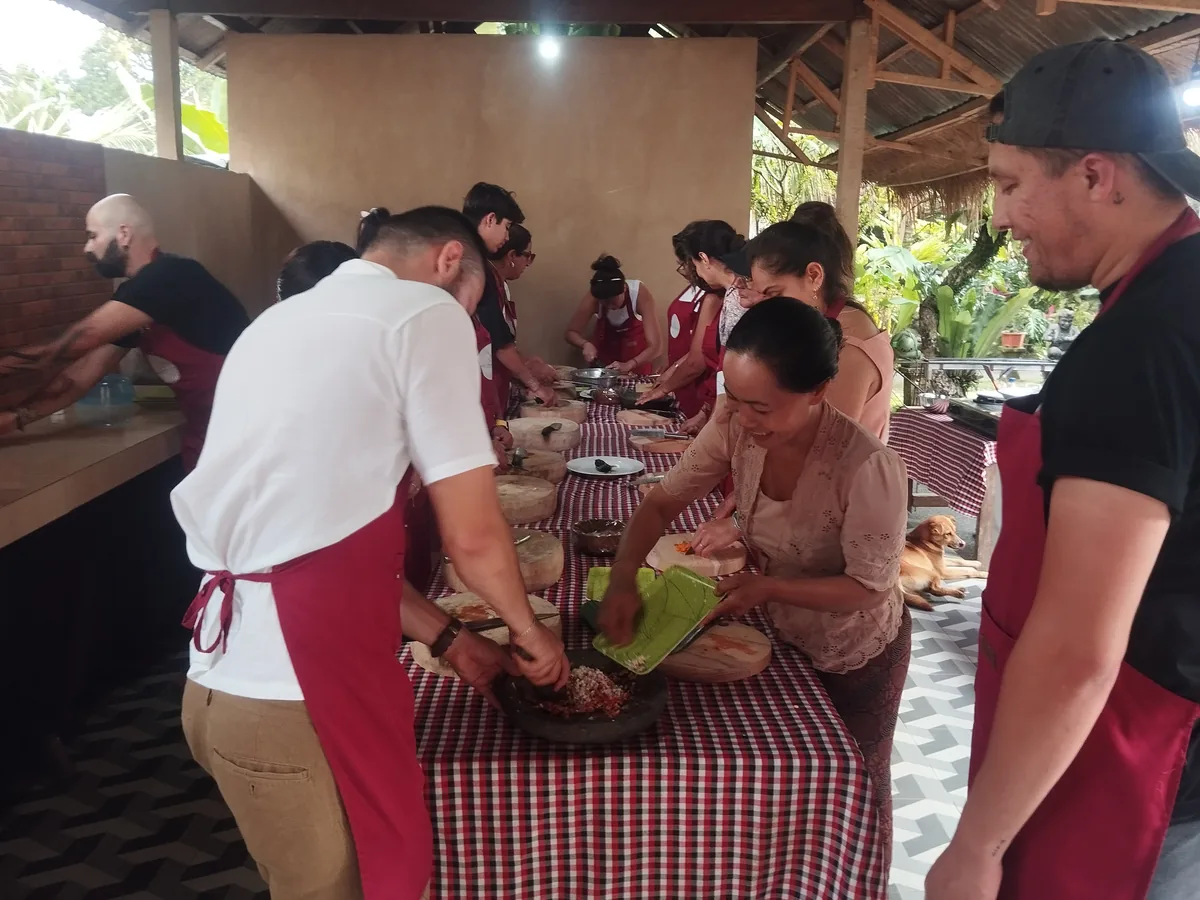
For travellers and home cooks researching balinese sambal varieties, the biggest gap in general travel guides is that they treat Balinese food and daily life as a single uniform checklist rather than a living household system. In a traditional Balinese compound around Ubud, decisions about ingredients, prep sequence, and table pairing depend on whether a meal is prepared for a quiet family lunch, a morning market run, or a shared gathering. When you join an Ubud Cooking Class at Wayan’s Paon, every question around balinese sambal varieties is answered through direct hands-on observation rather than abstract theory.
A second practical principle when evaluating balinese sambal varieties is recognizing the boundary between what happens at the morning produce stalls, what happens at the stone mortar (ulekan), and how the final dishes are balanced on the plate. In our private sessions such as Private Paon Table, your group works only with your own booking party and selects up to five dishes from the 53-dish menu (plus the foundational Base Genep spice paste), allowing you to test how each choice affects flavour, texture, and timing.
Comparative Reference Matrix: 10 Core Dimensions of Balinese Sambal Varieties
Before diving into each specialized subtopic in this family of guides, the table below summarizes how the ten focused questions around balinese sambal varieties differ in scope, practical kitchen impact, and what you should verify before buying ingredients or confirming a menu in Ubud:
| Focus Topic / Keyword Owner | Specific Question Addressed | Key Practical Distinction in Ubud |
|---|---|---|
| 1. sambal matah slicing method | Sambal Matah Is Fresh, Fragrant and Cut by Hand | The sambal matah slicing method matters because this is a sambal where the pieces stay visible. Uneven cuts create uneven bites: a large pie… |
| 2. sambal embe fried shallot method | Sambal Embe Starts with Fried Shallots | The sambal embe fried shallot method begins with patience at the stove. Thin shallot slices can go from pale and fragrant to bitter in a sho… |
| 3. sambal bongkot torch ginger | Sambal Bongkot and the Fragrance of Torch Ginger | Sambal bongkot torch ginger gets much of its identity from bongkot, the young inner stem or flower stalk of torch ginger. When sliced thinly… |
| 4. sambal matah vs sambal bongkot | Matah or Bongkot? Two Fresh Balinese Sambals Compared | When you compare sambal matah vs sambal bongkot, the useful question is not which one is more authentic. Both are Balinese sambals with reci… |
| 5. sambal matah chilli level | How Much Chilli Belongs in Sambal Matah? | There is no single correct sambal matah chilli level. Chillies vary in size and heat, and a recipe that tastes balanced with one batch may b… |
| 6. balinese sambal for grilled fish | Which Balinese Sambal Works with Grilled Fish? | A Balinese sambal for grilled fish should suit the seasoning on the fish rather than compete with it. A simply grilled piece can welcome a b… |
| 7. balinese sambal recipes at home | A Balinese Sambal Trio for a Home-Cooked Meal | Making a sambal trio at home is easier when each bowl stays small and has a clear purpose. Prepare a fresh-cut matah, a shallot-forward embe… |
| 8. tempe sambal matah | Tempeh with Sambal Matah: A Simple Rice Plate | Tempe sambal matah makes a satisfying rice plate because the two main textures pull in different directions. Tempeh can be browned until its… |
| 9. sambal matah in english | Sambal Matah in English: What the Name Means | If you are searching for sambal matah in English, there is no single translation that captures every version. Menus often keep the Balinese … |
| 10. how to serve balinese sambal | Serving Balinese Sambal without Letting It Take Over the Plate | Knowing how to serve Balinese sambal is mostly a matter of keeping choice on the table. A small bowl beside rice and the main dish lets each… |
Deep-Dive Guide to the 10 Specialized Subtopics Within Balinese Sambal Varieties
Each of the ten companion articles in this topic family isolates one specific decision or ingredient question related to balinese sambal varieties so that you never confuse a broad category label with a concrete culinary rule. Below is how each specialized guide fits into the wider picture:
1. Sambal Matah Is Fresh, Fragrant and Cut by Hand
When narrowing your focus from balinese sambal varieties to the specific question of sambal matah slicing method, the primary distinction is context and practical application. The sambal matah slicing method matters because this is a sambal where the pieces stay visible. Uneven cuts create uneven bites: a large piece of shallot can dominate, while a fine chilli cut spreads heat quickly. Aim for pieces that are similar enough to share a spoonful, not for a restaurant-perfect dice. A sharp knife and a stable board make the work cleaner and safer. By keeping this specific scope distinct from neighbouring topics, you avoid applying a general rule where a precise ingredient check or timing adjustment is required.
In practice at the market or in the paon, Choose fresh shallots, chillies and the aromatics your recipe calls for. Trim away dry ends and bruised outer layers. Wash ingredients that need washing, then dry them well; excess water can make a fresh sambal taste diluted. If your version uses lemongrass or citrus leaves, remove tough fibres and slice the tender parts very finely. Some kitchens add garlic, lime or shrimp paste, while others keep the bowl simpler. Whether you are comparing options before booking your private session or taking notes to cook at home after your trip, treating sambal matah slicing method as its own step ensures your preparation remains accurate and stress-free.
2. Sambal Embe Starts with Fried Shallots
When narrowing your focus from balinese sambal varieties to the specific question of sambal embe fried shallot method, the primary distinction is context and practical application. The sambal embe fried shallot method begins with patience at the stove. Thin shallot slices can go from pale and fragrant to bitter in a short moment, especially in a small pan where the oil stays hot. The goal is a golden, crisp shallot with aromatic oil, not a handful of dark fragments. Chilli, garlic and shrimp paste may be part of a cook’s version, but the shallots set the texture. By keeping this specific scope distinct from neighbouring topics, you avoid applying a general rule where a precise ingredient check or timing adjustment is required.
In practice at the market or in the paon, Peel the shallots and slice them into similar thicknesses so they brown at roughly the same rate. Separate pieces that cling together before they reach the oil. Use a pan with enough room for the slices to move; overcrowding can make them steam and soften before they colour. Add oil to a cool or gently warmed pan according to your recipe, then bring it up gradually rather than dropping the shallots into smoking oil. Whether you are comparing options before booking your private session or taking notes to cook at home after your trip, treating sambal embe fried shallot method as its own step ensures your preparation remains accurate and stress-free.
3. Sambal Bongkot and the Fragrance of Torch Ginger
When narrowing your focus from balinese sambal varieties to the specific question of sambal bongkot torch ginger, the primary distinction is context and practical application. Sambal bongkot torch ginger gets much of its identity from bongkot, the young inner stem or flower stalk of torch ginger. When sliced thinly, it brings a clean fragrance that can remind people of citrus and flowers without being a citrus fruit. The exact part used and the way it is prepared vary between recipes, so look for the ingredient itself rather than expecting one identical bowl everywhere. By keeping this specific scope distinct from neighbouring topics, you avoid applying a general rule where a precise ingredient check or timing adjustment is required.
In practice at the market or in the paon, Remove dry or tough outer layers from the torch ginger and inspect the centre. Use the tender section your recipe calls for, then slice it across into very fine pieces. Thin cuts make the texture easier to eat and help the aroma mingle with shallot, chilli and lime. If the piece is fibrous, trim away the toughest part instead of forcing it into the sambal. Keep the cut ingredient covered while you prepare the rest so it does not dry out. Whether you are comparing options before booking your private session or taking notes to cook at home after your trip, treating sambal bongkot torch ginger as its own step ensures your preparation remains accurate and stress-free.
4. Matah or Bongkot? Two Fresh Balinese Sambals Compared
When narrowing your focus from balinese sambal varieties to the specific question of sambal matah vs sambal bongkot, the primary distinction is context and practical application. When you compare sambal matah vs sambal bongkot, the useful question is not which one is more authentic. Both are Balinese sambals with recipes that can shift from kitchen to kitchen. Matah is recognised for a mix of finely cut fresh aromatics, while bongkot puts torch ginger at the centre. Their ingredients can overlap, but one bowl usually makes a different fragrance or texture more noticeable. By keeping this specific scope distinct from neighbouring topics, you avoid applying a general rule where a precise ingredient check or timing adjustment is required.
In practice at the market or in the paon, In matah, shallot and chilli often share the foreground with lemongrass, citrus leaves or lime. The cut pieces stay visible and give the sambal a crisp, juicy bite. In bongkot, thin slices of tender torch ginger contribute a floral, bright aroma. Shallot, chilli and citrus may also appear, yet the distinctive ginger-flower note is what to notice. A menu may keep the dish name in Balinese rather than describing every ingredient. Whether you are comparing options before booking your private session or taking notes to cook at home after your trip, treating sambal matah vs sambal bongkot as its own step ensures your preparation remains accurate and stress-free.
5. How Much Chilli Belongs in Sambal Matah?
When narrowing your focus from balinese sambal varieties to the specific question of sambal matah chilli level, the primary distinction is context and practical application. There is no single correct sambal matah chilli level. Chillies vary in size and heat, and a recipe that tastes balanced with one batch may become much hotter with another. The safest way to adjust a home bowl is to start with less chilli than you think you need, combine the other ingredients, then add more in small amounts after tasting. You can always increase the heat; removing it once mixed is difficult. By keeping this specific scope distinct from neighbouring topics, you avoid applying a general rule where a precise ingredient check or timing adjustment is required.
In practice at the market or in the paon, Thin rings spread heat through the sambal, while larger pieces give a more occasional burst. Removing some seeds and inner ribs may soften the result, but the chilli flesh still carries heat. If you are preparing food for different preferences, keep part of the chilli separate or serve extra on the side. Wear gloves if you are sensitive to chilli oils, and wash your hands and knife before touching your face or other foods. Whether you are comparing options before booking your private session or taking notes to cook at home after your trip, treating sambal matah chilli level as its own step ensures your preparation remains accurate and stress-free.
6. Which Balinese Sambal Works with Grilled Fish?
When narrowing your focus from balinese sambal varieties to the specific question of balinese sambal for grilled fish, the primary distinction is context and practical application. A Balinese sambal for grilled fish should suit the seasoning on the fish rather than compete with it. A simply grilled piece can welcome a bright, fresh sambal; a richer or more strongly seasoned fish may need only a small spoonful on the side. Matah, embe and bongkot all bring different textures, so the best match depends on the fish, the cooking method and how much sauce is already on the plate. By keeping this specific scope distinct from neighbouring topics, you avoid applying a general rule where a precise ingredient check or timing adjustment is required.
In practice at the market or in the paon, Finely cut shallot, chilli and aromatics can lift the smoky taste of grilled fish. The citrus and fresh ingredients provide a lively contrast, while a little oil helps the sambal coat a bite. Add it gradually, especially if the fish has already been brushed with a spicy paste. For a crisp piece of fish, keep the sambal beside it until serving rather than soaking the skin. Whether you are comparing options before booking your private session or taking notes to cook at home after your trip, treating balinese sambal for grilled fish as its own step ensures your preparation remains accurate and stress-free.
7. A Balinese Sambal Trio for a Home-Cooked Meal
When narrowing your focus from balinese sambal varieties to the specific question of balinese sambal recipes at home, the primary distinction is context and practical application. Making a sambal trio at home is easier when each bowl stays small and has a clear purpose. Prepare a fresh-cut matah, a shallot-forward embe and a fragrant bongkot, then offer all three beside a simple meal. This is a practical way to taste their differences, not a claim that every Balinese table serves the same set. If one ingredient is hard to find, make the bowls you can prepare well rather than substituting without checking the flavour. By keeping this specific scope distinct from neighbouring topics, you avoid applying a general rule where a precise ingredient check or timing adjustment is required.
In practice at the market or in the paon, Start by washing and drying the ingredients. Slice the tender torch ginger and aromatics for bongkot first, since the flower stalk may need trimming. Set the fresh matah ingredients aside and cut them closer to serving time so their edges stay lively. Fry shallot for embe next, allowing time for it to cool slightly before it meets other ingredients. Keep separate knives and bowls clean as you work, especially if the ingredients touch raw meat or fish elsewhere in the kitchen. Whether you are comparing options before booking your private session or taking notes to cook at home after your trip, treating balinese sambal recipes at home as its own step ensures your preparation remains accurate and stress-free.
8. Tempeh with Sambal Matah: A Simple Rice Plate
When narrowing your focus from balinese sambal varieties to the specific question of tempe sambal matah, the primary distinction is context and practical application. Tempe sambal matah makes a satisfying rice plate because the two main textures pull in different directions. Tempeh can be browned until its edges are savoury and firm, while sambal matah stays fresh, cut and aromatic. Keep the sambal off the hot pan until the last moment; cooking it with the tempeh can soften the shallot and change the bright finish that makes the pairing work. By keeping this specific scope distinct from neighbouring topics, you avoid applying a general rule where a precise ingredient check or timing adjustment is required.
In practice at the market or in the paon, Cut tempeh into slices or small cubes that will brown evenly. Pat away surface moisture if needed, season lightly and cook in a pan with enough room for the pieces to make contact with the surface. Turn them when the underside has colour. A crowded pan traps steam, so work in batches if necessary. Let excess oil drain on a clean plate, then taste before adding more salt or a sauce. Whether you are comparing options before booking your private session or taking notes to cook at home after your trip, treating tempe sambal matah as its own step ensures your preparation remains accurate and stress-free.
9. Sambal Matah in English: What the Name Means
When narrowing your focus from balinese sambal varieties to the specific question of sambal matah in english, the primary distinction is context and practical application. If you are searching for sambal matah in English, there is no single translation that captures every version. Menus often keep the Balinese dish name and add a short explanation such as “fresh Balinese sambal with sliced aromatics.” That description helps an English-speaking diner picture the texture without suggesting that every bowl uses an identical ingredient list or preparation. When examining sambal matah in english in the context of everyday kitchen work and guest planning in Gianyar and Ubud, separating specific ingredient names, preparation timing, and household customs prevents common misunderstandings before you shop or cook. By keeping this specific scope distinct from neighbouring topics, you avoid applying a general rule where a precise ingredient check or timing adjustment is required.
In practice at the market or in the paon, “Sambal” is widely used for a chilli-based condiment, while “matah” is commonly glossed as raw or fresh. Translating the full name simply as “raw chilli sauce” can be misleading: sambal matah is usually a mix of cut aromatics dressed with seasoning and oil, and some cooks use warm oil or briefly soften ingredients. “Fresh Balinese sambal” is easier to understand, but it is a description rather than a word-for-word translation. Whether you are comparing options before booking your private session or taking notes to cook at home after your trip, treating sambal matah in english as its own step ensures your preparation remains accurate and stress-free.
10. Serving Balinese Sambal without Letting It Take Over the Plate
When narrowing your focus from balinese sambal varieties to the specific question of how to serve balinese sambal, the primary distinction is context and practical application. Knowing how to serve Balinese sambal is mostly a matter of keeping choice on the table. A small bowl beside rice and the main dish lets each person decide how much heat, oil or crunch to add. That approach also protects a crisp garnish or a delicate piece of fish from being covered before anyone has tasted the meal. By keeping this specific scope distinct from neighbouring topics, you avoid applying a general rule where a precise ingredient check or timing adjustment is required.
In practice at the market or in the paon, Put out a modest amount of sambal with a clean spoon and offer more separately. If the sambal is already mixed into a dish, mention that before serving and check how spicy the current batch is. Heat varies with the chilli and recipe, so a familiar dish name does not guarantee a familiar level. Separate serving is especially useful for a shared meal where guests prefer different amounts. Whether you are comparing options before booking your private session or taking notes to cook at home after your trip, treating how to serve balinese sambal as its own step ensures your preparation remains accurate and stress-free.
How to Apply These Notes When Planning Your Private Cooking Day at Wayan’s Paon
Bringing all ten facets of balinese sambal varieties together reveals a consistent lesson about Balinese culinary culture: clarity comes from asking specific questions before the cooking begins. In a private household setting in Ubud, your host does not rely on factory-made pastes or rigid group schedules. Instead, fresh roots (galangal, turmeric, ginger, and aromatic kencur), shallots, garlic, lemongrass, salam leaves, and kaffir lime are proportioned for the exact five dishes your group chooses to cook.
If you have dietary requirements—such as vegetarian or vegan preparation without fermented shrimp paste (terasi), gluten-free substitutions using pure rice flour and palm sugar (Gula Aren), dairy-free coconut milk infusions, or nut-free spice pastes omitting candlenut (kemiri)—discussing them when you select your menu allows the kitchen to prepare dedicated mortars, cutting boards, and filtered drinking-water washing stations in advance.
Finally, use this pillar overview on balinese sambal varieties alongside the ten focused cluster guides linked above whenever you want to verify a local Balinese term, compare morning market timing against afternoon kitchen sessions, or adapt a traditional Ubud technique for your own stove at home.