
Guide
Tiuk and Blakas Have Different Jobs at the Chopping Board
Tiuk and blakas are useful names to learn at a Balinese chopping board. Tiuk refers to a knife; blakas commonly identifies a larger chopping…
Read guide →Explore Balinese dishes by ingredient, flavour and cooking method. Learn the difference between a leaf-wrapped dish, a grilled satay and a slow-cooked specialty before choosing your private class menu.
A PRIVATE GROUP, HANDS ON
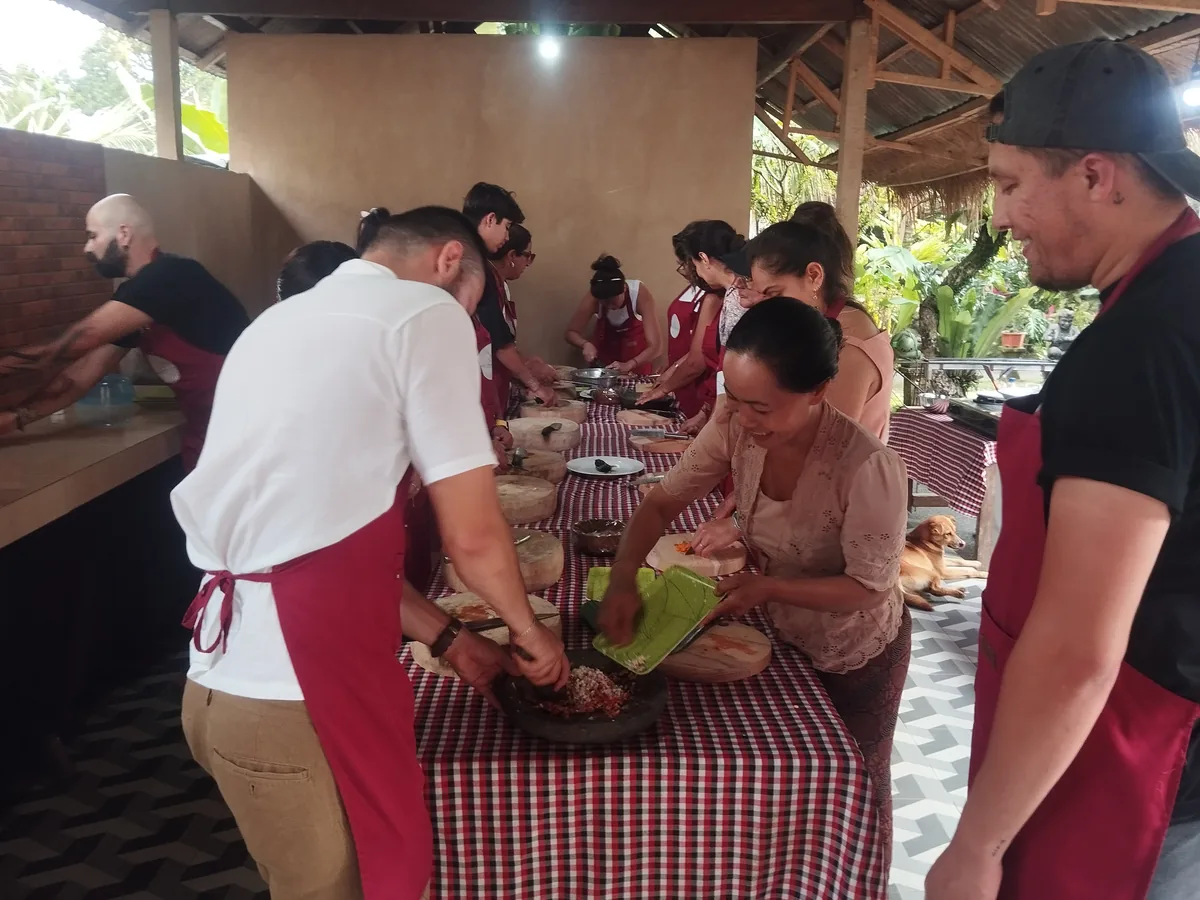
You cook with the people in your booking group. Unrelated tourists are not added to the class, and you can discuss your menu directly with Wayan before the day.
See private experiencesAT A GLANCE
Choose your experience, add up to five dishes, then send the full request to Wayan in one WhatsApp message.
Tiuk and blakas are useful names to learn at a Balinese chopping board. Tiuk refers to a knife; blakas commonly identifies a larger chopping…
Read guide →The kikihan coconut grater makes a familiar ingredient look different before it reaches the plate. A piece of coconut flesh becomes smaller shreds against…
Read guide →A wajan in Balinese cooking is a useful object to recognise because the curved pan can appear at several stages of a meal. You…
Read guide →Ingke plates combine a woven support with a liner used for serving food. Traditional examples use leaf ribs in the woven structure, with banana…
Read guide →Siut and sinduk nasi are names you may hear around rice preparation and serving in Bali. A siut is associated with working the rice;…
Read guide →The penglaklakan pan is the cooking mould associated with jaje laklak, the small Balinese cakes often served with grated coconut and a sweet sauce.…
Read guide →Every dish below opens its own food-and-culture guide. Add up to five dishes to your menu, then choose the private experience that suits your day. The builder stops at five so your request stays clear and realistic.
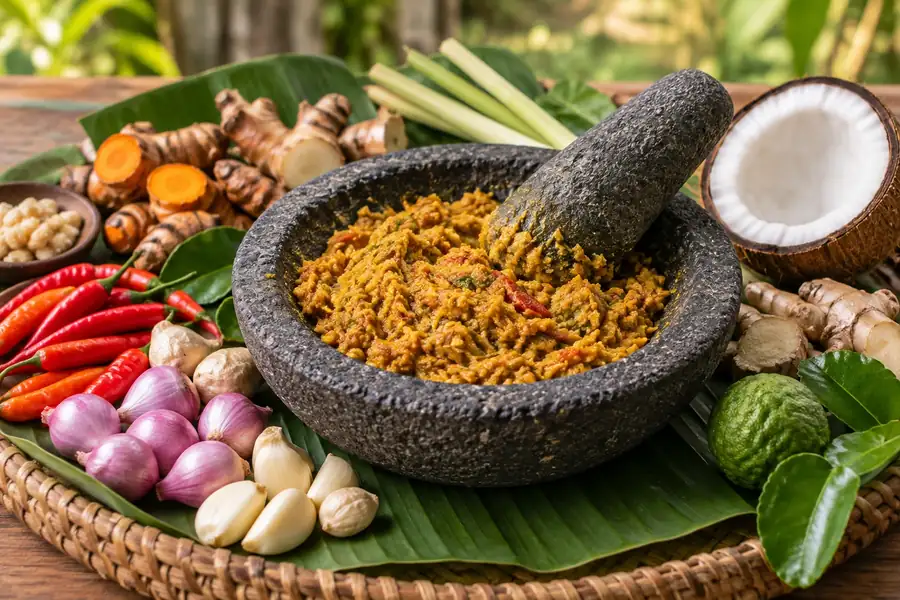
The aromatic spice foundation behind many Balinese dishes, ground from fresh roots, aromatics and spices.
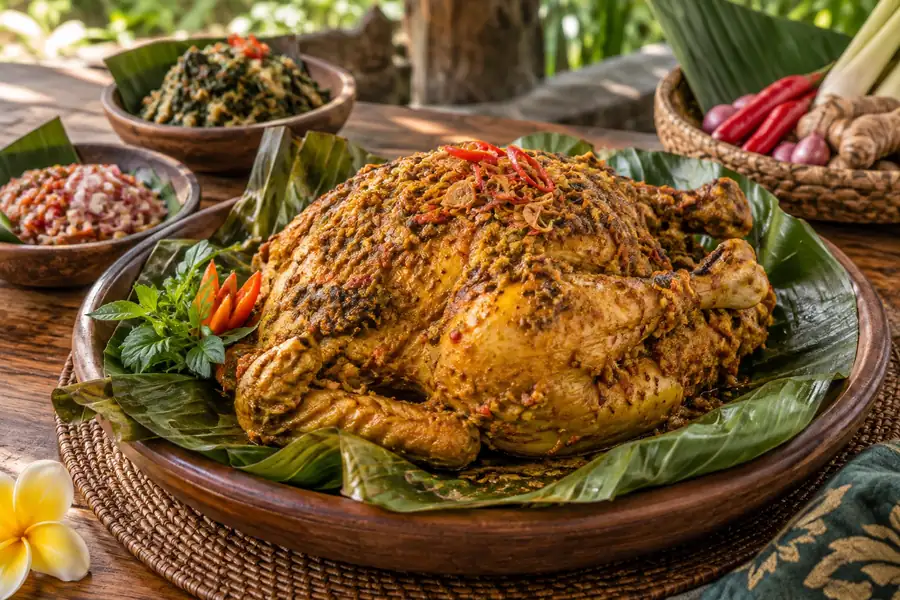
Whole chicken seasoned deeply with Balinese spices and slow-cooked until tender and intensely aromatic.
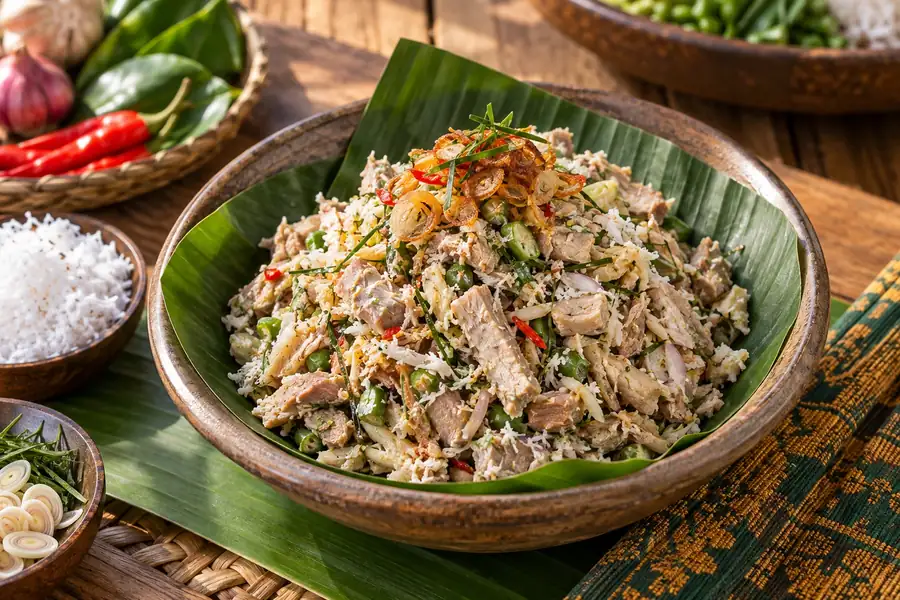
Cooked pork, vegetables, coconut and Balinese spices mixed as a fresh white lawar without raw blood.
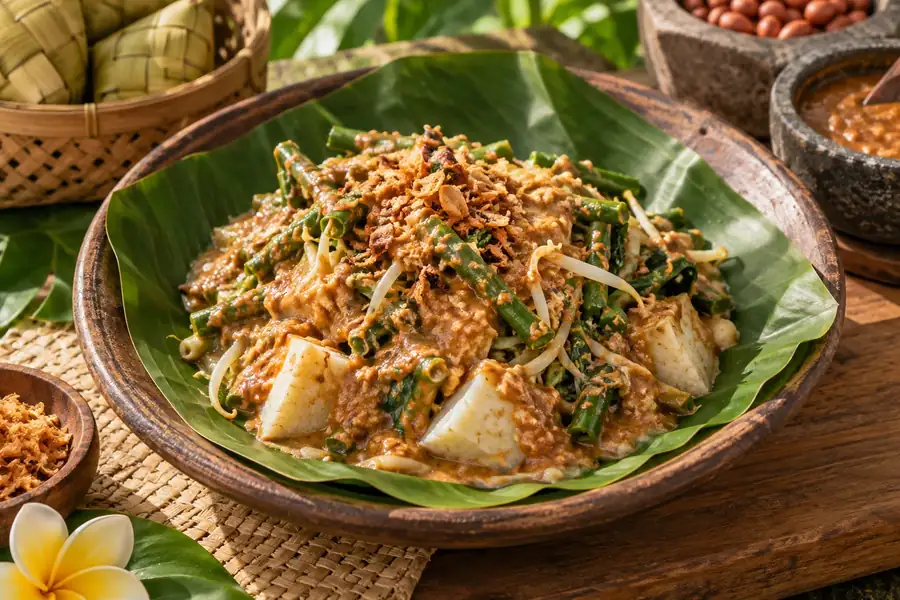
Rice cake and steamed vegetables mixed with peanut sauce ground fresh to your preferred chilli level.
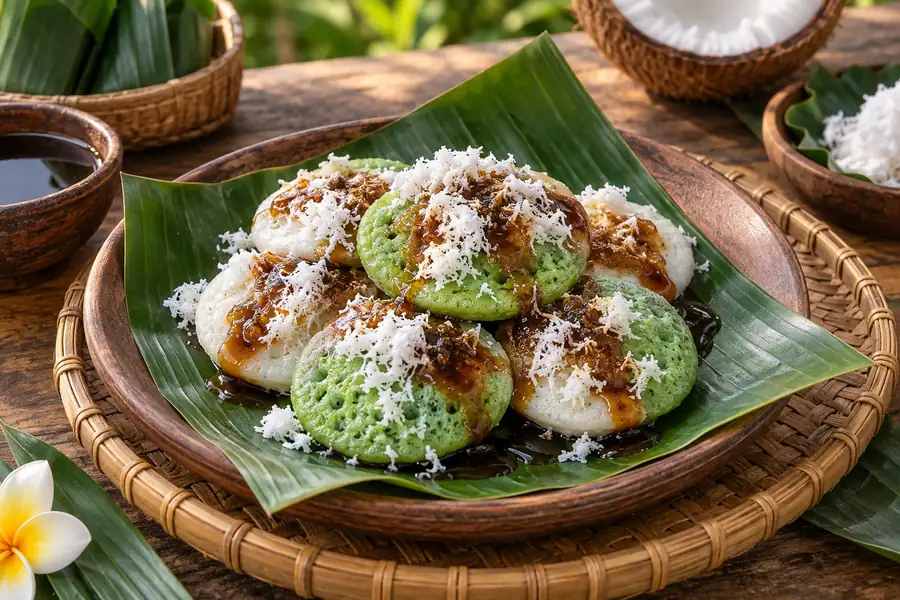
Small rice-flour pancakes served with grated coconut and palm-sugar syrup; soft, chewy and gently sweet.
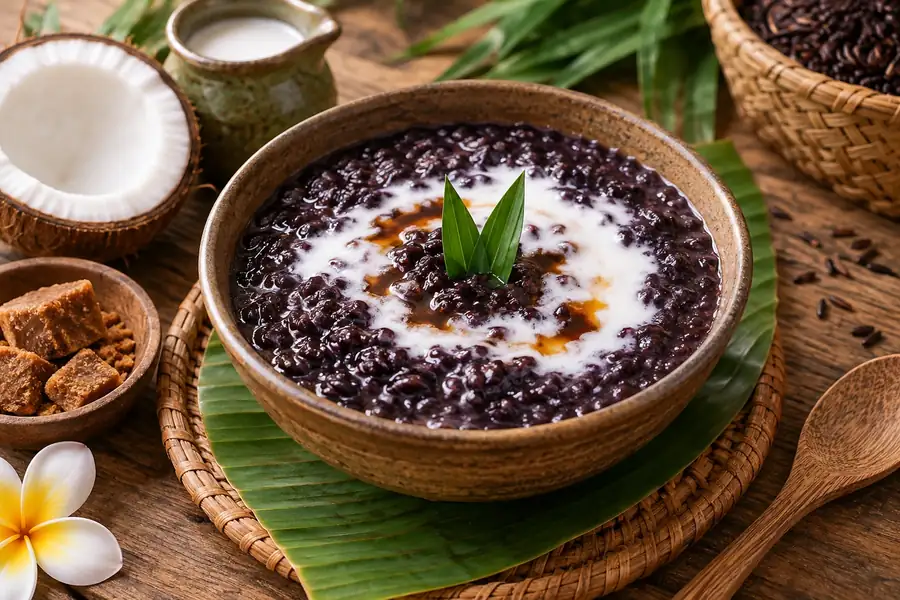
Black glutinous rice simmered until soft, sweetened with palm sugar and balanced with coconut milk.