
Guide
Jukut Kelentang Uses Moringa Pods Rather Than Leaves
Jukut kelentang uses the young pods of the moringa tree. It is a different ingredient from the leaves called kelor. The Buleleng monograph describes…
Read guide →Explore Balinese dishes by ingredient, flavour and cooking method. Learn the difference between a leaf-wrapped dish, a grilled satay and a slow-cooked specialty before choosing your private class menu.
A PRIVATE GROUP, HANDS ON
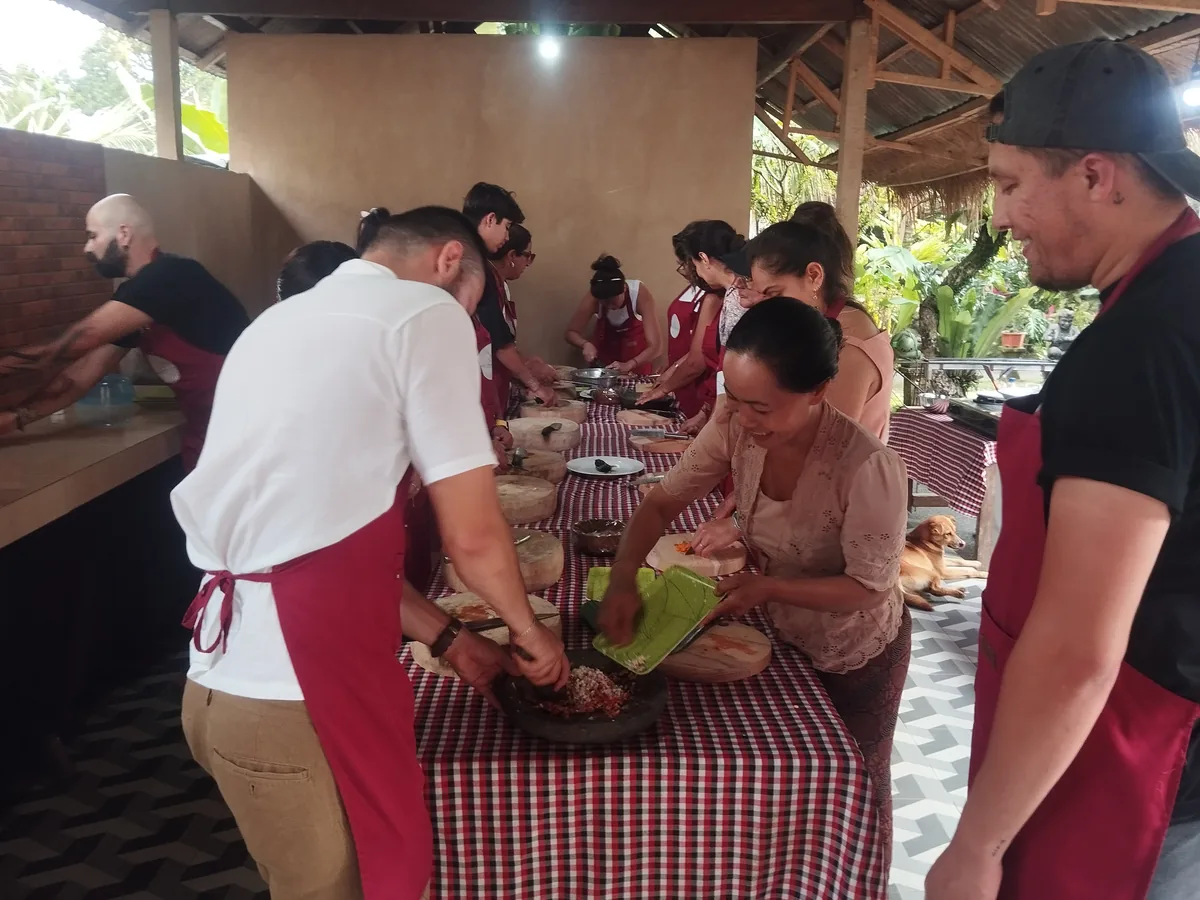
You cook with the people in your booking group. Unrelated tourists are not added to the class, and you can discuss your menu directly with Wayan before the day.
See private experiencesAT A GLANCE
Choose your experience, add up to five dishes, then send the full request to Wayan in one WhatsApp message.
Jukut kelentang uses the young pods of the moringa tree. It is a different ingredient from the leaves called kelor. The Buleleng monograph describes…
Read guide →Sambal batun kacang deserves a more precise description than “peanut sauce”. The Buleleng study’s version combines not-yet-dried long-bean seeds with fried dried anchovies, garlic…
Read guide →Sambal tuwung is an eggplant condiment, rather than simply another chilli paste. A Buleleng food study documents white eggplant combined with shallot, chillies, shrimp…
Read guide →Sudang lepet is a salted, dried fish preparation associated with Buleleng, particularly Sangsit. Thin fish pieces on a rice plate can be easy to…
Read guide →Entil is a rice preparation to recognise by both its grain and its wrapping. Bali’s provincial cultural inventory associates it with Pupuan and Penebel…
Read guide →Jukut buangit is a North Bali vegetable preparation associated with Sangsit in Buleleng. Its name is worth keeping if you enjoy learning about dishes…
Read guide →Every dish below opens its own food-and-culture guide. Add up to five dishes to your menu, then choose the private experience that suits your day. The builder stops at five so your request stays clear and realistic.
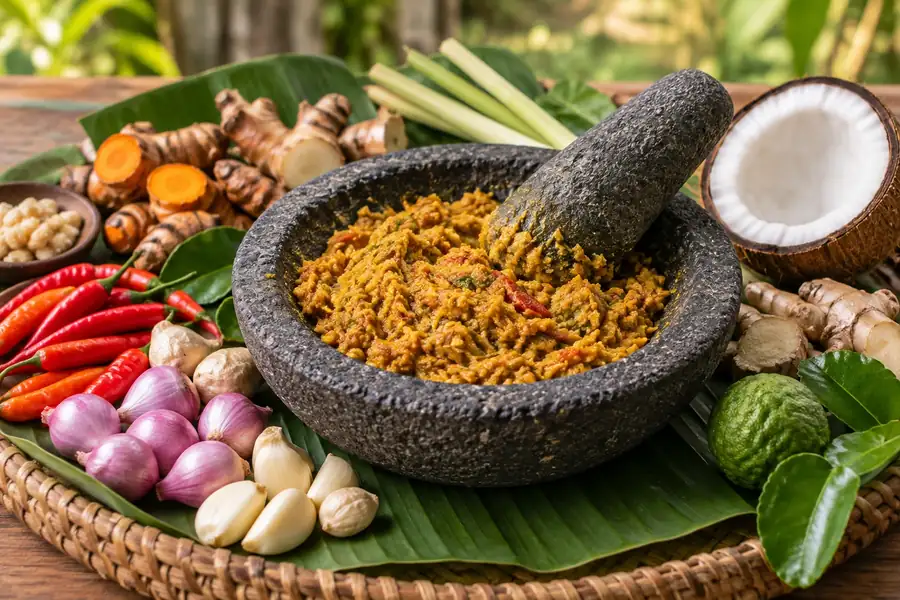
The aromatic spice foundation behind many Balinese dishes, ground from fresh roots, aromatics and spices.
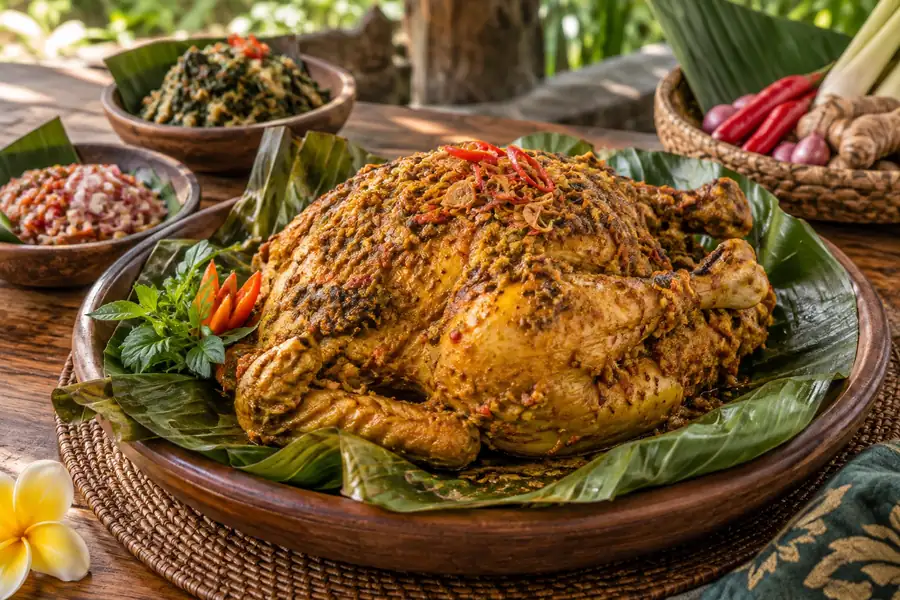
Whole chicken seasoned deeply with Balinese spices and slow-cooked until tender and intensely aromatic.
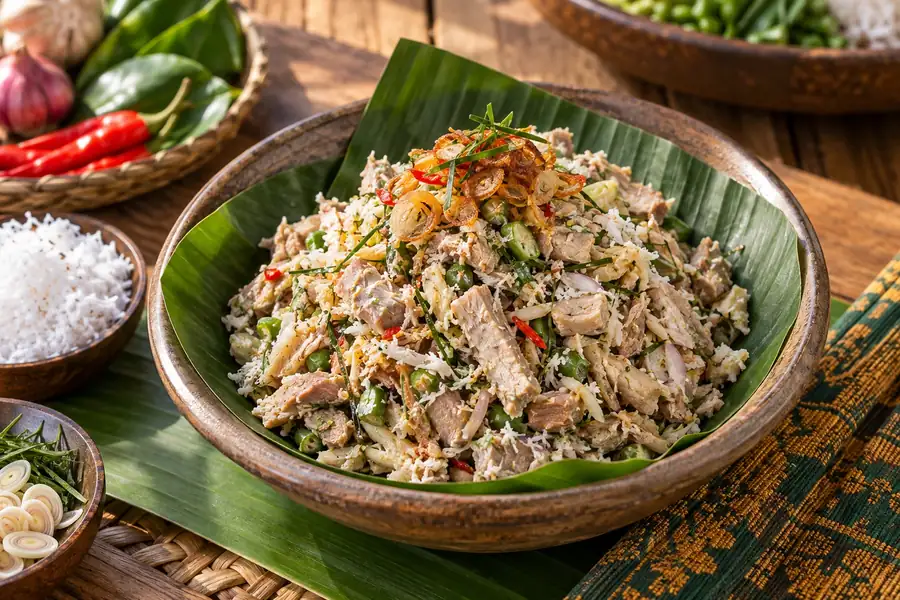
Cooked pork, vegetables, coconut and Balinese spices mixed as a fresh white lawar without raw blood.
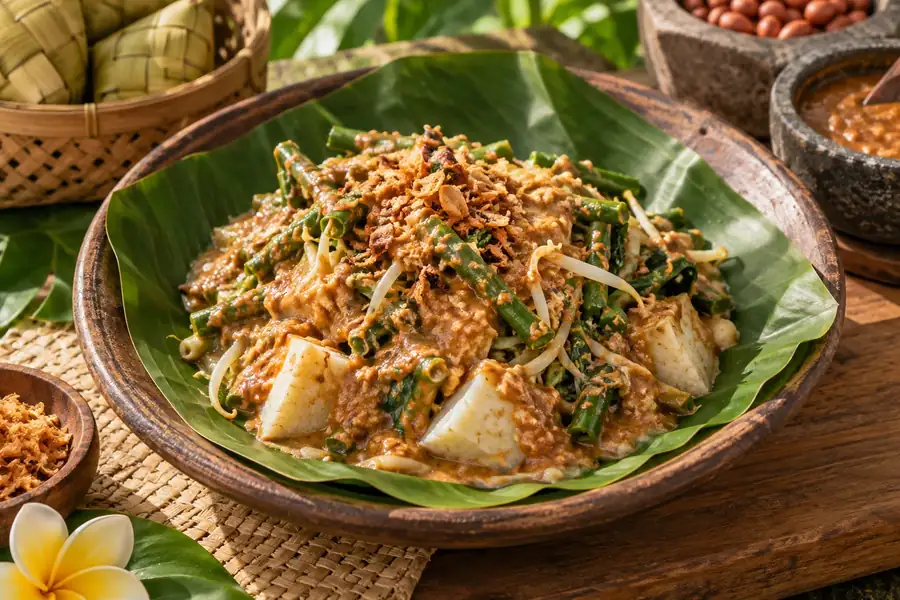
Rice cake and steamed vegetables mixed with peanut sauce ground fresh to your preferred chilli level.
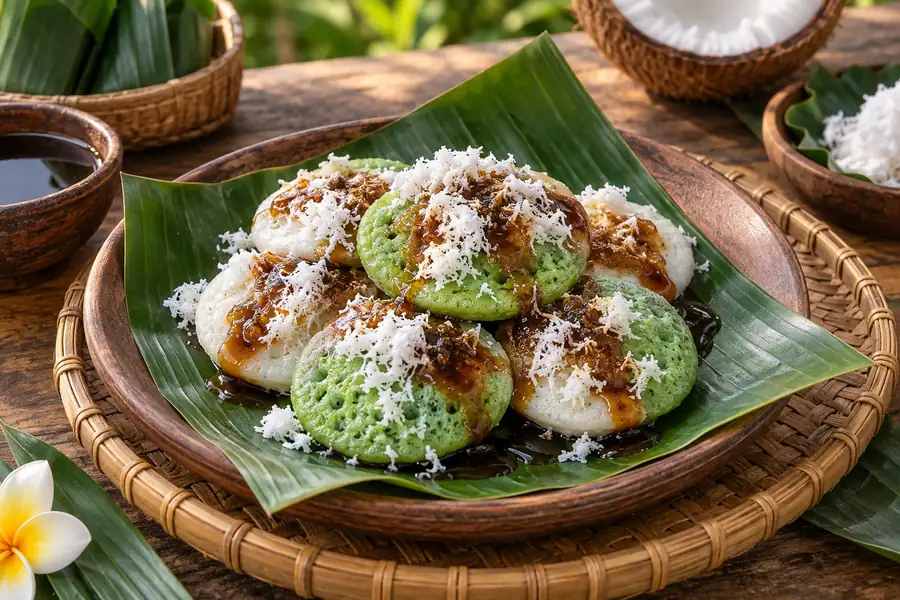
Small rice-flour pancakes served with grated coconut and palm-sugar syrup; soft, chewy and gently sweet.
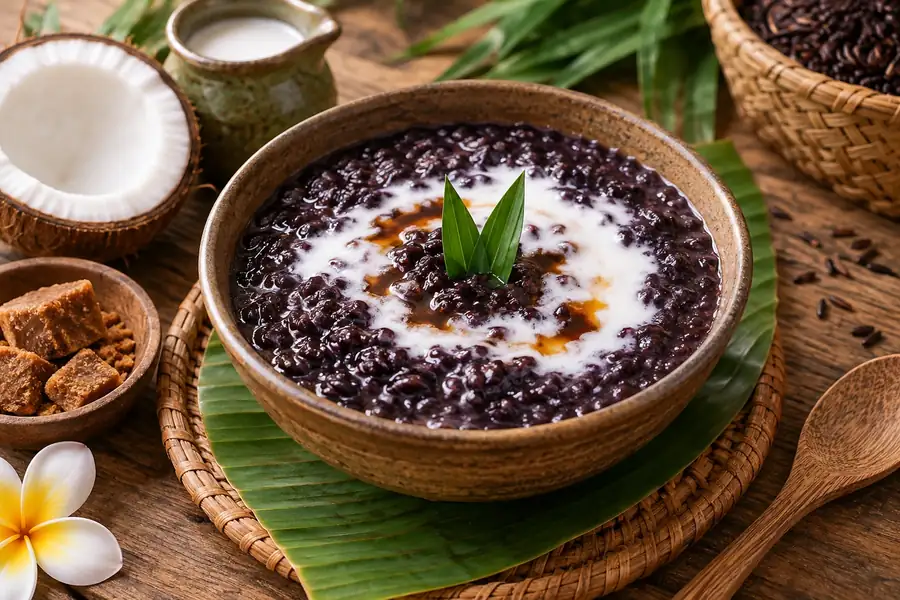
Black glutinous rice simmered until soft, sweetened with palm sugar and balanced with coconut milk.