
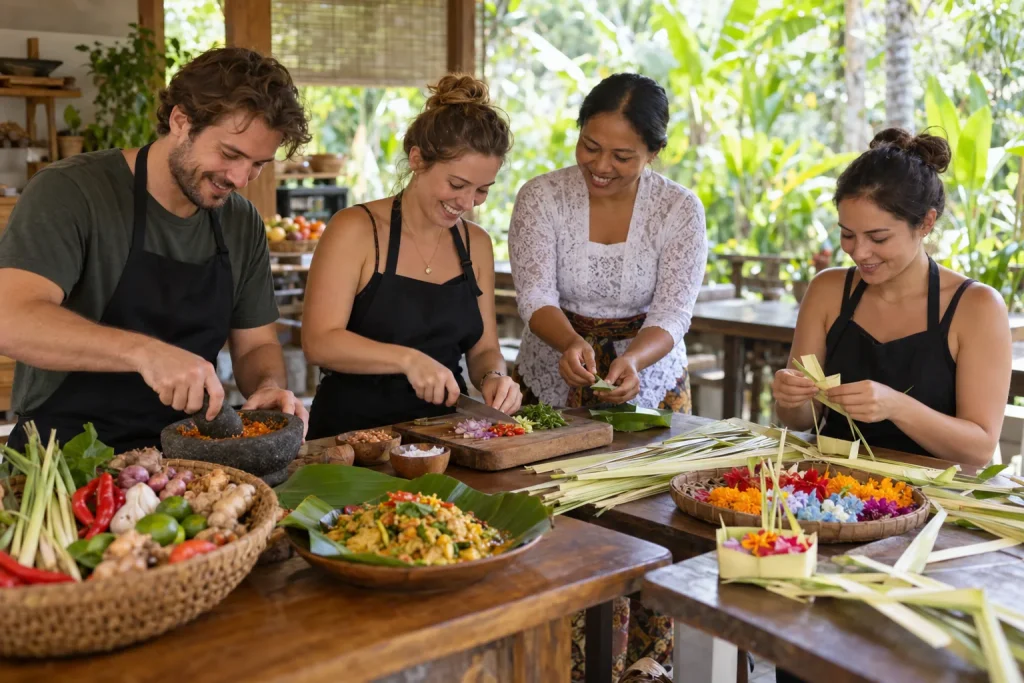
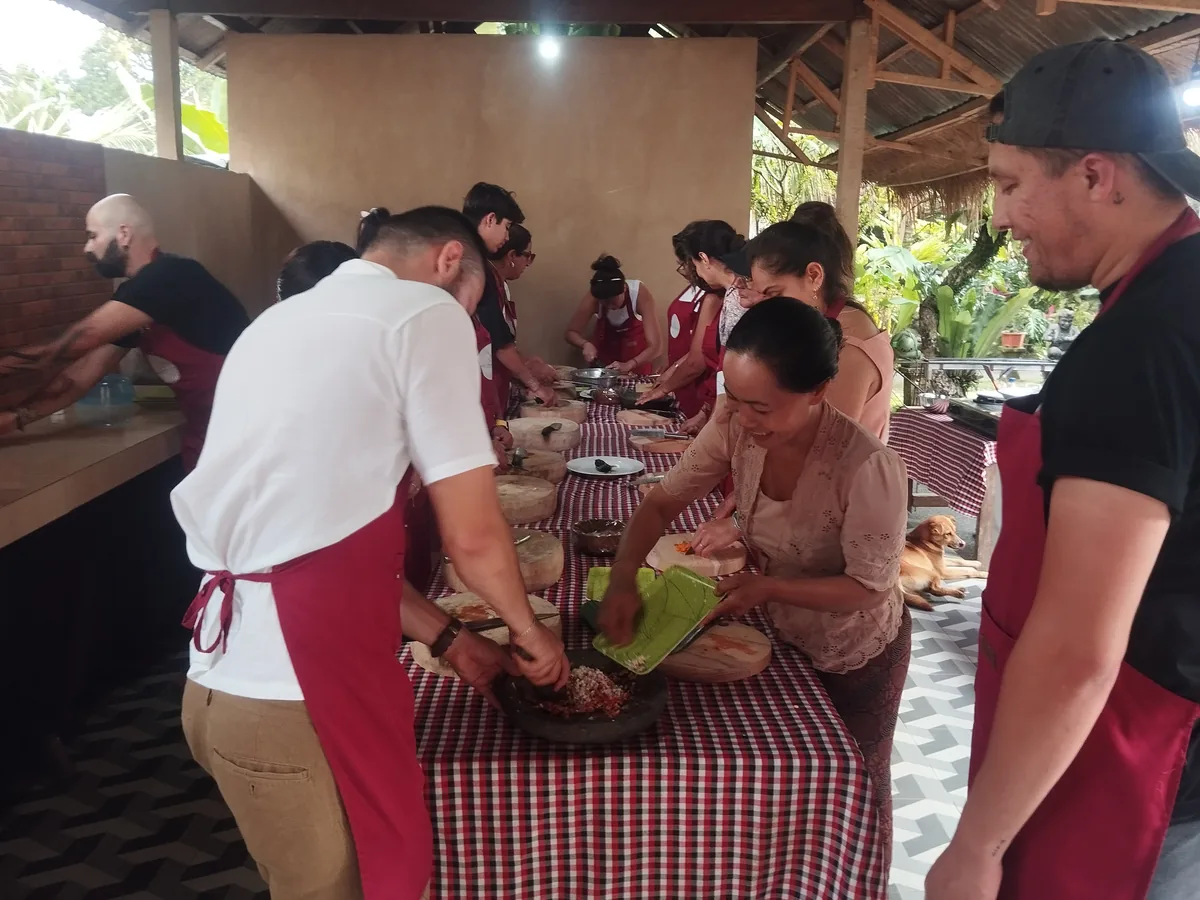
A cooking class that also introduces canang sari making calls for clear expectations. This guide focuses on the private Ubud experience described on the service page: cooking is paired with a respectful offering-making activity, while the exact date, menu and practical details should be confirmed with the host. Start with the wider Cooking Class Ubud offer, then check the current balinese offering making and cooking class ubud details before choosing a date. When examining cooking and canang sari making in ubud in the context of everyday kitchen work and guest planning in Gianyar and Ubud, separating specific ingredient names, preparation timing, and household customs prevents common misunderstandings before you shop or cook.
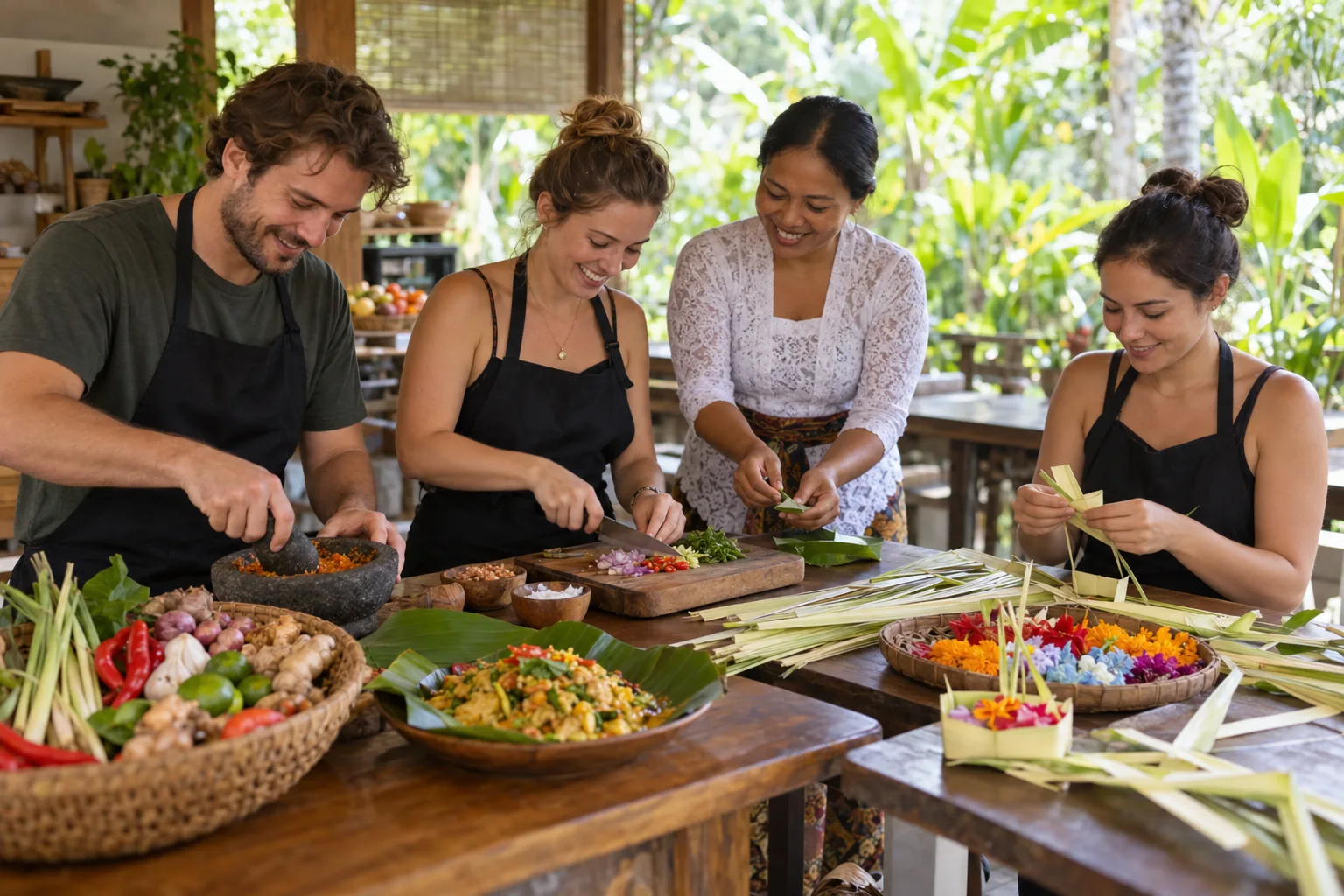
Two kinds of learning in one private booking
The current offer brings a hands-on cooking session together with a cultural craft activity. They are connected by the host and the booking, but they are not the same lesson: one centers on preparing food, while the other introduces canang sari making with care. Ask how the host plans to divide the time so your group knows what each part involves.
What the public page confirms
The service page describes a private group and a food menu selected from the host’s library. It does not publish a fixed timetable for the craft activity, so avoid assuming that every visit follows an identical sequence. The practical overview in canang sari making class in ubud explains what to clarify about the session itself.
Keep the cultural boundary clear
Guests can choose up to five dishes from a library of more than thirty options, with no menu-upgrade fee listed. The page also describes complimentary pickup and return in Ubud. Those details help with planning, but the actual dishes and pickup arrangement still need to be confirmed for your date.
Make the booking easy to confirm
The public description does not give a permanent list of ingredients for canang sari, a step-by-step craft syllabus, or rules about photography and clothing. Treat those as useful questions for the host rather than filling the gaps with assumptions. canang sari class materials gathers the details to ask about materials and photos.
Choose the experience for the right reason
Canang sari has meaning within Balinese Hindu daily practice. A visitor learning about its making should not assume that a class is a religious ceremony, an invitation to participate in worship, or a complete account of local custom. The live offer presents this as a respectful learning activity; canang sari class or ceremony explains the difference between a class and a ceremony.
Read the practical guides
A good question is specific and open: ask what the host is comfortable explaining, then follow their lead. The aim is to understand the experience being offered, not to ask the host to perform or represent every Balinese tradition.
Send the date, guest count, dietary needs and accommodation area in one message. Ask whether the menu you want is available, how the cooking and craft activities fit into the visit, and what time the host recommends for pickup. canang sari class booking questions offers a compact booking checklist; dietary requests for canang sari cooking class covers dietary details, and ubud cooking class pickup covers transport.
Morning or afternoon timing is arranged with the host, and outside-Ubud transport is quoted by location. Leave some space around the visit rather than scheduling another fixed activity immediately afterward. For a tailored outline, use the service page and wait for the host’s date-specific confirmation.
This format suits travelers who want to cook, ask questions and spend time with a host in a private setting. It can be a thoughtful introduction, but it should not be treated as a shortcut to mastering a cultural practice. how to make canang sari discusses what a class can teach, and private cooking and canang sari class describes the private format without guessing at a group’s suitability.
If your main goal is a recipe lesson, compare the menu and cooking time with other options on the homepage. If your interest is the craft, ask what is included before booking. A clear answer makes it easier to decide whether both parts match what your group wants from the day.
Use this guide to shape the questions, then confirm the current details directly on the service page.
Choose the question that matters to your group:
How Cooking and Canang Sari Making in Ubud: What to Expect Connects Market Observation, Kitchen Technique, and Practical Planning in Ubud
For travellers and home cooks researching cooking and canang sari making in ubud, the biggest gap in general travel guides is that they treat Balinese food and daily life as a single uniform checklist rather than a living household system. In a traditional Balinese compound around Ubud, decisions about ingredients, prep sequence, and table pairing depend on whether a meal is prepared for a quiet family lunch, a morning market run, or a shared gathering. When you join an Ubud Cooking Class at Wayan’s Paon, every question around cooking and canang sari making in ubud is answered through direct hands-on observation rather than abstract theory.
A second practical principle when evaluating cooking and canang sari making in ubud is recognizing the boundary between what happens at the morning produce stalls, what happens at the stone mortar (ulekan), and how the final dishes are balanced on the plate. In our private sessions such as Cooking + Offering Making, your group works only with your own booking party and selects up to five dishes from the 53-dish menu (plus the foundational Base Genep spice paste), allowing you to test how each choice affects flavour, texture, and timing.
Comparative Reference Matrix: 10 Core Dimensions of Cooking And Canang Sari Making In Ubud
Before diving into each specialized subtopic in this family of guides, the table below summarizes how the ten focused questions around cooking and canang sari making in ubud differ in scope, practical kitchen impact, and what you should verify before buying ingredients or confirming a menu in Ubud:
| Focus Topic / Keyword Owner | Specific Question Addressed | Key Practical Distinction in Ubud |
|---|---|---|
| 1. canang sari making class in ubud | Canang Sari Making Class in Ubud: How the Session Works | A canang sari making class in Ubud is easiest to understand through the actual offer rather than a generic workshop description. The live pa… |
| 2. canang sari and balinese cooking class | Canang Sari and Balinese Cooking: How the Activities Fit Together | Combining food and cultural learning in one booking can work well when each part has a clear purpose. The balinese offering making and cooki… |
| 3. canang sari class or ceremony | Canang Sari Class or Ceremony? Understanding the Difference | People searching for a canang sari class or ceremony may be looking for very different things. The balinese offering making and cooking clas… |
| 4. canang sari class booking questions | Canang Sari Class Booking: Six Questions to Ask the Host | A few clear questions can turn a general enquiry into a useful plan. The balinese offering making and cooking class ubud page describes priv… |
| 5. how to make canang sari | How to Make Canang Sari: What a Ubud Class Can Teach | “How to make canang sari” sounds like a request for one set of craft instructions, but the practice belongs to a living cultural and religio… |
| 6. private cooking and canang sari class | A Private Cooking and Canang Sari Class in Ubud: What the Format Includes | The private format matters because the cooking and offering-making activities are arranged for one booking group. The balinese offering maki… |
| 7. dietary requests for canang sari cooking class | Dietary Requests for a Canang Sari Cooking Class: What to Tell the Host | The cooking menu is one of the details to settle before booking the offering-making activity. The balinese offering making and cooking class… |
| 8. ubud cooking class pickup | Ubud Pickup for a Cooking and Offering-Making Class: What to Confirm | Transport is part of planning a cooking visit, especially when food and a cultural activity share the same booking. The balinese offering ma… |
| 9. canang sari class materials | Canang Sari Class Materials: What to Ask Before Booking | Travelers often want to know what they will handle during an offering-making activity. The balinese offering making and cooking class ubud p… |
| 10. plan a cooking class day in ubud | How to Plan a Cooking Class Day in Ubud around Canang Sari Making | A cooking visit with a canang sari making activity needs a little room in the day’s schedule. The balinese offering making and cooking class… |
Deep-Dive Guide to the 10 Specialized Subtopics Within Cooking And Canang Sari Making In Ubud
Each of the ten companion articles in this topic family isolates one specific decision or ingredient question related to cooking and canang sari making in ubud so that you never confuse a broad category label with a concrete culinary rule. Below is how each specialized guide fits into the wider picture:
1. Canang Sari Making Class in Ubud: How the Session Works
When narrowing your focus from cooking and canang sari making in ubud to the specific question of canang sari making class in ubud, the primary distinction is context and practical application. A canang sari making class in Ubud is easiest to understand through the actual offer rather than a generic workshop description. The live page pairs private Balinese cooking with a respectful offering-making activity. Start with balinese offering making and cooking class ubud for current details and browse the wider Ubud Cooking Class choices if you are still comparing formats. By keeping this specific scope distinct from neighbouring topics, you avoid applying a general rule where a precise ingredient check or timing adjustment is required.
In practice at the market or in the paon, The public page confirms that cooking and offering making are both part of the experience, but it does not publish a minute-by-minute lesson plan. The host can explain how the activities fit your booking, which part begins first and how much time to leave for each. That answer is more reliable than a schedule copied from another venue. Whether you are comparing options before booking your private session or taking notes to cook at home after your trip, treating canang sari making class in ubud as its own step ensures your preparation remains accurate and stress-free.
2. Canang Sari and Balinese Cooking: How the Activities Fit Together
When narrowing your focus from cooking and canang sari making in ubud to the specific question of canang sari and balinese cooking class, the primary distinction is context and practical application. Combining food and cultural learning in one booking can work well when each part has a clear purpose. The balinese offering making and cooking class ubud page describes private cooking alongside a respectful canang sari making activity, while the homepage lists the broader cooking classes ubud range of cooking formats. The host can confirm how the two parts fit a particular date. By keeping this specific scope distinct from neighbouring topics, you avoid applying a general rule where a precise ingredient check or timing adjustment is required.
In practice at the market or in the paon, The cooking portion is built around dishes selected from the menu library. Guests may choose up to five from more than thirty options, with no menu-upgrade fee shown on the page. The offering-making activity adds a cultural craft element, but it is not presented as a cooking technique or as a ceremonial reenactment. Whether you are comparing options before booking your private session or taking notes to cook at home after your trip, treating canang sari and balinese cooking class as its own step ensures your preparation remains accurate and stress-free.
3. Canang Sari Class or Ceremony? Understanding the Difference
When narrowing your focus from cooking and canang sari making in ubud to the specific question of canang sari class or ceremony, the primary distinction is context and practical application. People searching for a canang sari class or ceremony may be looking for very different things. The balinese offering making and cooking class ubud page describes a private cooking booking with a respectful offering-making activity; it does not advertise attendance at a religious ceremony. Use the Cooking Class Ubud page for the current class choices and keep that distinction clear when you enquire. By keeping this specific scope distinct from neighbouring topics, you avoid applying a general rule where a precise ingredient check or timing adjustment is required.
In practice at the market or in the paon, Canang sari is associated with daily Balinese Hindu practice and has meaning beyond its visible materials. A visitor’s introduction to making one should not be presented as worship, a temple visit or a full account of religious practice. The class page itself frames this as respectful cultural learning rather than a ceremony. Whether you are comparing options before booking your private session or taking notes to cook at home after your trip, treating canang sari class or ceremony as its own step ensures your preparation remains accurate and stress-free.
4. Canang Sari Class Booking: Six Questions to Ask the Host
When narrowing your focus from cooking and canang sari making in ubud to the specific question of canang sari class booking questions, the primary distinction is context and practical application. A few clear questions can turn a general enquiry into a useful plan. The balinese offering making and cooking class ubud page describes private cooking with a respectful canang sari making activity, and the wider cooking classes ubud list helps compare class formats. Send the host the date and group details along with these questions. By keeping this specific scope distinct from neighbouring topics, you avoid applying a general rule where a precise ingredient check or timing adjustment is required.
In practice at the market or in the paon, The public page lets guests choose up to five dishes from a library of more than thirty, but the menu should be confirmed for the actual date. Name your preferred dishes and ask which can be prepared. If the group is flexible, say so; if one dish matters most, make that clear early. Whether you are comparing options before booking your private session or taking notes to cook at home after your trip, treating canang sari class booking questions as its own step ensures your preparation remains accurate and stress-free.
5. How to Make Canang Sari: What a Ubud Class Can Teach
When narrowing your focus from cooking and canang sari making in ubud to the specific question of how to make canang sari, the primary distinction is context and practical application. “How to make canang sari” sounds like a request for one set of craft instructions, but the practice belongs to a living cultural and religious context. This page answers from the perspective of a class: the balinese offering making and cooking class ubud offer describes a respectful making activity alongside private cooking. Compare current Ubud Cooking Class options if you are deciding what kind of learning you want. By keeping this specific scope distinct from neighbouring topics, you avoid applying a general rule where a precise ingredient check or timing adjustment is required.
In practice at the market or in the paon, Canang sari is a Balinese Hindu offering used in daily practice. Its meaning and making should not be reduced to a tourist craft formula or treated as identical in every household and setting. A short activity can introduce something about the making process, but it cannot stand in for the wider context or the knowledge of people who practice it. Whether you are comparing options before booking your private session or taking notes to cook at home after your trip, treating how to make canang sari as its own step ensures your preparation remains accurate and stress-free.
6. A Private Cooking and Canang Sari Class in Ubud: What the Format Includes
When narrowing your focus from cooking and canang sari making in ubud to the specific question of private cooking and canang sari class, the primary distinction is context and practical application. The private format matters because the cooking and offering-making activities are arranged for one booking group. The balinese offering making and cooking class ubud page describes what this experience offers, while the Cooking Class Ubud page helps you compare it with other cooking options around Ubud. Confirm the current details before you decide how it fits your party. By keeping this specific scope distinct from neighbouring topics, you avoid applying a general rule where a precise ingredient check or timing adjustment is required.
In practice at the market or in the paon, The service page identifies the class as private. That tells you the booking is arranged for your party rather than as an open public class, but it does not establish an exact group-size limit. Ask the host to confirm the number of guests for your date and any logistics that depend on it. Whether you are comparing options before booking your private session or taking notes to cook at home after your trip, treating private cooking and canang sari class as its own step ensures your preparation remains accurate and stress-free.
7. Dietary Requests for a Canang Sari Cooking Class: What to Tell the Host
When narrowing your focus from cooking and canang sari making in ubud to the specific question of dietary requests for canang sari cooking class, the primary distinction is context and practical application. The cooking menu is one of the details to settle before booking the offering-making activity. The balinese offering making and cooking class ubud page asks guests to share dietary needs in advance so the host can confirm the menu; the broader cooking classes ubud choices can help if the format does not fit your requirements. By keeping this specific scope distinct from neighbouring topics, you avoid applying a general rule where a precise ingredient check or timing adjustment is required.
In practice at the market or in the paon, Name the ingredients or dishes that matter, which guest the request applies to and whether it is a preference or a strict restriction. If an allergy or cross-contact concern is involved, say so plainly rather than relying on a broad label. Specific information gives the host something concrete to check against the planned dishes. Whether you are comparing options before booking your private session or taking notes to cook at home after your trip, treating dietary requests for canang sari cooking class as its own step ensures your preparation remains accurate and stress-free.
8. Ubud Pickup for a Cooking and Offering-Making Class: What to Confirm
When narrowing your focus from cooking and canang sari making in ubud to the specific question of ubud cooking class pickup, the primary distinction is context and practical application. Transport is part of planning a cooking visit, especially when food and a cultural activity share the same booking. The balinese offering making and cooking class ubud page lists complimentary pickup and return within Ubud; use the Ubud Cooking Class page to compare current class choices if your accommodation is farther away. By keeping this specific scope distinct from neighbouring topics, you avoid applying a general rule where a precise ingredient check or timing adjustment is required.
In practice at the market or in the paon, Tell the host the accommodation name or area, the number of guests and any access detail that could affect collection. If your party is staying in separate places, agree on one meeting point before you message. A clear location makes it easier for the host to confirm whether the pickup falls within Ubud. Whether you are comparing options before booking your private session or taking notes to cook at home after your trip, treating ubud cooking class pickup as its own step ensures your preparation remains accurate and stress-free.
9. Canang Sari Class Materials: What to Ask Before Booking
When narrowing your focus from cooking and canang sari making in ubud to the specific question of canang sari class materials, the primary distinction is context and practical application. Travelers often want to know what they will handle during an offering-making activity. The balinese offering making and cooking class ubud page describes a respectful canang sari learning experience but does not list its materials or photography guidance. Check the current class details and broader Cooking Class Ubud options, then ask the host directly before you book. When examining canang sari class materials in the context of everyday kitchen work and guest planning in Gianyar and Ubud, separating specific ingredient names, preparation timing, and household customs prevents common misunderstandings before you shop or cook. By keeping this specific scope distinct from neighbouring topics, you avoid applying a general rule where a precise ingredient check or timing adjustment is required.
In practice at the market or in the paon, A picture can show one arrangement without telling you what is provided, which pieces guests will use or how the activity is introduced. The public service description leaves those details open. Ask the host what materials are included and whether the group should bring anything; do not assume a standard kit from another venue. Whether you are comparing options before booking your private session or taking notes to cook at home after your trip, treating canang sari class materials as its own step ensures your preparation remains accurate and stress-free.
10. How to Plan a Cooking Class Day in Ubud around Canang Sari Making
When narrowing your focus from cooking and canang sari making in ubud to the specific question of plan a cooking class day in ubud, the primary distinction is context and practical application. A cooking visit with a canang sari making activity needs a little room in the day’s schedule. The balinese offering making and cooking class ubud page arranges morning or afternoon timing with the host and lists complimentary Ubud pickup and return. Browse cooking classes ubud for the wider picture, then build the day around confirmed details. By keeping this specific scope distinct from neighbouring topics, you avoid applying a general rule where a precise ingredient check or timing adjustment is required.
In practice at the market or in the paon, The public page does not publish a fixed start time or duration. Tell the host what else is on your itinerary and ask which session window is available on your date. Once the start is confirmed, leave enough margin for pickup and a relaxed finish instead of estimating from another visitor’s account. Whether you are comparing options before booking your private session or taking notes to cook at home after your trip, treating plan a cooking class day in ubud as its own step ensures your preparation remains accurate and stress-free.
How to Apply These Notes When Planning Your Private Cooking Day at Wayan’s Paon
Bringing all ten facets of cooking and canang sari making in ubud together reveals a consistent lesson about Balinese culinary culture: clarity comes from asking specific questions before the cooking begins. In a private household setting in Ubud, your host does not rely on factory-made pastes or rigid group schedules. Instead, fresh roots (galangal, turmeric, ginger, and aromatic kencur), shallots, garlic, lemongrass, salam leaves, and kaffir lime are proportioned for the exact five dishes your group chooses to cook.
If you have dietary requirements—such as vegetarian or vegan preparation without fermented shrimp paste (terasi), gluten-free substitutions using pure rice flour and palm sugar (Gula Aren), dairy-free coconut milk infusions, or nut-free spice pastes omitting candlenut (kemiri)—discussing them when you select your menu allows the kitchen to prepare dedicated mortars, cutting boards, and filtered drinking-water washing stations in advance.
Finally, use this pillar overview on cooking and canang sari making in ubud alongside the ten focused cluster guides linked above whenever you want to verify a local Balinese term, compare morning market timing against afternoon kitchen sessions, or adapt a traditional Ubud technique for your own stove at home.