
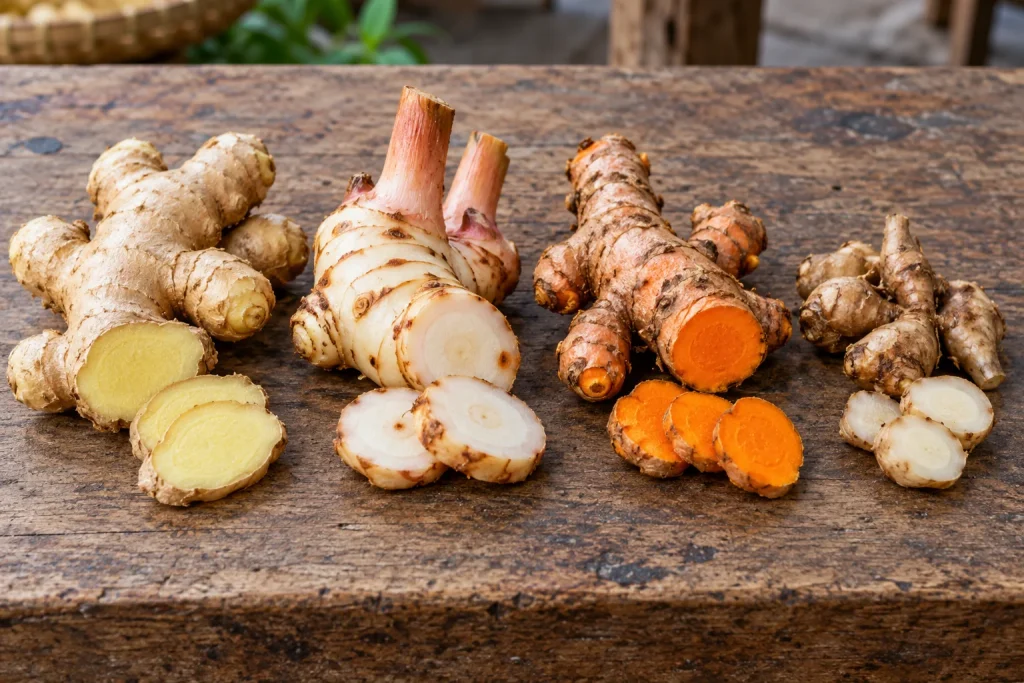
For a fresh-root drink, a good turmeric purchase starts with the outside and ends with a quick look at the cut surface. You do not need the largest rhizome in the basket. Choose pieces that feel firm for their size, have no wet soft patches and smell clean when freshly cut. When examining fresh turmeric for jamu in the context of everyday kitchen work and guest planning in Gianyar and Ubud, separating specific ingredient names, preparation timing, and household customs prevents common misunderstandings before you shop or cook.
What to look for at the market
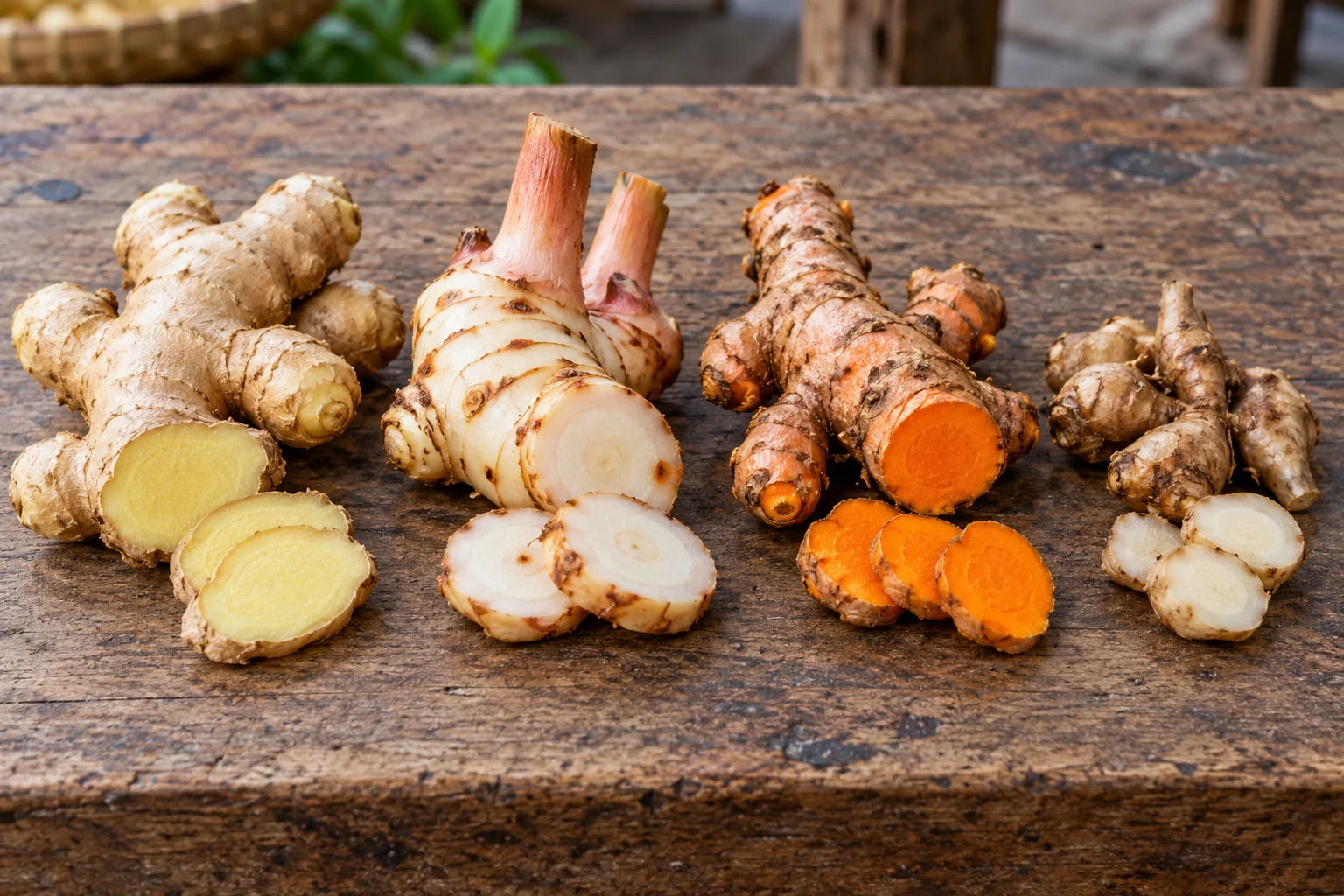
Turmeric, ginger, galangal and kencur can sit together in a market basket, but they have different shapes, aromas and cut surfaces. If you are not sure which one you picked up, ask the seller before buying. Once home, wash the root under running water, slice it and keep the peel only where it is clean and intact.
Buy for the batch you plan to make
A modest quantity is enough for a first drink; you can always buy more after you learn how strong your preferred root is. Very large roots are not automatically more aromatic. If the skin has soil on it, brush and rinse it under running water before slicing. Peel only damaged or especially rough spots rather than removing every thin layer.
Keep the colour off the things you want pale
For fresh turmeric vs powder, remember that moisture and fibre change the method. Fresh roots usually need blending, simmering or straining; powder works faster but can settle. The side-by-side fresh turmeric vs powder jamu guide explains the difference, and the turmeric jamu recipe gives a manageable batch size.
Cut turmeric on a board that can be washed promptly. A ceramic bowl and stainless-steel spoon are easier to clean than porous surfaces, and a kitchen cloth may stain. Wash your hands after prep and rinse the knife and board as soon as you finish. When you are ready to cook a Balinese meal with local ingredients, see what a Cooking Class Ubud covers.
How How to Choose Fresh Turmeric for Jamu Connects Market Observation, Kitchen Technique, and Practical Planning in Ubud
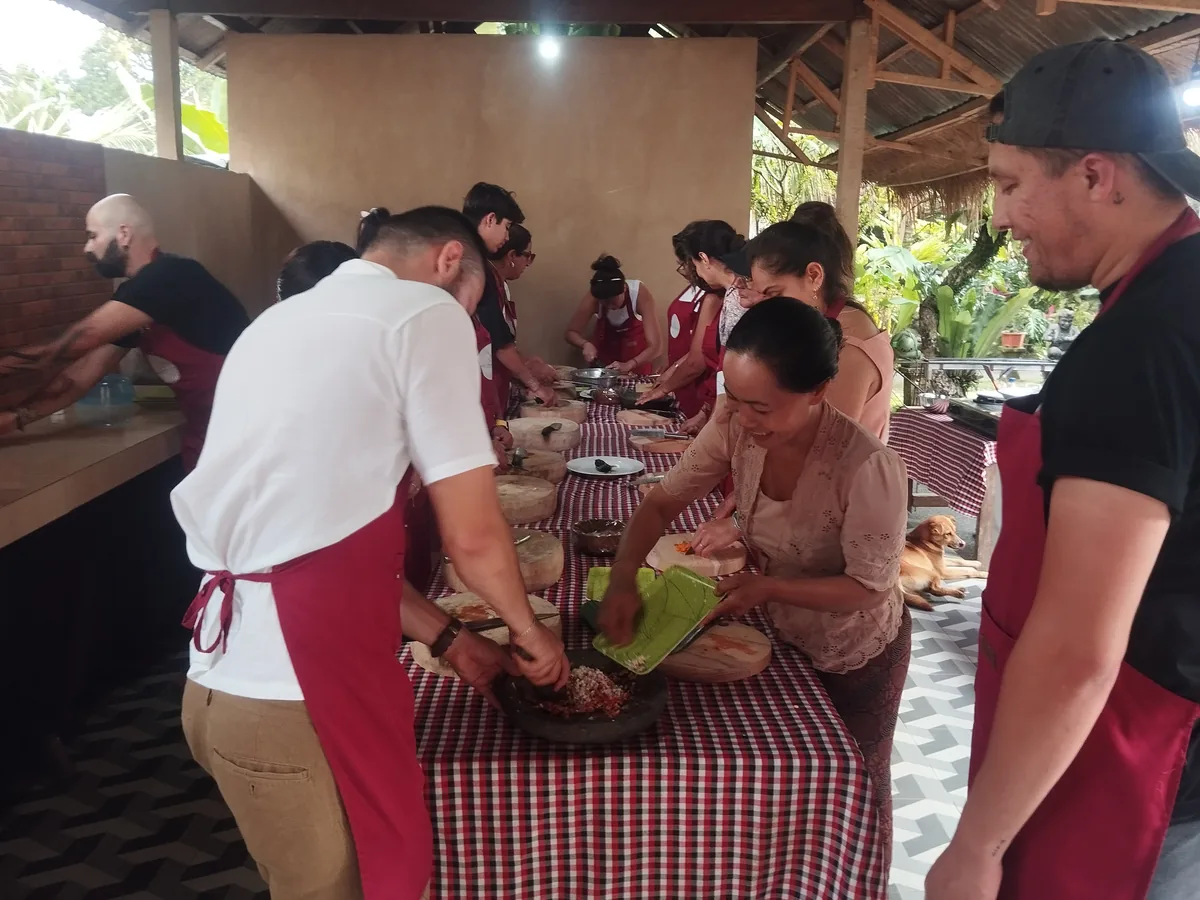
For travellers and home cooks researching fresh turmeric for jamu, the biggest gap in general travel guides is that they treat Balinese food and daily life as a single uniform checklist rather than a living household system. In a traditional Balinese compound around Ubud, decisions about ingredients, prep sequence, and table pairing depend on whether a meal is prepared for a quiet family lunch, a morning market run, or a shared gathering. When you join an Ubud Cooking Class at Wayan’s Paon, every question around fresh turmeric for jamu is answered through direct hands-on observation rather than abstract theory.
A second practical principle when evaluating fresh turmeric for jamu is recognizing the boundary between what happens at the morning produce stalls, what happens at the stone mortar (ulekan), and how the final dishes are balanced on the plate. In our private sessions such as Boreh to Paon, your group works only with your own booking party and selects up to five dishes from the 53-dish menu (plus the foundational Base Genep spice paste), allowing you to test how each choice affects flavour, texture, and timing.
Comparative Reference Matrix: 10 Core Dimensions of Fresh Turmeric For Jamu
Before diving into each specialized subtopic in this family of guides, the table below summarizes how the ten focused questions around fresh turmeric for jamu differ in scope, practical kitchen impact, and what you should verify before buying ingredients or confirming a menu in Ubud:
| Focus Topic / Keyword Owner | Specific Question Addressed | Key Practical Distinction in Ubud |
|---|---|---|
| 1. turmeric jamu | Turmeric Jamu: A Kitchen Guide to Fresh Root, Powder and Balance | Turmeric jamu is easy to recognise by its golden colour, but the name does not point to one fixed recipe. Fresh turmeric may be blended or s… |
| 2. turmeric jamu ingredients | What Goes into a Turmeric Jamu? | When a turmeric drink tastes muddy, sour, too sweet or unexpectedly savoury, the cause is usually the balance of a few simple ingredients. A… |
| 3. fresh turmeric vs powder jamu | Fresh Turmeric or Powder for Jamu? | Fresh turmeric and turmeric powder can both make a golden drink, but they do not behave the same way in a glass. Fresh root brings moisture,… |
| 4. turmeric tamarind jamu | Balancing Turmeric, Tamarind and Palm Sugar in Jamu | Turmeric and tamarind bring two strong signals to a drink: earthy bitterness and bright acidity. Palm sugar can soften the edge, but too muc… |
| 5. turmeric jamu recipe | A Small-Batch Turmeric Jamu Recipe for the Home Kitchen | This turmeric jamu recipe is sized for a home kitchen: enough for about three or four small glasses, without leaving a large pot to balance…. |
| 6. how to strain turmeric jamu | How to Strain Jamu for a Smoother Drink | Straining changes the texture of turmeric jamu, not its identity. A single pass through a fine sieve removes larger fibres while leaving som… |
| 7. jamu recipe with turmeric powder | Jamu Recipe with Turmeric Powder: What Changes? | Turmeric powder is useful when you want a quick cup and do not have a fresh root to wash and slice. It also behaves differently: it may thic… |
| 8. kunyit asam vs loloh kunyit | Kunyit Asam vs Loloh Kunyit: What Changes in the Glass? | Kunyit asam and loloh kunyit can look similar in a glass: both may be golden, tart and built around turmeric. The useful difference is not a… |
| 9. how to serve turmeric jamu | Serving Turmeric Jamu Cold or at Room Temperature | Turmeric jamu does not need elaborate presentation. A small clean glass is enough to show the colour and keep the first taste focused. The s… |
| 10. how to store turmeric jamu | How to Store Turmeric Jamu After Making It Fresh | Fresh turmeric jamu tastes brightest soon after preparation, and there is no single shelf-life number that fits every homemade recipe. A ble… |
Deep-Dive Guide to the 10 Specialized Subtopics Within Fresh Turmeric For Jamu
Each of the ten companion articles in this topic family isolates one specific decision or ingredient question related to fresh turmeric for jamu so that you never confuse a broad category label with a concrete culinary rule. Below is how each specialized guide fits into the wider picture:
1. Turmeric Jamu: A Kitchen Guide to Fresh Root, Powder and Balance
When narrowing your focus from fresh turmeric for jamu to the specific question of turmeric jamu, the primary distinction is context and practical application. Turmeric jamu is easy to recognise by its golden colour, but the name does not point to one fixed recipe. Fresh turmeric may be blended or simmered; tamarind, ginger, sugar, salt and other seasonings appear in different combinations. The best starting point is to decide what kind of glass you want: bright and tart, earthy and direct, or rounder and sweeter. By keeping this specific scope distinct from neighbouring topics, you avoid applying a general rule where a precise ingredient check or timing adjustment is required.
In practice at the market or in the paon, Jamu is a broad Indonesian name for herbal preparations, while Balinese makers also use the word loloh for local herbal drinks. The terms can overlap in casual conversation, but they are not instructions for what is inside a particular bottle. UNESCO inscribed Jamu wellness culture on its Representative List in 2023; that recognition describes a living practice passed between makers and communities, not a single formula. A 2015 field study recorded 51 plant species used for loloh across 13 Balinese villages, a reminder that local preparations are diverse. Whether you are comparing options before booking your private session or taking notes to cook at home after your trip, treating turmeric jamu as its own step ensures your preparation remains accurate and stress-free.
2. What Goes into a Turmeric Jamu?
When narrowing your focus from fresh turmeric for jamu to the specific question of turmeric jamu ingredients, the primary distinction is context and practical application. When a turmeric drink tastes muddy, sour, too sweet or unexpectedly savoury, the cause is usually the balance of a few simple ingredients. A useful shopping list begins with turmeric and water; everything else has a specific job. That makes it easier to adjust the glass without turning every version into a long, generic spice list. By keeping this specific scope distinct from neighbouring topics, you avoid applying a general rule where a precise ingredient check or timing adjustment is required.
In practice at the market or in the paon, Fresh turmeric provides the colour and earthy base. Choose sound roots and wash away soil before cutting; the skin can stain a board, cloth and fingers. Water controls concentration. Begin with less than the full amount if you want to blend the roots, then thin the drink after straining. Whether you are comparing options before booking your private session or taking notes to cook at home after your trip, treating turmeric jamu ingredients as its own step ensures your preparation remains accurate and stress-free.
3. Fresh Turmeric or Powder for Jamu?
When narrowing your focus from fresh turmeric for jamu to the specific question of fresh turmeric vs powder jamu, the primary distinction is context and practical application. Fresh turmeric and turmeric powder can both make a golden drink, but they do not behave the same way in a glass. Fresh root brings moisture, fibres and a brighter root aroma. Powder is convenient and concentrated, yet it can thicken the liquid, leave sediment or clump if it hits hot water in one lump. By keeping this specific scope distinct from neighbouring topics, you avoid applying a general rule where a precise ingredient check or timing adjustment is required.
In practice at the market or in the paon, With fresh turmeric, you control the preparation. Wash the root, scrape away only damaged skin, then slice or grate it before blending or simmering. The fibres need time to soften or a sieve to remove them. The result often smells more like a just-cut rhizome, and the strength varies with the root’s age and condition. Whether you are comparing options before booking your private session or taking notes to cook at home after your trip, treating fresh turmeric vs powder jamu as its own step ensures your preparation remains accurate and stress-free.
4. Balancing Turmeric, Tamarind and Palm Sugar in Jamu
When narrowing your focus from fresh turmeric for jamu to the specific question of turmeric tamarind jamu, the primary distinction is context and practical application. Turmeric and tamarind bring two strong signals to a drink: earthy bitterness and bright acidity. Palm sugar can soften the edge, but too much sweetness blurs both. A better method is to add each ingredient in sequence and taste after the liquid has cooled slightly. By keeping this specific scope distinct from neighbouring topics, you avoid applying a general rule where a precise ingredient check or timing adjustment is required.
In practice at the market or in the paon, Make a light turmeric base with water and fresh root. If you add tamarind and sweetener before tasting the base, you have fewer clues about what needs changing. Once the root has been simmered or blended and strained to your liking, add tamarind a little at a time. Some tamarind is mild; some is sharply sour, so a fixed spoon count will not always taste the same. Whether you are comparing options before booking your private session or taking notes to cook at home after your trip, treating turmeric tamarind jamu as its own step ensures your preparation remains accurate and stress-free.
5. A Small-Batch Turmeric Jamu Recipe for the Home Kitchen
When narrowing your focus from fresh turmeric for jamu to the specific question of turmeric jamu recipe, the primary distinction is context and practical application. This turmeric jamu recipe is sized for a home kitchen: enough for about three or four small glasses, without leaving a large pot to balance. It uses fresh turmeric and tamarind for an earthy, tart drink, with palm sugar added only after tasting. Think of it as a practical adaptation rather than a claim to reproduce one specific Balinese maker’s recipe. By keeping this specific scope distinct from neighbouring topics, you avoid applying a general rule where a precise ingredient check or timing adjustment is required.
In practice at the market or in the paon, Fresh roots vary, so the stated quantities are a starting point. If this batch feels too intense, dilute it. If it tastes too sour, correct with water before adding more sugar. For a smoother texture, strain twice through a finer sieve. For a more rustic glass, one strain is enough. Whether you are comparing options before booking your private session or taking notes to cook at home after your trip, treating turmeric jamu recipe as its own step ensures your preparation remains accurate and stress-free.
6. How to Strain Jamu for a Smoother Drink
When narrowing your focus from fresh turmeric for jamu to the specific question of how to strain turmeric jamu, the primary distinction is context and practical application. Straining changes the texture of turmeric jamu, not its identity. A single pass through a fine sieve removes larger fibres while leaving some body in the glass. A second pass through clean muslin makes it smoother, though it also takes longer. Choose the result you actually enjoy instead of assuming every herbal drink must be clear. By keeping this specific scope distinct from neighbouring topics, you avoid applying a general rule where a precise ingredient check or timing adjustment is required.
In practice at the market or in the paon, After blending or simmering the root, turn off the heat and give the liquid a short rest. Larger pieces will sink and the first pour will be easier to handle. Set a clean fine-mesh sieve over a stable jug, then pour slowly so the pulp does not splash over the sides. Whether you are comparing options before booking your private session or taking notes to cook at home after your trip, treating how to strain turmeric jamu as its own step ensures your preparation remains accurate and stress-free.
7. Jamu Recipe with Turmeric Powder: What Changes?
When narrowing your focus from fresh turmeric for jamu to the specific question of jamu recipe with turmeric powder, the primary distinction is context and practical application. Turmeric powder is useful when you want a quick cup and do not have a fresh root to wash and slice. It also behaves differently: it may thicken the drink, form small clumps or settle at the bottom. This method is built for one or two servings, with a small whisking step that makes the texture more even. By keeping this specific scope distinct from neighbouring topics, you avoid applying a general rule where a precise ingredient check or timing adjustment is required.
In practice at the market or in the paon, The powder may not dissolve completely, and a little sediment is normal for this kind of drink. If the flavour is too strong, add water rather than trying to cover it with a lot of sweetener. If it is too sour, adjust with a little more water and then taste again. The best amount of powder depends on the product, so treat one teaspoon as a starting point. Whether you are comparing options before booking your private session or taking notes to cook at home after your trip, treating jamu recipe with turmeric powder as its own step ensures your preparation remains accurate and stress-free.
8. Kunyit Asam vs Loloh Kunyit: What Changes in the Glass?
When narrowing your focus from fresh turmeric for jamu to the specific question of kunyit asam vs loloh kunyit, the primary distinction is context and practical application. Kunyit asam and loloh kunyit can look similar in a glass: both may be golden, tart and built around turmeric. The useful difference is not a strict colour test. It is the recipe and the place behind the name. Kunyit asam usually signals a turmeric-and-tamarind combination; loloh kunyit points to a Balinese herbal drink tradition where ingredients can vary by maker. By keeping this specific scope distinct from neighbouring topics, you avoid applying a general rule where a precise ingredient check or timing adjustment is required.
In practice at the market or in the paon, Many Indonesian kunyit asam recipes combine turmeric with tamarind and a sweetener. The proportions differ by household and product, so the phrase describes a flavour direction more than a locked formula. A home version can be made with fresh root, tamarind water and palm sugar, but it should be introduced as a home recipe rather than the only correct one. Whether you are comparing options before booking your private session or taking notes to cook at home after your trip, treating kunyit asam vs loloh kunyit as its own step ensures your preparation remains accurate and stress-free.
9. Serving Turmeric Jamu Cold or at Room Temperature
When narrowing your focus from fresh turmeric for jamu to the specific question of how to serve turmeric jamu, the primary distinction is context and practical application. Turmeric jamu does not need elaborate presentation. A small clean glass is enough to show the colour and keep the first taste focused. The serving temperature is a preference, but it changes how the drink comes across: warm liquid can make the root aroma more obvious, while chilling tends to make the sour edge feel sharper. When examining how to serve turmeric jamu in the context of everyday kitchen work and guest planning in Gianyar and Ubud, separating specific ingredient names, preparation timing, and household customs prevents common misunderstandings before you shop or cook. By keeping this specific scope distinct from neighbouring topics, you avoid applying a general rule where a precise ingredient check or timing adjustment is required.
In practice at the market or in the paon, If you have just prepared a batch, taste a small amount while it is warm but not hot. This makes it easier to notice the turmeric, ginger and tamarind separately. Decide whether the balance needs water or sweetener before you chill the whole jug. Once ice melts, the drink becomes lighter, so do not use ice to fix a recipe that is already too strong. Whether you are comparing options before booking your private session or taking notes to cook at home after your trip, treating how to serve turmeric jamu as its own step ensures your preparation remains accurate and stress-free.
10. How to Store Turmeric Jamu After Making It Fresh
When narrowing your focus from fresh turmeric for jamu to the specific question of how to store turmeric jamu, the primary distinction is context and practical application. Fresh turmeric jamu tastes brightest soon after preparation, and there is no single shelf-life number that fits every homemade recipe. A blended drink, a simmered extract and a bottled product have different ingredients and handling. Instead of promising the same number of days for all of them, use careful cooling, clean containers and the maker’s instructions. By keeping this specific scope distinct from neighbouring topics, you avoid applying a general rule where a precise ingredient check or timing adjustment is required.
In practice at the market or in the paon, Prepare only as much as you expect to drink, especially while you are still tuning the recipe. If there is extra, transfer it to a clean, covered container and refrigerate it promptly once it has cooled enough to handle. Keep it cold, pour with a clean glass and avoid returning a partly used serving to the main bottle. Stir before serving because turmeric solids can settle. Whether you are comparing options before booking your private session or taking notes to cook at home after your trip, treating how to store turmeric jamu as its own step ensures your preparation remains accurate and stress-free.
How to Apply These Notes When Planning Your Private Cooking Day at Wayan’s Paon
Bringing all ten facets of fresh turmeric for jamu together reveals a consistent lesson about Balinese culinary culture: clarity comes from asking specific questions before the cooking begins. In a private household setting in Ubud, your host does not rely on factory-made pastes or rigid group schedules. Instead, fresh roots (galangal, turmeric, ginger, and aromatic kencur), shallots, garlic, lemongrass, salam leaves, and kaffir lime are proportioned for the exact five dishes your group chooses to cook.
If you have dietary requirements—such as vegetarian or vegan preparation without fermented shrimp paste (terasi), gluten-free substitutions using pure rice flour and palm sugar (Gula Aren), dairy-free coconut milk infusions, or nut-free spice pastes omitting candlenut (kemiri)—discussing them when you select your menu allows the kitchen to prepare dedicated mortars, cutting boards, and filtered drinking-water washing stations in advance.
Finally, use this pillar overview on fresh turmeric for jamu alongside the ten focused cluster guides linked above whenever you want to verify a local Balinese term, compare morning market timing against afternoon kitchen sessions, or adapt a traditional Ubud technique for your own stove at home.