
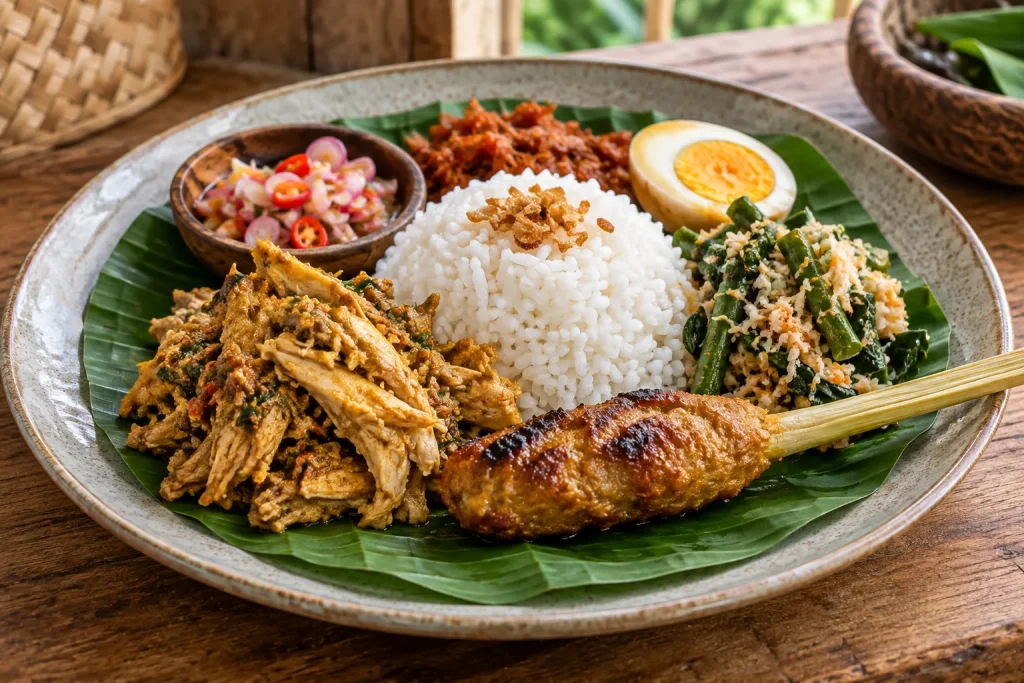
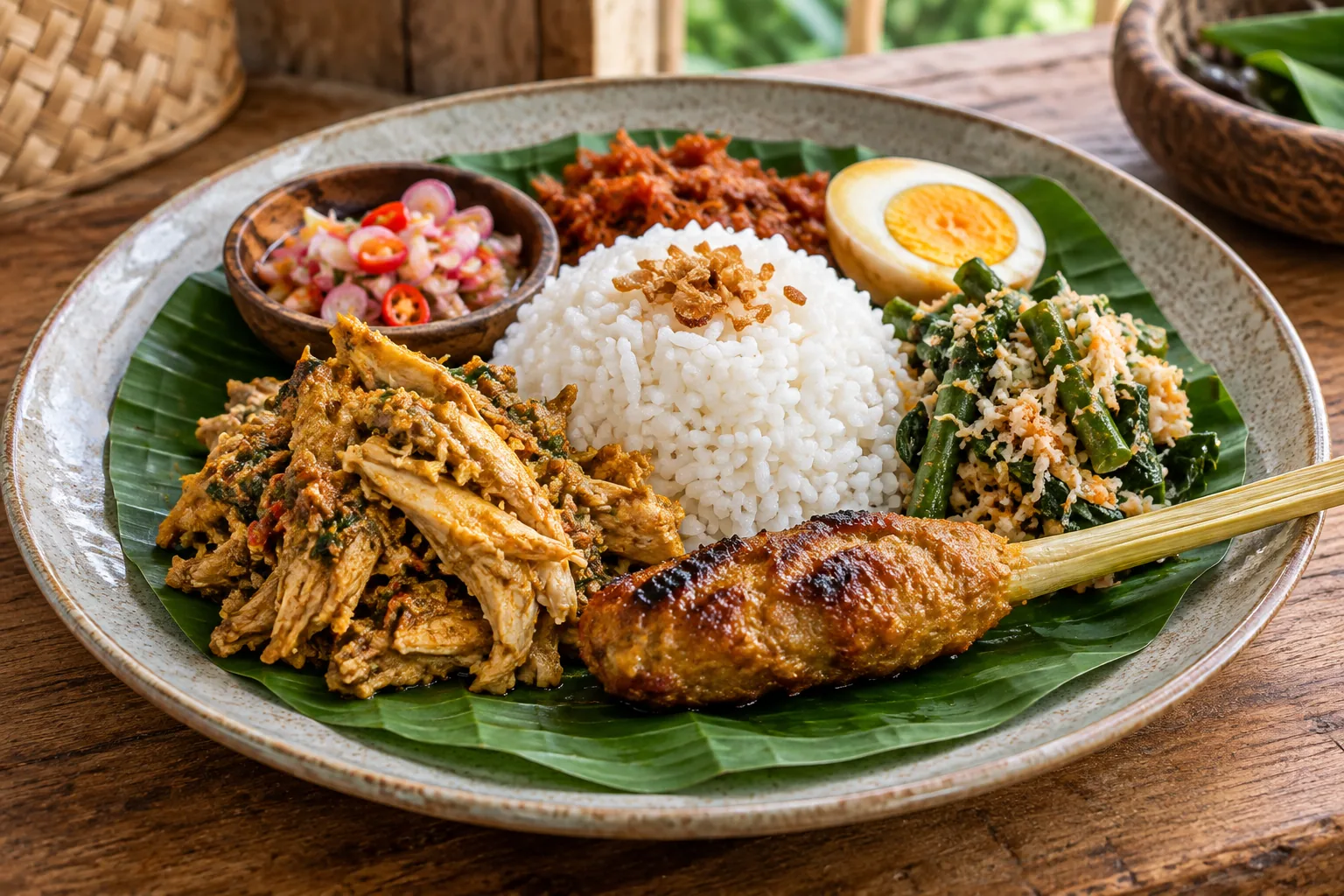
Nasi campur Bali is a meal made from contrasts: a scoop of rice, several smaller portions, and enough variation for each bite to taste a little different. One plate may bring together spiced chicken, lawar, a grilled skewer, vegetables and sambal. Another may be built around pork, fish or a simpler set of sides. The name describes a way of serving a meal, not one fixed recipe that every kitchen must follow. When examining nasi campur bali in the context of everyday kitchen work and guest planning in Gianyar and Ubud, separating specific ingredient names, preparation timing, and household customs prevents common misunderstandings before you shop or cook. When examining nasi campur bali in the context of everyday kitchen work and guest planning in Gianyar and Ubud, separating specific ingredient names, preparation timing, and household customs prevents common misunderstandings before you shop or cook.
Read the plate from the rice outward
Rice gives the meal its centre and makes the stronger flavours easier to balance. The sides do the more expressive work. A grilled item adds char, a slow-cooked protein brings a softer texture, vegetables contribute crunch or freshness, and sambal can lift the whole plate with heat and acidity. Looking at those roles is more useful than expecting every plate to contain the same list of dishes.
Common Balinese sides, without treating them as a checklist
Some warungs serve a plate already arranged; others let the guest point to dishes at a counter. The cook may ask whether you want chicken, pork, fish or a particular vegetable. If the options are unfamiliar, begin by identifying the main protein and sambal. Those choices usually tell you more about the meal than the word nasi campur alone.
Why the same name can lead to different meals
Tourism and food guides often describe nasi campur Bali with examples such as sate lilit, ayam betutu, lawar and sambal matah. Sate lilit is seasoned minced meat or fish formed around a stick; ayam betutu is a richly seasoned chicken preparation; and lawar combines chopped ingredients with coconut and spices. These are familiar possibilities, not guaranteed components of every serving.
Build a plate with a little contrast
Sambal matah is often a fresh, aromatic contrast to cooked sides, while vegetables with seasoned coconut can add a softer, nutty note. A vendor may use a different sambal, a different protein, or a side associated with a nearby household tradition. Ask what is on the counter today rather than relying on a photograph or a description written for another restaurant.
Questions that make ordering easier
A plate changes with the cook, the menu focus and what has been prepared that day. One kitchen may be known for shredded chicken and egg; another may serve pork with lawar; a coastal menu might include fish. Portion size and spice level also vary. It is normal for two nasi campur plates to share the same name while having very little else in common.
A useful way to explore Balinese food
That flexibility is part of the appeal, but it matters when you avoid particular ingredients. A vegetable side can contain meat stock, shrimp paste or another animal-derived seasoning. A dish name does not establish whether a meal is halal or vegetarian. If a restriction is important, ask about the whole dish and how it is prepared.
What to remember before choosing
Choose one protein or substantial centre first. Add a vegetable with a different texture, then decide how much heat you want. If the main dish is rich or grilled, a fresh or lightly dressed side can make the next bite feel brighter. If you prefer a mild meal, ask for sambal separately and keep a plain portion of rice available.
A small tasting plan for a first plate
There is no prize for choosing the greatest number of sides. A few flavours that work together can be easier to enjoy than a plate crowded with several spicy, salty or coconut-heavy dishes. When sharing, two people can order different combinations and trade a taste after checking that both are comfortable with the ingredients.
At a counter, ask which dish is chicken, fish or pork; whether a side is spicy; and whether the price changes with the items selected. If you have an allergy, ask about the ingredients in the sauce as well as the visible main food. If the answer is uncertain, choose a dish the server can explain clearly instead of guessing from colour or appearance.
For halal or vegetarian needs, be direct about the standard you follow. Ask about meat, broth, cooking fat, shrimp paste and shared utensils when they matter to you. A confident answer about one ingredient does not automatically answer every preparation question. You can thank the seller and choose another option if the details remain unclear.
Think of nasi campur as a small tasting of a kitchen’s everyday cooking, rather than a formal sampler with a fixed menu. Notice how the rice, protein, vegetables and sambal work together. If a particular side catches your attention, learn its name and ask how the cook seasons it. That gives you a more specific way to explore the next meal.
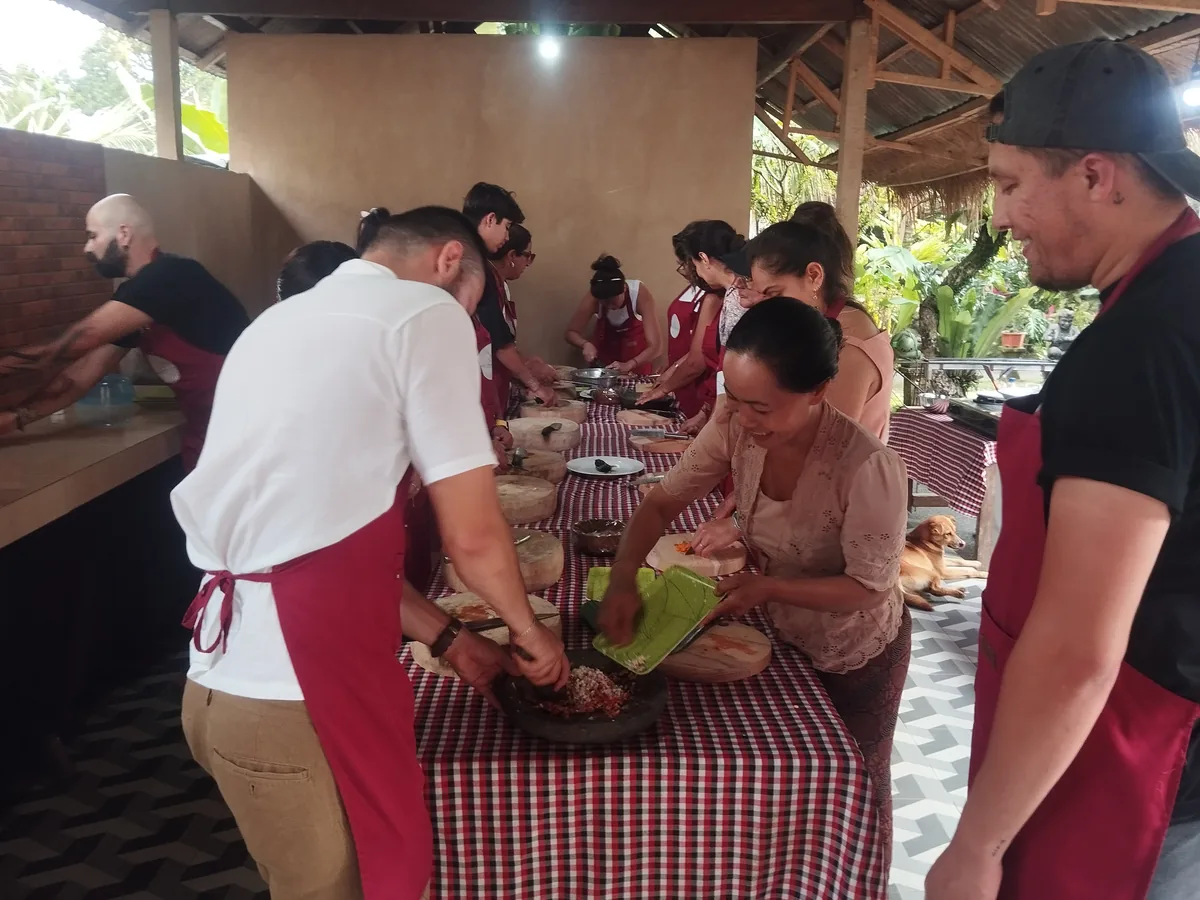
The cooking behind those flavours becomes easier to recognise when you see how ingredients are prepared together. Guests curious about that process can review the current details for our Cooking Class Ubud experience. The class page explains the experience itself; the plate in a warung remains the work of that particular cook.
The clearest expectation is also the simplest: rice with a selection of sides, with the exact combination changing from place to place. Ask what is being served today, choose a protein and a contrasting vegetable, and decide whether you want sambal on the plate or on the side. Those small questions make an unfamiliar menu much easier to navigate.
If you are comparing two plates, compare the dishes actually offered, not an imagined standard recipe. A local menu may reflect family preferences, a specialist kitchen or the day’s preparation. Give the cook room to describe it in their own terms; that conversation is often a better introduction than a long list of supposedly mandatory ingredients.
For a first visit to a counter, make one decision at a time. Choose the main item, ask what the vegetable side contains, then check the sambal. Taste each portion with rice before mixing the plate. You will notice which flavours are already strong and can leave the remaining sides for another meal.
If you are ordering for a group, compare plates rather than ordering the same combination for everyone. One person can try a chicken-led version while another chooses fish or vegetables, provided each diner is comfortable with the ingredients. Sharing a small taste is an easy way to learn without turning lunch into a large sampler.
How Nasi Campur Bali: A Plate Built from Many Small Dishes Connects Market Observation, Kitchen Technique, and Practical Planning in Ubud
For travellers and home cooks researching nasi campur bali, the biggest gap in general travel guides is that they treat Balinese food and daily life as a single uniform checklist rather than a living household system. In a traditional Balinese compound around Ubud, decisions about ingredients, prep sequence, and table pairing depend on whether a meal is prepared for a quiet family lunch, a morning market run, or a shared gathering. When you join an Ubud Cooking Class at Wayan’s Paon, every question around nasi campur bali is answered through direct hands-on observation rather than abstract theory.
A second practical principle when evaluating nasi campur bali is recognizing the boundary between what happens at the morning produce stalls, what happens at the stone mortar (ulekan), and how the final dishes are balanced on the plate. In our private sessions such as Private Paon Table, your group works only with your own booking party and selects up to five dishes from the 53-dish menu (plus the foundational Base Genep spice paste), allowing you to test how each choice affects flavour, texture, and timing.
Comparative Reference Matrix: 10 Core Dimensions of Nasi Campur Bali
Before diving into each specialized subtopic in this family of guides, the table below summarizes how the ten focused questions around nasi campur bali differ in scope, practical kitchen impact, and what you should verify before buying ingredients or confirming a menu in Ubud:
| Focus Topic / Keyword Owner | Specific Question Addressed | Key Practical Distinction in Ubud |
|---|---|---|
| 1. nasi campur lawar bali | Nasi Campur Lawar Bali: What Can Change from One Recipe to the Next | In nasi campur lawar Bali, lawar is the side that can change the character of the plate most quickly. It may look like a finely chopped vege… |
| 2. nasi campur babi bali | Nasi Campur Babi Bali: How Pork Sides Shape the Plate | Nasi campur babi Bali is a useful search when you want to understand a pork-centred plate, but the phrase still does not describe one fixed … |
| 3. nasi campur bali halal | Nasi Campur Bali Halal: Questions to Ask Before You Choose | A nasi campur plate is assembled from several dishes, so halal suitability cannot be decided by the rice or the main protein alone. A chicke… |
| 4. nasi campur bali rice | Rice at the Centre of a Nasi Campur Bali Plate | Nasi campur Bali rice has a quiet job: it gives the stronger sides somewhere to land without disappearing under them. A good base is tender,… |
| 5. nasi campur bali terenak | Nasi Campur Bali Terenak: What Makes a Plate Memorable? | Searching for nasi campur Bali terenak can lead to long lists and confident rankings, but the most satisfying plate is usually a personal ca… |
| 6. nasi campur bali with fish | Nasi Campur Bali with Fish: One Plate, Several Ways to Serve It | Nasi campur Bali with fish can mean a fish-based skewer among several sides, a separate grilled preparation, or a menu that does not include… |
| 7. vegetarian nasi campur bali | Vegetarian Nasi Campur Bali: What to Check Before Ordering | Vegetarian nasi campur Bali is possible only when the ingredients in the individual sides suit the way you eat. A plate can look plant-forwa… |
| 8. how to make nasi campur bali | How to Make Nasi Campur Bali at Home, One Component at a Time | If you are wondering how to make nasi campur Bali at home, start with the structure of the plate rather than a long list of recipes. Cook ri… |
| 9. sambal for nasi campur bali | Sambal for Nasi Campur Bali: Fresh, Cooked or Served on the Side | Sambal for nasi campur Bali can change the meal more than its small serving suggests. A fresh condiment may taste bright and aromatic; a coo… |
| 10. nasi campur bali vs nasi padang | Nasi Campur Bali vs Nasi Padang: How the Plates Differ | Nasi campur Bali vs nasi Padang is a useful comparison when you are choosing between two well-known Indonesian rice meals. Both bring rice t… |
Deep-Dive Guide to the 10 Specialized Subtopics Within Nasi Campur Bali
Each of the ten companion articles in this topic family isolates one specific decision or ingredient question related to nasi campur bali so that you never confuse a broad category label with a concrete culinary rule. Below is how each specialized guide fits into the wider picture:
1. Nasi Campur Lawar Bali: What Can Change from One Recipe to the Next
When narrowing your focus from nasi campur bali to the specific question of nasi campur lawar bali, the primary distinction is context and practical application. In nasi campur lawar Bali, lawar is the side that can change the character of the plate most quickly. It may look like a finely chopped vegetable mix, but the ingredients and seasoning depend on the cook. Some versions include meat; some may include ingredients a vegetarian or halal diner needs to ask about. The useful habit is to treat lawar as a named dish with its own recipe, not as a guaranteed salad. By keeping this specific scope distinct from neighbouring topics, you avoid applying a general rule where a precise ingredient check or timing adjustment is required.
In practice at the market or in the paon, Lawar is commonly described as a Balinese mixture of finely chopped ingredients, coconut and spices. It can bring a moist, savoury texture alongside rice and a drier grilled item. The seasoning may be fragrant, hot or both, and the amount of coconut changes how rich it feels. In a mixed-rice serving, even a small spoonful can influence several bites. Whether you are comparing options before booking your private session or taking notes to cook at home after your trip, treating nasi campur lawar bali as its own step ensures your preparation remains accurate and stress-free.
2. Nasi Campur Babi Bali: How Pork Sides Shape the Plate
When narrowing your focus from nasi campur bali to the specific question of nasi campur babi bali, the primary distinction is context and practical application. Nasi campur babi Bali is a useful search when you want to understand a pork-centred plate, but the phrase still does not describe one fixed menu. A serving may include roast pork or another pork preparation with rice, vegetables, lawar and sambal. The sides and portions depend on the kitchen. Read the actual menu and ask what is included before ordering. By keeping this specific scope distinct from neighbouring topics, you avoid applying a general rule where a precise ingredient check or timing adjustment is required.
In practice at the market or in the paon, A pork plate may include babi guling, the Balinese roast-pork preparation, or a different cut cooked and seasoned by that particular warung. The menu wording matters: a plate with roast pork may not include the same skin, sausage, broth or side dishes as one served elsewhere. Ask the seller to point out the components if the description is brief. Whether you are comparing options before booking your private session or taking notes to cook at home after your trip, treating nasi campur babi bali as its own step ensures your preparation remains accurate and stress-free.
3. Nasi Campur Bali Halal: Questions to Ask Before You Choose
When narrowing your focus from nasi campur bali to the specific question of nasi campur bali halal, the primary distinction is context and practical application. A nasi campur plate is assembled from several dishes, so halal suitability cannot be decided by the rice or the main protein alone. A chicken or fish label may leave questions about lawar, stock, cooking fat, sambal and shared utensils. For nasi campur Bali halal, check the specific venue and the preparation it can confirm rather than relying on the dish name. By keeping this specific scope distinct from neighbouring topics, you avoid applying a general rule where a precise ingredient check or timing adjustment is required.
In practice at the market or in the paon, Start by asking what protein is used and how it is prepared. Then ask about the sides that will be added: lawar, vegetables, egg, sauce and sambal can each have their own ingredients. A menu may use a short label such as chicken or fish without describing the seasoning or cooking medium. Whether you are comparing options before booking your private session or taking notes to cook at home after your trip, treating nasi campur bali halal as its own step ensures your preparation remains accurate and stress-free.
4. Rice at the Centre of a Nasi Campur Bali Plate
When narrowing your focus from nasi campur bali to the specific question of nasi campur bali rice, the primary distinction is context and practical application. Nasi campur Bali rice has a quiet job: it gives the stronger sides somewhere to land without disappearing under them. A good base is tender, easy to portion and still distinct enough to pair with a rich protein, a vegetable and sambal. That small detail changes how the entire plate feels, whether lunch comes from a warung or your own kitchen. By keeping this specific scope distinct from neighbouring topics, you avoid applying a general rule where a precise ingredient check or timing adjustment is required.
In practice at the market or in the paon, It is tempting to treat rice as a neutral filler, but its warmth and texture shape every bite. Soft rice can soften a highly seasoned side; rice that clumps heavily can make a plate feel dense. The goal is not a special trick or a complicated variety. It is a comfortable base that lets the rest of the food remain recognisable. Whether you are comparing options before booking your private session or taking notes to cook at home after your trip, treating nasi campur bali rice as its own step ensures your preparation remains accurate and stress-free.
5. Nasi Campur Bali Terenak: What Makes a Plate Memorable?
When narrowing your focus from nasi campur bali to the specific question of nasi campur bali terenak, the primary distinction is context and practical application. Searching for nasi campur Bali terenak can lead to long lists and confident rankings, but the most satisfying plate is usually a personal call. One diner wants crisp edges and chilli; another looks for tender meat, fragrant rice and a mild vegetable. A useful way to judge a plate is to notice how its parts work together, then choose the combination you would happily eat again. By keeping this specific scope distinct from neighbouring topics, you avoid applying a general rule where a precise ingredient check or timing adjustment is required.
In practice at the market or in the paon, A mixed rice plate changes from one cook to another, so a restaurant’s signature combination is not a universal definition of the best. The available sides, seasoning and portion can all shift. Instead of looking for a fixed checklist, decide what matters to you: a familiar protein, a vegetable with texture, a fresh condiment or enough variety to try several small bites. Whether you are comparing options before booking your private session or taking notes to cook at home after your trip, treating nasi campur bali terenak as its own step ensures your preparation remains accurate and stress-free.
6. Nasi Campur Bali with Fish: One Plate, Several Ways to Serve It
When narrowing your focus from nasi campur bali to the specific question of nasi campur bali with fish, the primary distinction is context and practical application. Nasi campur Bali with fish can mean a fish-based skewer among several sides, a separate grilled preparation, or a menu that does not include seafood that day. The name of the meal does not promise one standard fish dish. Start by asking what the kitchen has prepared, then choose sides that let the fish remain distinct rather than covering it with stronger flavours. By keeping this specific scope distinct from neighbouring topics, you avoid applying a general rule where a precise ingredient check or timing adjustment is required.
In practice at the market or in the paon, Nasi campur describes rice served with a changing selection of dishes. Some Balinese food guides include sate lilit among the familiar sides, and sate lilit can be made with fish as well as other minced ingredients. A different kitchen may offer a grilled fillet, a fish cake or no fish at all. Check the actual menu instead of expecting one version everywhere. Whether you are comparing options before booking your private session or taking notes to cook at home after your trip, treating nasi campur bali with fish as its own step ensures your preparation remains accurate and stress-free.
7. Vegetarian Nasi Campur Bali: What to Check Before Ordering
When narrowing your focus from nasi campur bali to the specific question of vegetarian nasi campur bali, the primary distinction is context and practical application. Vegetarian nasi campur Bali is possible only when the ingredients in the individual sides suit the way you eat. A plate can look plant-forward while a vegetable dish uses meat stock, shrimp paste or fish sauce. The safest approach is to treat each component as its own recipe and ask before the server assembles the rice and sides. By keeping this specific scope distinct from neighbouring topics, you avoid applying a general rule where a precise ingredient check or timing adjustment is required.
In practice at the market or in the paon, People use vegetarian to mean different things. Some eat eggs or dairy; some avoid them. Some are comfortable with a shared cooking surface; others need separate utensils. Decide which ingredients and preparation details matter to you before you reach the counter, then explain those limits clearly. Whether you are comparing options before booking your private session or taking notes to cook at home after your trip, treating vegetarian nasi campur bali as its own step ensures your preparation remains accurate and stress-free.
8. How to Make Nasi Campur Bali at Home, One Component at a Time
When narrowing your focus from nasi campur bali to the specific question of how to make nasi campur bali, the primary distinction is context and practical application. If you are wondering how to make nasi campur Bali at home, start with the structure of the plate rather than a long list of recipes. Cook rice, prepare one seasoned centre, add a vegetable side and make a condiment you can serve separately. A home meal built from three or four well-planned components is more manageable than trying to recreate a whole warung counter. By keeping this specific scope distinct from neighbouring topics, you avoid applying a general rule where a precise ingredient check or timing adjustment is required.
In practice at the market or in the paon, Decide whether the plate will centre on chicken, fish, egg, tempeh or another protein. Add one vegetable that cooks quickly and choose a sambal or fresh condiment. This gives you a mix of textures while keeping the work realistic for a home kitchen. Whether you are comparing options before booking your private session or taking notes to cook at home after your trip, treating how to make nasi campur bali as its own step ensures your preparation remains accurate and stress-free.
9. Sambal for Nasi Campur Bali: Fresh, Cooked or Served on the Side
When narrowing your focus from nasi campur bali to the specific question of sambal for nasi campur bali, the primary distinction is context and practical application. Sambal for nasi campur Bali can change the meal more than its small serving suggests. A fresh condiment may taste bright and aromatic; a cooked sambal can bring deeper chilli and sweetness. The exact recipe varies, and not every plate uses sambal matah. Ask what is being served and whether it can be placed on the side. By keeping this specific scope distinct from neighbouring topics, you avoid applying a general rule where a precise ingredient check or timing adjustment is required.
In practice at the market or in the paon, Sambal matah is associated with sliced aromatics and chilli, often combined with oil and a sour note. Its fresh texture can contrast with rice, grilled food and richer sides. A cooked sambal is softened by heat and may taste rounder or sweeter depending on the cook’s ingredients. Whether you are comparing options before booking your private session or taking notes to cook at home after your trip, treating sambal for nasi campur bali as its own step ensures your preparation remains accurate and stress-free.
10. Nasi Campur Bali vs Nasi Padang: How the Plates Differ
When narrowing your focus from nasi campur bali to the specific question of nasi campur bali vs nasi padang, the primary distinction is context and practical application. Nasi campur Bali vs nasi Padang is a useful comparison when you are choosing between two well-known Indonesian rice meals. Both bring rice together with a selection of dishes, but their menus, serving habits and seasonings can differ. Neither name describes one unchanging recipe, so the most accurate comparison starts with the food offered by the specific restaurant. By keeping this specific scope distinct from neighbouring topics, you avoid applying a general rule where a precise ingredient check or timing adjustment is required.
In practice at the market or in the paon, Nasi campur literally signals a mixed rice meal: rice with smaller portions of other prepared dishes. In Bali, the sides may include local preparations such as lawar, sate lilit, ayam betutu, vegetables or sambal. A restaurant may assemble the plate from a counter or serve its own set combination. Whether you are comparing options before booking your private session or taking notes to cook at home after your trip, treating nasi campur bali vs nasi padang as its own step ensures your preparation remains accurate and stress-free.
How to Apply These Notes When Planning Your Private Cooking Day at Wayan’s Paon
Bringing all ten facets of nasi campur bali together reveals a consistent lesson about Balinese culinary culture: clarity comes from asking specific questions before the cooking begins. In a private household setting in Ubud, your host does not rely on factory-made pastes or rigid group schedules. Instead, fresh roots (galangal, turmeric, ginger, and aromatic kencur), shallots, garlic, lemongrass, salam leaves, and kaffir lime are proportioned for the exact five dishes your group chooses to cook.
If you have dietary requirements—such as vegetarian or vegan preparation without fermented shrimp paste (terasi), gluten-free substitutions using pure rice flour and palm sugar (Gula Aren), dairy-free coconut milk infusions, or nut-free spice pastes omitting candlenut (kemiri)—discussing them when you select your menu allows the kitchen to prepare dedicated mortars, cutting boards, and filtered drinking-water washing stations in advance.
Finally, use this pillar overview on nasi campur bali alongside the ten focused cluster guides linked above whenever you want to verify a local Balinese term, compare morning market timing against afternoon kitchen sessions, or adapt a traditional Ubud technique for your own stove at home.