
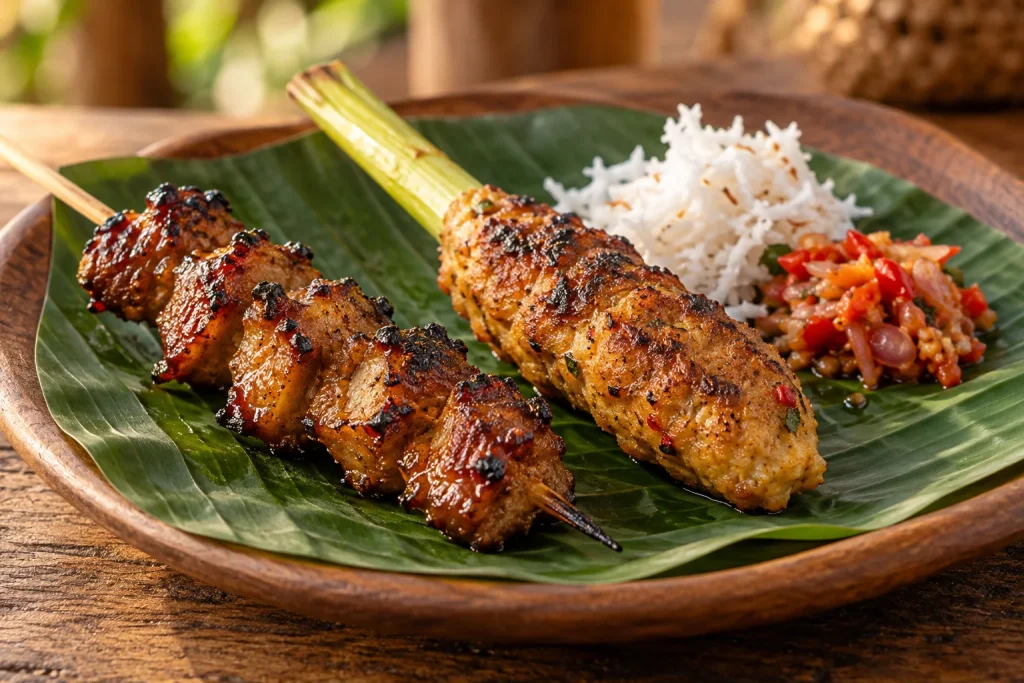

Sate manis vs sate lilit babi is easiest to understand by looking at the meat before it reaches the grill. Sate manis uses marinated pork pieces. Sate lilit starts with minced pork mixed with seasoning and coconut, then shaped around its support. The shared satay format hides a real difference in texture and preparation.
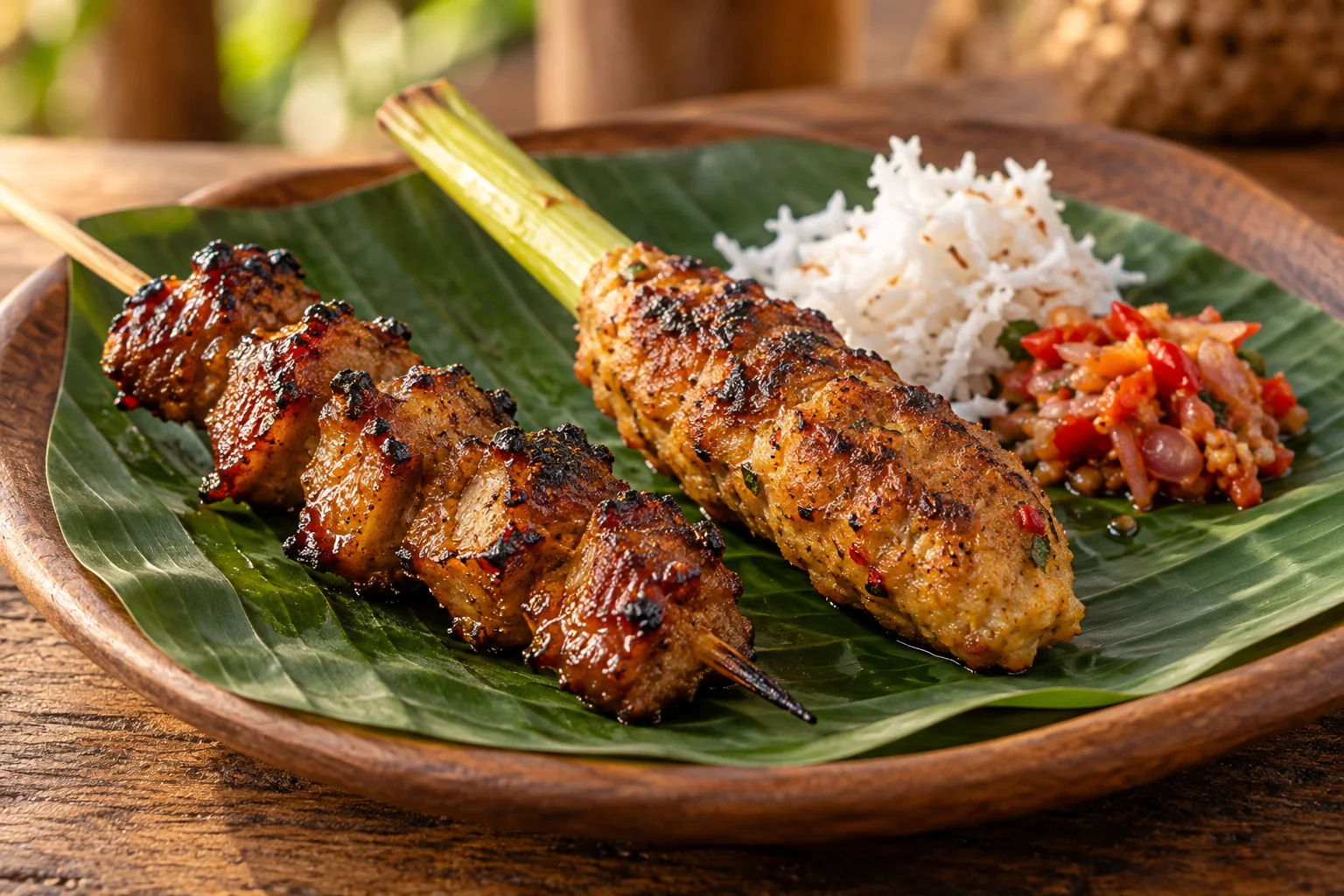
Whole pieces hold the marinade on the surface
The current sate manis babi bali page describes marinated pork grilled for caramelised edges and juicy centres. Each piece remains distinct, so the cook can turn the skewers and judge the surface as it colours. The marinade’s exact ingredients belong to the operator’s recipe and should not be guessed from the word manis alone.
This format makes the ratio of surface to centre easy to notice. Smaller pieces cook quickly; larger pieces need more time. A sweet coating can darken if the heat is too fierce, so steady turning and distance from the flame matter. The goal is a browned outside with cooked meat, not a burnt layer that masks the seasoning.
Lilit starts with minced pork
The existing sate lilit babi bali page describes minced pork mixed with coconut and Balinese seasoning, shaped in lilit style and grilled. The mixture binds into one surface around its support, rather than leaving separate chunks. That changes how the skewer browns and how the bite feels when you pull it away.
Because the mince is shaped by hand, thickness matters. A piece that is too thick can brown outside while staying soft in the centre; a loose wrap can fall away from the stick. The cook aims for an even layer and turns it as it sets. The specific seasoning can vary, so treat the dish method as its defining comparison point.
The grill is shared; the texture is not
Both preparations meet direct heat and can show a smoky or browned surface. Their common cooking method does not make them interchangeable. One offers discrete marinated pieces; the other is a seasoned minced mixture with coconut. Diners can choose by texture, sweetness and how much of the meal they want to eat by hand.
Sides vary by seller and menu. Ask whether rice or sambal is included and whether the skewer is served as a single portion or as part of a larger plate. If a specific ingredient matters, ask about the current batch. The dish name alone does not reveal every seasoning or possible allergen in either marinade or mixture.
Use the comparison to find the right owner page
The wider balinese pork dish guide places both satays beside roast pork, urutan and grilled ribs. For current class options, check the Cooking Class Ubud homepage and confirm the menu for your date. This comparison is about method, not a promise that both skewers are prepared in every class.
For the individual preparations, use sate manis babi bali for marinated pieces and sate lilit babi bali for the minced version. Keeping those anchors attached to the right owners helps readers move from the comparison to the recipe or dish description they actually want.