
Tumpeng preparation makes more sense when you follow the whole platter rather than treating the rice cone as a trick on its own. Rice is cooked, supporting dishes are prepared, and the parts are brought together for a shared meal. The wider Cooking Class Ubud experience list is a useful starting point; the live tumpeng cooking class ubud page explains the specific class format. When examining tumpeng preparation in the context of everyday kitchen work and guest planning in Gianyar and Ubud, separating specific ingredient names, preparation timing, and household customs prevents common misunderstandings before you shop or cook.
Start with the whole platter
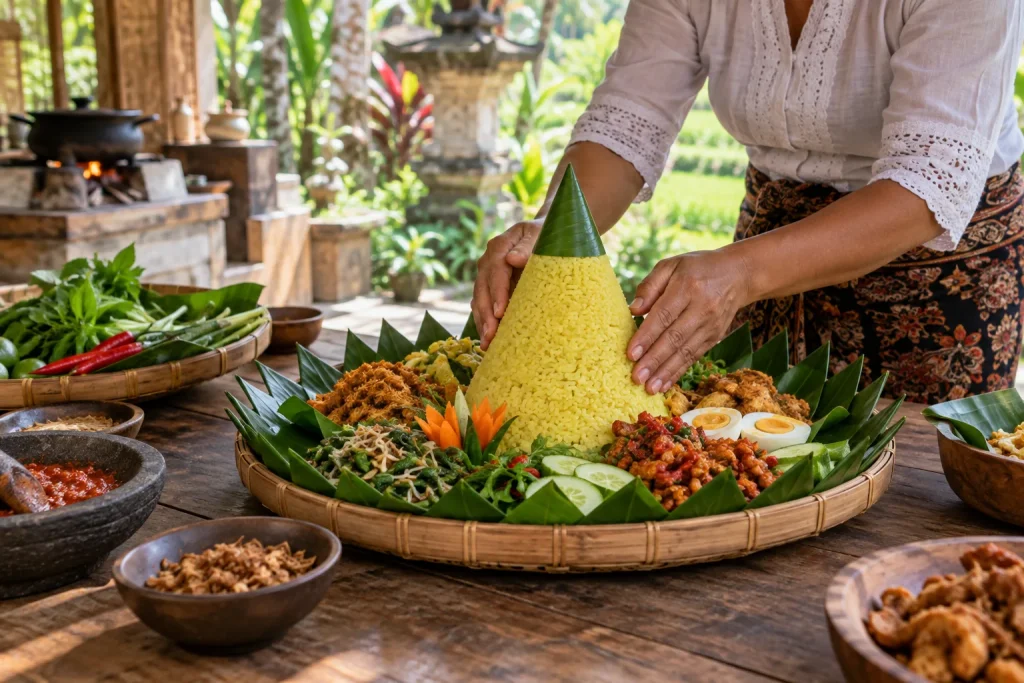
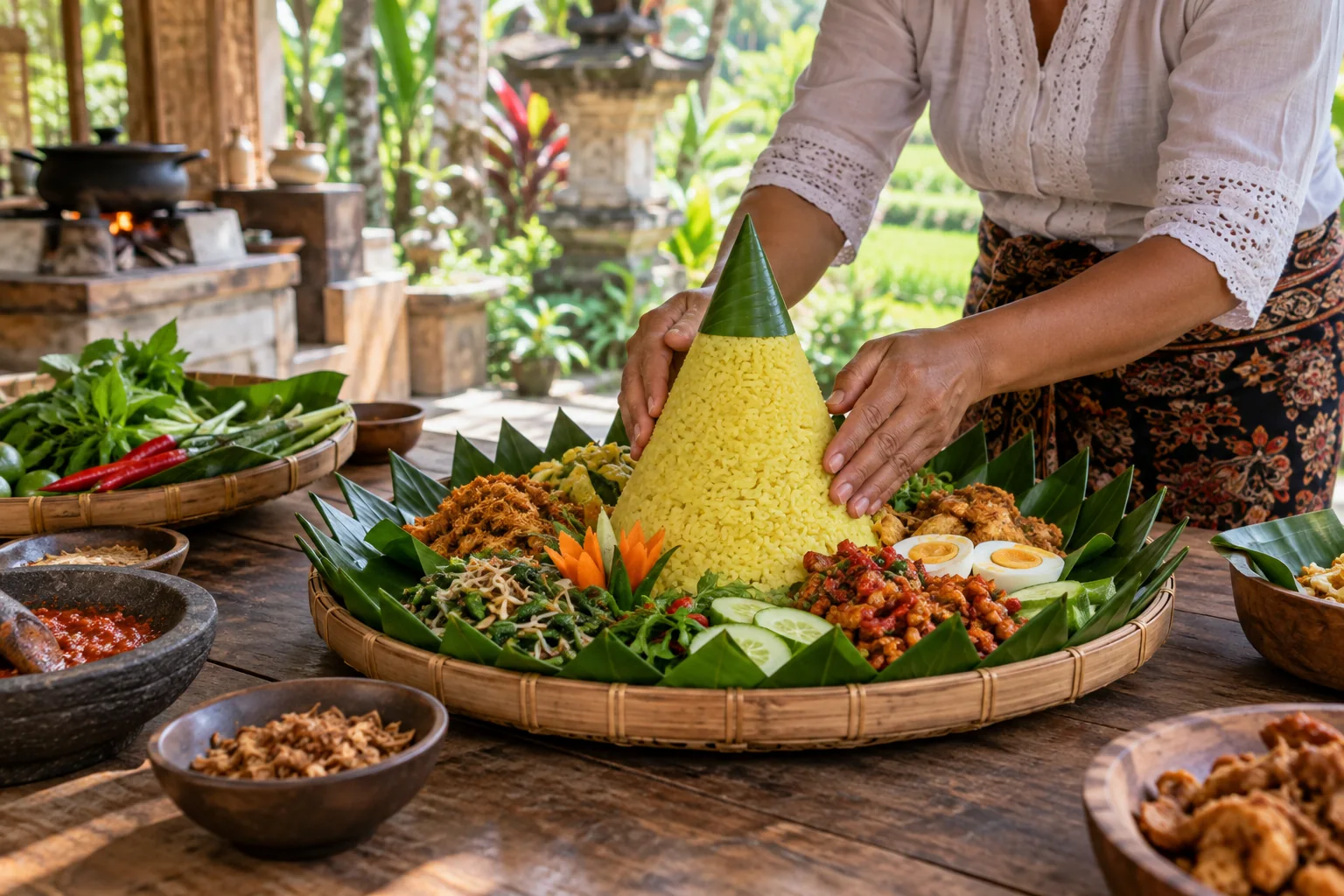
A tumpeng table has a center and a supporting cast. The cone-shaped rice draws the eye, while the side dishes add different colors, textures and flavors around it. Yellow rice is one familiar version, but rice and accompaniments vary by region and cook. Ask what a particular class will prepare instead of assuming every tumpeng has the same set menu.
The class moves from cooking to assembly
This guide focuses on the practical sequence. Tumpeng’s cultural meaning deserves its own conversation; here, the useful question is how the meal is cooked and assembled.
Confirm what affects your visit
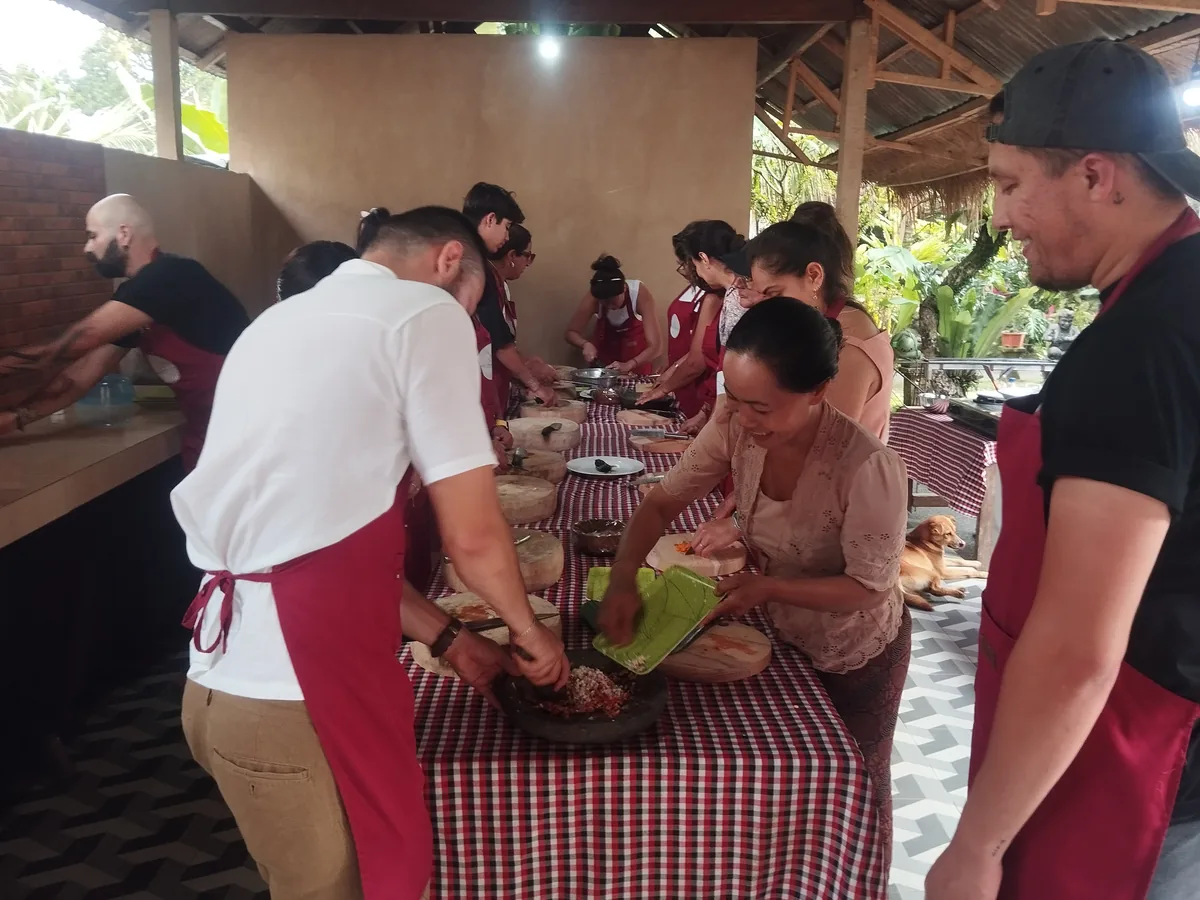
The Ubud service page describes a private, curated-menu session. Guests prepare and cook the components, shape and assemble the central presentation, then share the meal. Each stage has a purpose: cooking creates the elements, assembly brings them together, and eating closes the work.
The public page does not list every dish or publish a fixed recipe. Treat general tumpeng examples as context, not as a promise about the menu on your date.
The menu is curated rather than a choose-your-own list. If you have a dietary requirement, tell the host before booking and ask which substitutions can be confirmed. For an allergy, ask directly about ingredients and preparation, then wait for a clear answer before relying on a change.
Timing is arranged with the host. Pickup and return are listed as free within Ubud; transport from outside Ubud is quoted by location. Send your date, guest count, food needs and pickup area together so the reply covers the practical details.
For the current class format and booking details, use the live tumpeng cooking class ubud page.
How Tumpeng Preparation: Rice, Sides and Assembly Connects Market Observation, Kitchen Technique, and Practical Planning in Ubud
For travellers and home cooks researching tumpeng preparation, the biggest gap in general travel guides is that they treat Balinese food and daily life as a single uniform checklist rather than a living household system. In a traditional Balinese compound around Ubud, decisions about ingredients, prep sequence, and table pairing depend on whether a meal is prepared for a quiet family lunch, a morning market run, or a shared gathering. When you join an Ubud Cooking Class at Wayan’s Paon, every question around tumpeng preparation is answered through direct hands-on observation rather than abstract theory.
A second practical principle when evaluating tumpeng preparation is recognizing the boundary between what happens at the morning produce stalls, what happens at the stone mortar (ulekan), and how the final dishes are balanced on the plate. In our private sessions such as Tumpeng Cooking Class, your group works only with your own booking party and selects up to five dishes from the 53-dish menu (plus the foundational Base Genep spice paste), allowing you to test how each choice affects flavour, texture, and timing.
Comparative Reference Matrix: 10 Core Dimensions of Tumpeng Preparation
Before diving into each specialized subtopic in this family of guides, the table below summarizes how the ten focused questions around tumpeng preparation differ in scope, practical kitchen impact, and what you should verify before buying ingredients or confirming a menu in Ubud:
| Focus Topic / Keyword Owner | Specific Question Addressed | Key Practical Distinction in Ubud |
|---|---|---|
| 1. tumpeng class expectations | What Happens in a Tumpeng Cooking Class? | Tumpeng class expectations should start with the activity itself: this is a private cooking session built around preparing and assembling a … |
| 2. how to shape a tumpeng rice cone | How to Shape a Tumpeng Rice Cone | To learn how to shape a tumpeng rice cone, think in three parts: a cone-shaped mould, rice that will hold together, and a steady release ont… |
| 3. tumpeng rice and side dishes | Tumpeng Rice and Side Dishes: How the Platter Fits Together | Tumpeng rice and side dishes work as one platter: the cone gives the table its center, and the accompaniments complete the meal around it. I… |
| 4. tumpeng cooking class fixed menu | Tumpeng Cooking Class Fixed Menu: How It Works | A tumpeng cooking class fixed menu is a guided format, not a menu-builder where each guest selects a separate list of dishes. The live tumpe… |
| 5. tumpeng cooking class components | Tumpeng Cooking Class Components: What Gets Prepared | Think of tumpeng cooking class components as parts of one meal: rice, the dishes around it, and the assembly that brings them together. The … |
| 6. dietary requests for tumpeng class | Dietary Requests for a Tumpeng Class in Ubud | Dietary requests for tumpeng class bookings are best handled before the date is settled. The live tumpeng cooking class ubud page says guest… |
| 7. hands on tumpeng cooking experience | A Hands-On Tumpeng Cooking Experience from Start to Finish | A hands on tumpeng cooking experience is about joining the work behind the platter, not just watching a finished cone arrive at the table. T… |
| 8. private group tumpeng class | Private Group Tumpeng Class: Questions to Ask Before Booking | A private group tumpeng class gives your party a shared cooking plan, but the booking still needs a few clear details. The live tumpeng cook… |
| 9. tumpeng class vs balinese cooking class | Tumpeng Class vs Balinese Cooking Class: Which Format Fits? | For a tumpeng class vs balinese cooking class decision, begin with what you want to learn. Tumpeng centers on a rice presentation, its suppo… |
| 10. share a meal after a tumpeng cooking class | The Shared Meal After a Tumpeng Cooking Class | Share a meal after a tumpeng cooking class and the session has a natural finish: the group sees the work assembled, then sits down to eat to… |
Deep-Dive Guide to the 10 Specialized Subtopics Within Tumpeng Preparation
Each of the ten companion articles in this topic family isolates one specific decision or ingredient question related to tumpeng preparation so that you never confuse a broad category label with a concrete culinary rule. Below is how each specialized guide fits into the wider picture:
1. What Happens in a Tumpeng Cooking Class?
When narrowing your focus from tumpeng preparation to the specific question of tumpeng class expectations, the primary distinction is context and practical application. Tumpeng class expectations should start with the activity itself: this is a private cooking session built around preparing and assembling a meal. If you are comparing options, the Ubud Cooking Class page shows the broader offer, while the tumpeng cooking class ubud page covers the Tumpeng format. By keeping this specific scope distinct from neighbouring topics, you avoid applying a general rule where a precise ingredient check or timing adjustment is required.
In practice at the market or in the paon, The published sequence is simple. You prepare and cook the components, shape and assemble the central rice presentation, then sit down to share what the group has made. This is about taking part in the meal’s preparation, not arriving only for a finished plate. Whether you are comparing options before booking your private session or taking notes to cook at home after your trip, treating tumpeng class expectations as its own step ensures your preparation remains accurate and stress-free.
2. How to Shape a Tumpeng Rice Cone
When narrowing your focus from tumpeng preparation to the specific question of how to shape a tumpeng rice cone, the primary distinction is context and practical application. To learn how to shape a tumpeng rice cone, think in three parts: a cone-shaped mould, rice that will hold together, and a steady release onto the platter. Shaping and assembly are part of the private tumpeng cooking class ubud in Ubud; broader cooking classes ubud options appear on the homepage. By keeping this specific scope distinct from neighbouring topics, you avoid applying a general rule where a precise ingredient check or timing adjustment is required.
In practice at the market or in the paon, For a home version, a clean cone-shaped mould gives the rice its outline. Warm yellow rice is easier to press into a form than cold, loose rice. Add it gradually and press evenly so the cone has support from base to tip; avoid large air pockets without turning the rice into a hard block. Whether you are comparing options before booking your private session or taking notes to cook at home after your trip, treating how to shape a tumpeng rice cone as its own step ensures your preparation remains accurate and stress-free.
3. Tumpeng Rice and Side Dishes: How the Platter Fits Together
When narrowing your focus from tumpeng preparation to the specific question of tumpeng rice and side dishes, the primary distinction is context and practical application. Tumpeng rice and side dishes work as one platter: the cone gives the table its center, and the accompaniments complete the meal around it. If you want to make the arrangement yourself, Cooking Class Ubud leads to the cooking options and tumpeng cooking class ubud describes the current hands-on Tumpeng class. By keeping this specific scope distinct from neighbouring topics, you avoid applying a general rule where a precise ingredient check or timing adjustment is required.
In practice at the market or in the paon, Yellow rice is a familiar choice, often colored with turmeric and cooked with aromatics. Other versions use different rice preparations. Around the cone, side dishes add contrast: soft and crisp textures, vegetables and richer elements, mild flavors beside sharper ones. Whether you are comparing options before booking your private session or taking notes to cook at home after your trip, treating tumpeng rice and side dishes as its own step ensures your preparation remains accurate and stress-free.
4. Tumpeng Cooking Class Fixed Menu: How It Works
When narrowing your focus from tumpeng preparation to the specific question of tumpeng cooking class fixed menu, the primary distinction is context and practical application. A tumpeng cooking class fixed menu is a guided format, not a menu-builder where each guest selects a separate list of dishes. The live tumpeng cooking class ubud page describes a curated selection; Ubud Cooking Class helps you compare other cooking formats in Ubud. By keeping this specific scope distinct from neighbouring topics, you avoid applying a general rule where a precise ingredient check or timing adjustment is required.
In practice at the market or in the paon, Tumpeng depends on several parts coming together: rice, supporting dishes and a final arrangement. A curated menu lets the host plan those components as one lesson and move the group through cooking and assembly in a sensible order. Whether you are comparing options before booking your private session or taking notes to cook at home after your trip, treating tumpeng cooking class fixed menu as its own step ensures your preparation remains accurate and stress-free.
5. Tumpeng Cooking Class Components: What Gets Prepared
When narrowing your focus from tumpeng preparation to the specific question of tumpeng cooking class components, the primary distinction is context and practical application. Think of tumpeng cooking class components as parts of one meal: rice, the dishes around it, and the assembly that brings them together. The current tumpeng cooking class ubud page describes that sequence; cooking classes ubud shows the wider Ubud offer. By keeping this specific scope distinct from neighbouring topics, you avoid applying a general rule where a precise ingredient check or timing adjustment is required.
In practice at the market or in the paon, A cone-shaped rice presentation is the visual anchor, but its preparation is only one part of the work. The rice needs to suit the form and the meal around it. Different recipes and regional styles use different preparations, so the name tumpeng does not tell you every ingredient. Whether you are comparing options before booking your private session or taking notes to cook at home after your trip, treating tumpeng cooking class components as its own step ensures your preparation remains accurate and stress-free.
6. Dietary Requests for a Tumpeng Class in Ubud
When narrowing your focus from tumpeng preparation to the specific question of dietary requests for tumpeng class, the primary distinction is context and practical application. Dietary requests for tumpeng class bookings are best handled before the date is settled. The live tumpeng cooking class ubud page says guests can share requirements and the host will consider compatible substitutions. For the wider range of Cooking Class Ubud experiences, start at the homepage. By keeping this specific scope distinct from neighbouring topics, you avoid applying a general rule where a precise ingredient check or timing adjustment is required.
In practice at the market or in the paon, Use plain, specific language. Say whether the request is a preference, restriction or allergy, and name the ingredient you need to avoid. If the requirement also applies to shared utensils or preparation surfaces, say so directly rather than assuming it will be understood. Whether you are comparing options before booking your private session or taking notes to cook at home after your trip, treating dietary requests for tumpeng class as its own step ensures your preparation remains accurate and stress-free.
7. A Hands-On Tumpeng Cooking Experience from Start to Finish
When narrowing your focus from tumpeng preparation to the specific question of hands on tumpeng cooking experience, the primary distinction is context and practical application. A hands on tumpeng cooking experience is about joining the work behind the platter, not just watching a finished cone arrive at the table. The current tumpeng cooking class ubud page confirms cooking, shaping, assembly and a shared meal. Compare it with other Ubud Cooking Class formats before choosing. By keeping this specific scope distinct from neighbouring topics, you avoid applying a general rule where a precise ingredient check or timing adjustment is required.
In practice at the market or in the paon, The components are cooked before the presentation is assembled. That gives you a chance to see how separate ingredients become one meal. Ask which tasks guests will handle on your date; the page confirms a hands-on class but does not publish a fixed task list. Whether you are comparing options before booking your private session or taking notes to cook at home after your trip, treating hands on tumpeng cooking experience as its own step ensures your preparation remains accurate and stress-free.
8. Private Group Tumpeng Class: Questions to Ask Before Booking
When narrowing your focus from tumpeng preparation to the specific question of private group tumpeng class, the primary distinction is context and practical application. A private group tumpeng class gives your party a shared cooking plan, but the booking still needs a few clear details. The live tumpeng cooking class ubud page describes the private format and curated menu; start with cooking classes ubud if you are comparing other experiences. By keeping this specific scope distinct from neighbouring topics, you avoid applying a general rule where a precise ingredient check or timing adjustment is required.
In practice at the market or in the paon, Send the guest count and date before arranging the rest of your day. The public page does not publish a maximum capacity for every booking, so ask the host to confirm that your group fits the available arrangement. Whether you are comparing options before booking your private session or taking notes to cook at home after your trip, treating private group tumpeng class as its own step ensures your preparation remains accurate and stress-free.
9. Tumpeng Class vs Balinese Cooking Class: Which Format Fits?
When narrowing your focus from tumpeng preparation to the specific question of tumpeng class vs balinese cooking class, the primary distinction is context and practical application. For a tumpeng class vs balinese cooking class decision, begin with what you want to learn. Tumpeng centers on a rice presentation, its supporting dishes and assembly; other Cooking Class Ubud formats may suit a broader menu goal. The tumpeng cooking class ubud page explains the current Tumpeng offer. When examining tumpeng class vs balinese cooking class in the context of everyday kitchen work and guest planning in Gianyar and Ubud, separating specific ingredient names, preparation timing, and household customs prevents common misunderstandings before you shop or cook. By keeping this specific scope distinct from neighbouring topics, you avoid applying a general rule where a precise ingredient check or timing adjustment is required.
In practice at the market or in the paon, The Tumpeng session follows one meal from cooking its components to shaping and assembling the platter. The menu is curated, so the lesson has a set direction. It suits travelers whose main interest is the rice cone and the way the whole meal comes together. Whether you are comparing options before booking your private session or taking notes to cook at home after your trip, treating tumpeng class vs balinese cooking class as its own step ensures your preparation remains accurate and stress-free.
10. The Shared Meal After a Tumpeng Cooking Class
When narrowing your focus from tumpeng preparation to the specific question of share a meal after a tumpeng cooking class, the primary distinction is context and practical application. Share a meal after a tumpeng cooking class and the session has a natural finish: the group sees the work assembled, then sits down to eat together. The live tumpeng cooking class ubud page includes a shared meal; Ubud Cooking Class lists other cooking experiences in Ubud. By keeping this specific scope distinct from neighbouring topics, you avoid applying a general rule where a precise ingredient check or timing adjustment is required.
In practice at the market or in the paon, The meal follows the cooking and assembly, so the experience needs more room than a short demonstration. Timing is arranged with the host. Ask for the expected start and finish before booking another activity around it. Whether you are comparing options before booking your private session or taking notes to cook at home after your trip, treating share a meal after a tumpeng cooking class as its own step ensures your preparation remains accurate and stress-free.
How to Apply These Notes When Planning Your Private Cooking Day at Wayan’s Paon
Bringing all ten facets of tumpeng preparation together reveals a consistent lesson about Balinese culinary culture: clarity comes from asking specific questions before the cooking begins. In a private household setting in Ubud, your host does not rely on factory-made pastes or rigid group schedules. Instead, fresh roots (galangal, turmeric, ginger, and aromatic kencur), shallots, garlic, lemongrass, salam leaves, and kaffir lime are proportioned for the exact five dishes your group chooses to cook.
If you have dietary requirements—such as vegetarian or vegan preparation without fermented shrimp paste (terasi), gluten-free substitutions using pure rice flour and palm sugar (Gula Aren), dairy-free coconut milk infusions, or nut-free spice pastes omitting candlenut (kemiri)—discussing them when you select your menu allows the kitchen to prepare dedicated mortars, cutting boards, and filtered drinking-water washing stations in advance.
Finally, use this pillar overview on tumpeng preparation alongside the ten focused cluster guides linked above whenever you want to verify a local Balinese term, compare morning market timing against afternoon kitchen sessions, or adapt a traditional Ubud technique for your own stove at home.