
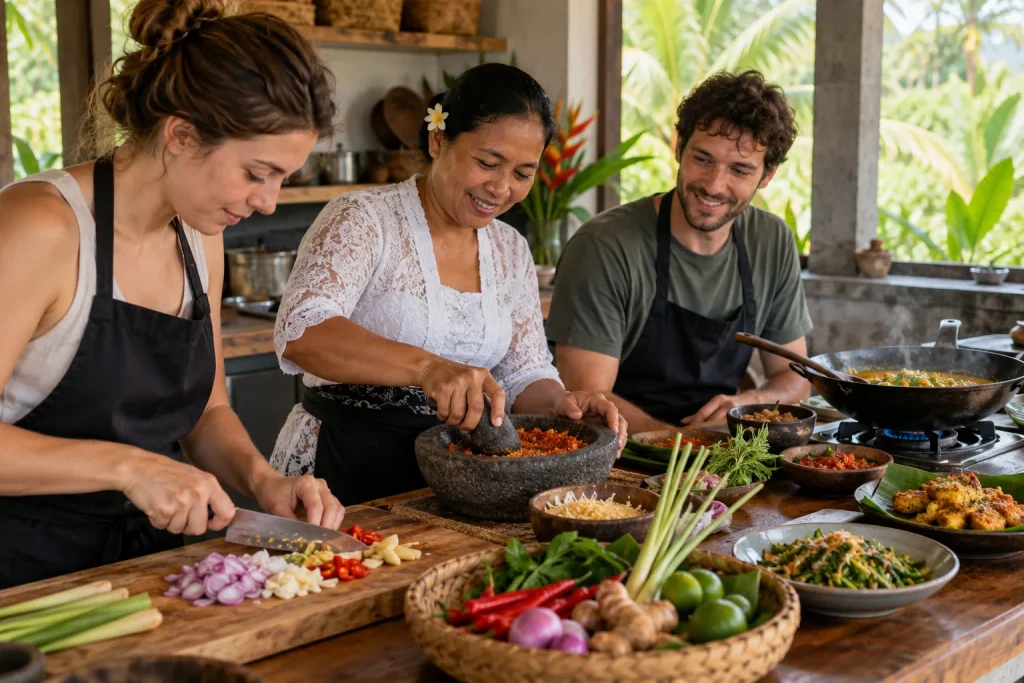
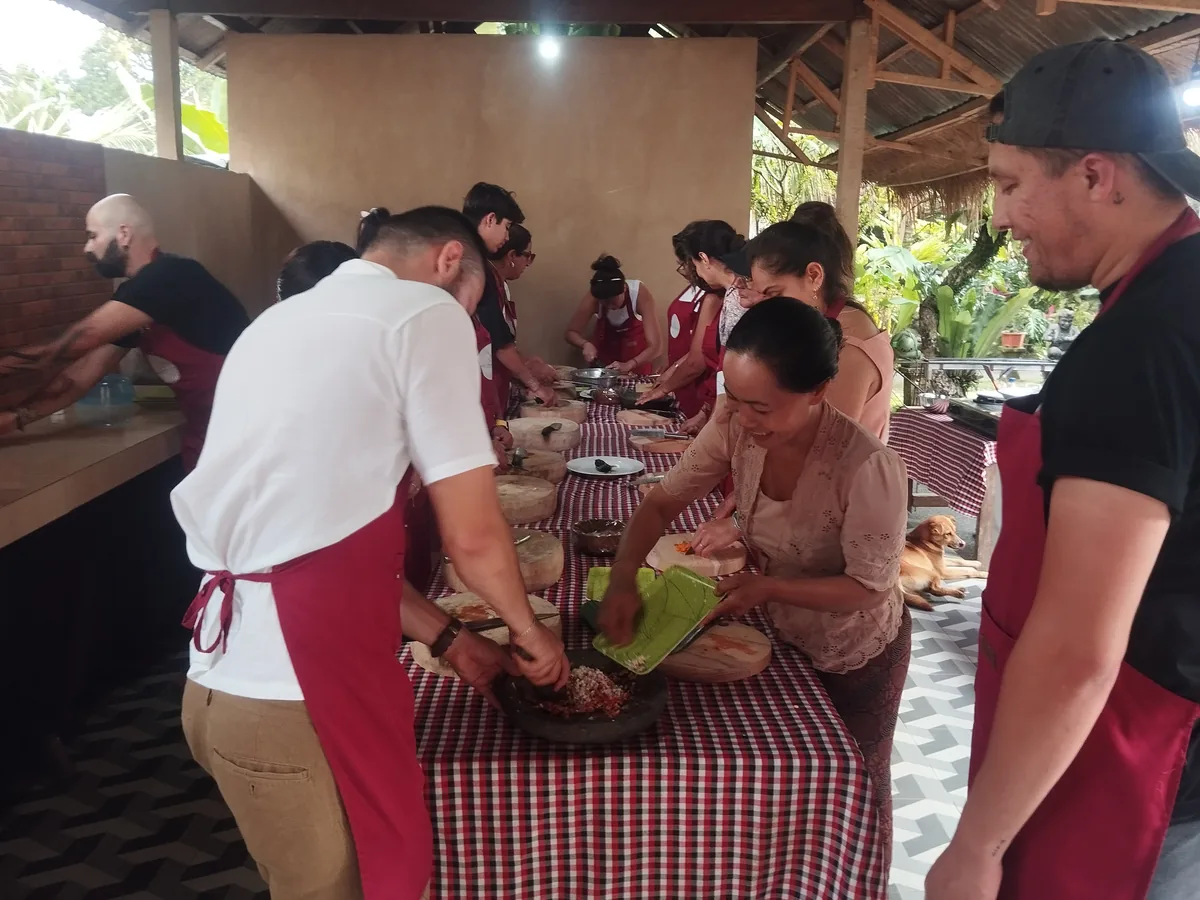
Ubud family activities work best when one part of the day matters most and the rest can flex around it. For one family, that anchor may be a shared meal; for another, it may be an activity where children can make, choose or discover something rather than move from stop to stop. A food-focused cooking session can fit that plan, but only when the format suits the group’s ages, appetite and energy. The useful question is not how many attractions can fit in a day. It is whether everyone has enough time to enjoy the one thing you chose. When examining ubud family activities in the context of everyday kitchen work and guest planning in Gianyar and Ubud, separating specific ingredient names, preparation timing, and household customs prevents common misunderstandings before you shop or cook. When examining ubud family activities in the context of everyday kitchen work and guest planning in Gianyar and Ubud, separating specific ingredient names, preparation timing, and household customs prevents common misunderstandings before you shop or cook.
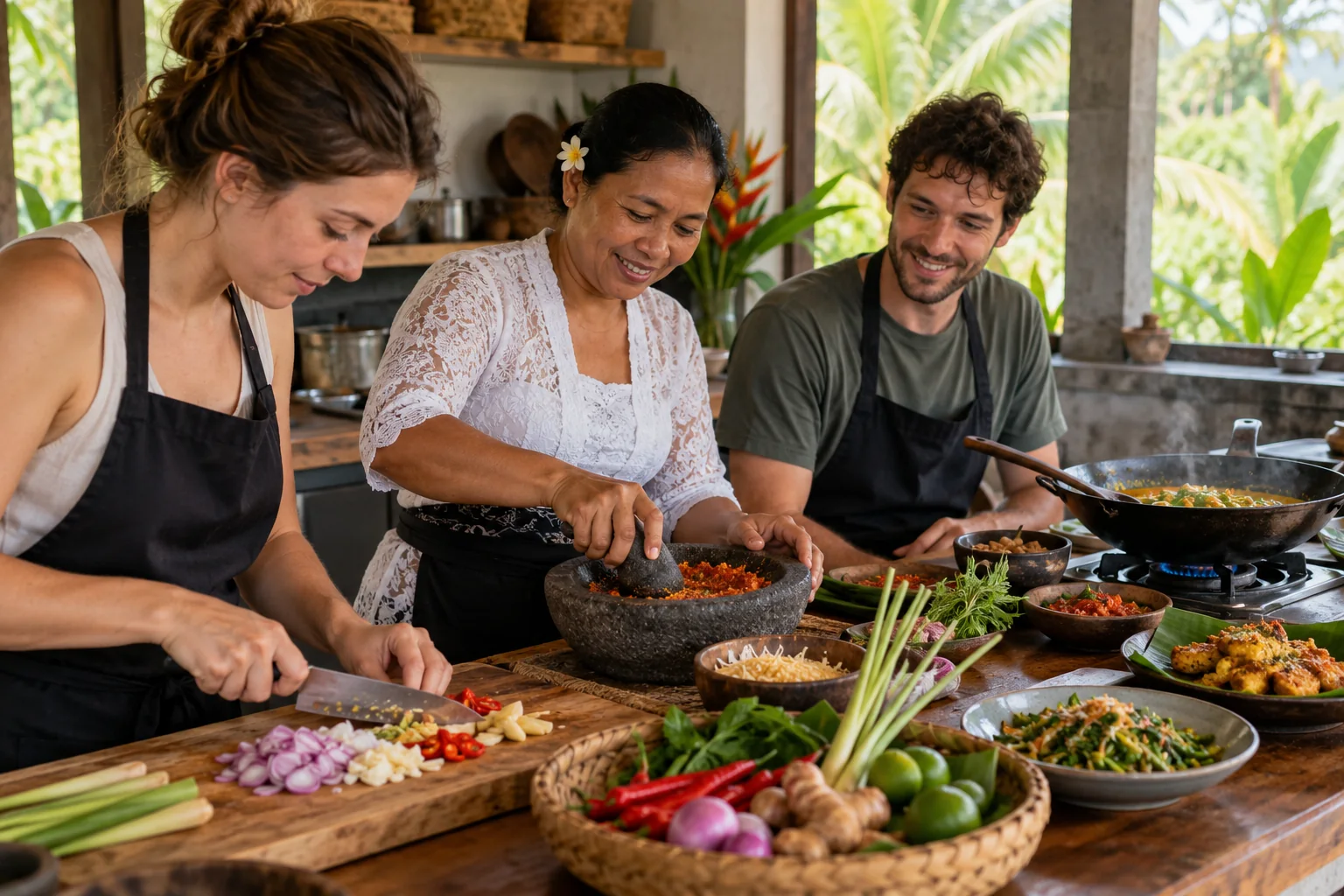
Start with the family’s actual pace
Before looking at options, talk through the day from the children’s point of view. How long can they stay interested in one activity? Do they enjoy helping with food, or would they rather watch first? Are they happiest after breakfast, or do they need a quiet hour before doing something new? These answers are more useful than a generic list of “must-do” stops because they help you decide what kind of outing belongs in the schedule.
Choose an activity that gives each person a role
It also helps to agree on one non-negotiable and one optional idea. A cooking session might be the main event, with a nearby walk or an unhurried meal as a possible addition. If the group is tired, skip the extra stop. If everyone is still engaged, decide in the moment. The plan remains worthwhile even when the optional part disappears.
Use the current menu rules, not assumptions
Family members do not need to enjoy the same parts of an outing. One child may want to mix or shape something, another may prefer to identify ingredients, and an adult may be most interested in how the finished dishes fit together. When comparing activities, ask what people actually do, how much time they spend listening or waiting, and whether there is a comfortable way to participate at different levels.
Plan transport and breaks as part of the activity
A cooking class can be a good match for a group that likes working toward a meal together. It may be a poor fit if someone strongly dislikes food preparation or if the family needs a very short activity. Neither result is a failure. A visit centred on eating, a market walk or a quieter cultural activity may be a better choice for that day. The point is to match the outing to the people who will be there.
Make food needs clear before the date
Wayan’s Paon currently describes its public cooking experiences as private to the booking group. The homepage says that most experiences let the group choose up to five dishes from a public library of more than 30 options. It also identifies Tumpeng and Megibung as curated-menu exceptions. That gives a family a useful starting point, but it does not mean every recipe, task or adjustment is available in every experience.
Keep the itinerary light enough to change
Begin by choosing the experience format, then ask which dishes belong to it and when the menu must be confirmed. If children have very different tastes, a menu with a familiar rice or vegetable dish alongside a new preparation may feel easier than choosing five unfamiliar items. Ask whether the host can explain the options before the booking is final. Keep the final choice within the current menu rules rather than promising a dish to a child before it has been confirmed.
Use a short checklist before you book
Travel arrangements shape how a family experiences the day. The current homepage says pickup and return are free within Ubud, while transport outside Ubud is quoted by location and paid by the guest. Families staying elsewhere should give the host their area before they settle the itinerary, then leave enough room for the confirmed pickup plan. Avoid building a second reservation around an estimated travel time that the host has not confirmed.
Think about the transition before and after the activity. Children may want water, a bathroom break or a few minutes to settle before starting. After cooking, a shared meal may already be the natural next step, so another fixed booking can make the day feel rushed. Keep a simple alternative ready: return to the accommodation, pause for a snack or let the children choose whether they still want to go out.
Food preferences, dislikes and allergies are different kinds of requests, so describe them precisely. “Does not like chilli” is not the same as “must not eat an ingredient for medical reasons.” Tell the host what applies to each family member, name the ingredient when you know it, and ask what the kitchen can confirm about the recipe and preparation. Do not assume that a private booking automatically means a medically safe kitchen or a separate set of tools.
If the host cannot confirm something important, treat that uncertainty as part of the decision. You can ask whether a different dish or format is suitable, or choose another activity. A clear answer is more useful than a vague promise because it lets the family decide with realistic expectations.
A food-focused day can be planned in three blocks: the main activity, a meal or rest period, and one optional stop. The exact order depends on the experience and the family’s schedule. A market-to-kitchen format may start with a market visit; another cooking experience may begin at the kitchen. Confirm the actual sequence instead of assuming every class includes the same trip or tasting.
Leave open space between blocks. That space is not wasted time; it gives the family room to respond to weather, tiredness, a slow meal or a child who wants to stay longer. If you are travelling with a stroller, a toddler or a relative who needs a slower pace, ask about access and transitions before setting the rest of the day around the activity.
Before confirming the date, write down the details that could change the decision: the ages in the group, how many adults will attend, the experience format, the likely menu, the timing, the pickup area and any dietary requirement. Ask one message with the key questions instead of sending a long series of guesses. Request confirmation of anything essential, including whether the selected experience has a fixed menu.
Then decide whether the answer fits your family. If it does, keep the rest of the itinerary flexible. If it does not, choose an activity that better suits the children and the adults who are travelling with them. For a current view of the private Balinese options and menu rules, review Cooking Class Ubud and confirm the details for your date directly with the host.
How Ubud Family Activities That Leave Room for Food, Rest and Play Connects Market Observation, Kitchen Technique, and Practical Planning in Ubud
For travellers and home cooks researching ubud family activities, the biggest gap in general travel guides is that they treat Balinese food and daily life as a single uniform checklist rather than a living household system. In a traditional Balinese compound around Ubud, decisions about ingredients, prep sequence, and table pairing depend on whether a meal is prepared for a quiet family lunch, a morning market run, or a shared gathering. When you join an Ubud Cooking Class at Wayan’s Paon, every question around ubud family activities is answered through direct hands-on observation rather than abstract theory.
A second practical principle when evaluating ubud family activities is recognizing the boundary between what happens at the morning produce stalls, what happens at the stone mortar (ulekan), and how the final dishes are balanced on the plate. In our private sessions such as Private Paon Table, your group works only with your own booking party and selects up to five dishes from the 53-dish menu (plus the foundational Base Genep spice paste), allowing you to test how each choice affects flavour, texture, and timing.
Comparative Reference Matrix: 10 Core Dimensions of Ubud Family Activities
Before diving into each specialized subtopic in this family of guides, the table below summarizes how the ten focused questions around ubud family activities differ in scope, practical kitchen impact, and what you should verify before buying ingredients or confirming a menu in Ubud:
| Focus Topic / Keyword Owner | Specific Question Addressed | Key Practical Distinction in Ubud |
|---|---|---|
| 1. family cooking class in ubud | A Family Cooking Class in Ubud: What Parents Should Confirm | A “family-friendly” label does not tell you whether a cooking session fits your children. Before choosing a family cooking class in Ubud, ge… |
| 2. balinese cooking menu with children | Build a Balinese Cooking Menu Children Can Help Prepare | A Balinese cooking menu with children is easier to plan when the family chooses a few roles before choosing every dish. One child may want a… |
| 3. ubud family activities for different ages | Ubud Family Activities for Children of Different Ages | Ubud family activities for different ages can be hard to choose when one child wants to move, another is happy to watch and the adults want … |
| 4. family cooking class dietary options | Family Cooking Class Dietary Options: What to Discuss Early | Family cooking class dietary options are easiest to discuss before a date is confirmed, while there is still time to check the exact menu an… |
| 5. balinese food spice level for kids | Balinese Food Spice Level for Kids: Plan the Menu, Not the Guesswork | Balinese food spice level for kids is best planned through a menu conversation, not a guess based on a dish name. Children can react differe… |
| 6. ubud cooking class morning or afternoon with kids | Morning or Afternoon? Choosing an Ubud Cooking Class with Kids | Choosing an Ubud cooking class morning or afternoon with kids comes down to the family’s rhythm, the session format and what needs to happen… |
| 7. family cooking class vs food tour in ubud | Family Cooking Class vs Food Tour in Ubud: Which Fits the Day? | A family cooking class vs food tour in Ubud is a useful comparison when parents want a food experience but have not decided how much of the … |
| 8. half-day ubud family itinerary | A Half-Day Ubud Family Itinerary around One Cooking Session | A half-day Ubud family itinerary works best when one cooking session is the main event and the rest of the plan stays flexible. The phrase “… |
| 9. school group vs family cooking class in ubud | School Group vs Family Cooking Class in Ubud: How to Choose | School group vs family cooking class in Ubud is a decision about the purpose and shape of the visit, not just the number of people. A family… |
| 10. ubud family activities with grandparents | Ubud Family Activities with Grandparents: A Day Everyone Can Enjoy | Ubud family activities with grandparents work best when the day has a clear shared purpose and enough room to adjust the pace. Children may … |
Deep-Dive Guide to the 10 Specialized Subtopics Within Ubud Family Activities
Each of the ten companion articles in this topic family isolates one specific decision or ingredient question related to ubud family activities so that you never confuse a broad category label with a concrete culinary rule. Below is how each specialized guide fits into the wider picture:
1. A Family Cooking Class in Ubud: What Parents Should Confirm
When narrowing your focus from ubud family activities to the specific question of family cooking class in ubud, the primary distinction is context and practical application. A “family-friendly” label does not tell you whether a cooking session fits your children. Before choosing a family cooking class in Ubud, get answers about the format, the menu and the children’s role in the kitchen. Those details shape whether the experience feels like a shared activity or a long wait between adult tasks. Ask the host what is confirmed for your date, then decide whether the answer works for your actual group. By keeping this specific scope distinct from neighbouring topics, you avoid applying a general rule where a precise ingredient check or timing adjustment is required.
In practice at the market or in the paon, Start with the name of the experience, not only the fact that it involves cooking. Wayan’s Paon lists several private experiences and a separate School & Student Cooking Group. The current homepage describes most packages as allowing the booking group to choose up to five dishes from a menu of more than 30, while Tumpeng and Megibung use curated menus. These formats should not be treated as interchangeable. Whether you are comparing options before booking your private session or taking notes to cook at home after your trip, treating family cooking class in ubud as its own step ensures your preparation remains accurate and stress-free.
2. Build a Balinese Cooking Menu Children Can Help Prepare
When narrowing your focus from ubud family activities to the specific question of balinese cooking menu with children, the primary distinction is context and practical application. A Balinese cooking menu with children is easier to plan when the family chooses a few roles before choosing every dish. One child may want a familiar ingredient, another may be curious about a new flavour, and the adults may care most about learning how the meal comes together. A useful menu balances those interests without promising that every preference can be accommodated. Start with the experience’s current rules, then ask the host which choices are available on your date. By keeping this specific scope distinct from neighbouring topics, you avoid applying a general rule where a precise ingredient check or timing adjustment is required.
In practice at the market or in the paon, Menus do not always work the same way across cooking experiences. Wayan’s Paon currently says most public packages let a booking group choose up to five dishes from a library of more than 30. The homepage also explains that Tumpeng and Megibung are curated-menu exceptions. If your family has its heart set on a particular dish, first ask whether the experience you are considering includes a selectable menu. Whether you are comparing options before booking your private session or taking notes to cook at home after your trip, treating balinese cooking menu with children as its own step ensures your preparation remains accurate and stress-free.
3. Ubud Family Activities for Children of Different Ages
When narrowing your focus from ubud family activities to the specific question of ubud family activities for different ages, the primary distinction is context and practical application. Ubud family activities for different ages can be hard to choose when one child wants to move, another is happy to watch and the adults want time together. Instead of looking for an activity that will suit every person in exactly the same way, plan around one shared anchor and leave room for each person to join at their own pace. A food activity can provide a common focus, but timing, transport, comfort and the group’s interests matter just as much. By keeping this specific scope distinct from neighbouring topics, you avoid applying a general rule where a precise ingredient check or timing adjustment is required.
In practice at the market or in the paon, Write down who is travelling and what tends to make a day easy or difficult for them. A toddler may need a nap and a short gap between meals. A school-aged child may want an activity with a visible result. A teenager might prefer a choice or a little independence. An older adult may care more about seating, shade, walking distance or a predictable return time. These are individual needs, not rules about what a certain age can enjoy. Whether you are comparing options before booking your private session or taking notes to cook at home after your trip, treating ubud family activities for different ages as its own step ensures your preparation remains accurate and stress-free.
4. Family Cooking Class Dietary Options: What to Discuss Early
When narrowing your focus from ubud family activities to the specific question of family cooking class dietary options, the primary distinction is context and practical application. Family cooking class dietary options are easiest to discuss before a date is confirmed, while there is still time to check the exact menu and preparation. A family may include an allergy, a medical restriction, a religious requirement, a vegetarian preference and a child who dislikes a certain texture. Those needs should not be compressed into one vague request. Describe who needs what, ask what the host can confirm for the selected experience, and decide from the answer rather than assuming every request can be accommodated. By keeping this specific scope distinct from neighbouring topics, you avoid applying a general rule where a precise ingredient check or timing adjustment is required.
In practice at the market or in the paon, Start by writing each person’s needs in plain language. An allergy or medically necessary restriction is different from a preference such as avoiding chilli or choosing a familiar dish. A religious requirement may concern ingredients, preparation or both. A child may dislike a texture without needing an ingredient removed. The host can respond more clearly when the family explains which details are essential and which are preferences. Whether you are comparing options before booking your private session or taking notes to cook at home after your trip, treating family cooking class dietary options as its own step ensures your preparation remains accurate and stress-free.
5. Balinese Food Spice Level for Kids: Plan the Menu, Not the Guesswork
When narrowing your focus from ubud family activities to the specific question of balinese food spice level for kids, the primary distinction is context and practical application. Balinese food spice level for kids is best planned through a menu conversation, not a guess based on a dish name. Children can react differently to chilli, pepper, ginger, texture and aroma, and one family’s idea of “mild” may not match another’s. Tell the host what the child is comfortable eating, ask where chilli appears in the dishes for your chosen experience, and confirm what can be served separately before you plan the meal around it. By keeping this specific scope distinct from neighbouring topics, you avoid applying a general rule where a precise ingredient check or timing adjustment is required.
In practice at the market or in the paon, Instead of asking only whether a class is spicy, name the parts you want to understand. Ask whether chilli is blended into a base, added while cooking, offered as a condiment or used in a sauce. Ask whether the answer differs across the dishes available in the selected package. A menu may include several preparations, and a broad description cannot tell a parent how each one is seasoned. Whether you are comparing options before booking your private session or taking notes to cook at home after your trip, treating balinese food spice level for kids as its own step ensures your preparation remains accurate and stress-free.
6. Morning or Afternoon? Choosing an Ubud Cooking Class with Kids
When narrowing your focus from ubud family activities to the specific question of ubud cooking class morning or afternoon with kids, the primary distinction is context and practical application. Choosing an Ubud cooking class morning or afternoon with kids comes down to the family’s rhythm, the session format and what needs to happen around the meal. A morning start may suit one group and feel rushed to another; a later session may fit a child’s routine but leave less room for another activity. Ask the host for the current time options, sequence and expected duration, then choose a session that leaves enough space before and after it. By keeping this specific scope distinct from neighbouring topics, you avoid applying a general rule where a precise ingredient check or timing adjustment is required.
In practice at the market or in the paon, Consider breakfast, naps, snacks and the time the children usually have their main meal. A child who is hungry or tired may find it harder to listen and join in, even when the activity sounds interesting. Parents know which routine points matter most. Write those down before comparing time options rather than selecting a slot first and trying to force the rest of the day around it. Whether you are comparing options before booking your private session or taking notes to cook at home after your trip, treating ubud cooking class morning or afternoon with kids as its own step ensures your preparation remains accurate and stress-free.
7. Family Cooking Class vs Food Tour in Ubud: Which Fits the Day?
When narrowing your focus from ubud family activities to the specific question of family cooking class vs food tour in ubud, the primary distinction is context and practical application. A family cooking class vs food tour in Ubud is a useful comparison when parents want a food experience but have not decided how much of the day should be hands-on. The difference is not simply “cooking” versus “eating.” A class centres on preparing dishes; a food tour usually centres on moving between places and tasting what is served. Exact inclusions vary, so compare the specific experience, child participation, travel and meal plan before choosing. By keeping this specific scope distinct from neighbouring topics, you avoid applying a general rule where a precise ingredient check or timing adjustment is required.
In practice at the market or in the paon, Start with the children’s interest. Do they want to mix, pound, shape or prepare ingredients alongside an adult, or would they rather sample ready-made food and see more of the area? Some children enjoy learning one process slowly; others prefer several short stops. Adults may also have different priorities. One parent may want a deeper look at a dish, while another wants a light activity between sightseeing plans. Whether you are comparing options before booking your private session or taking notes to cook at home after your trip, treating family cooking class vs food tour in ubud as its own step ensures your preparation remains accurate and stress-free.
8. A Half-Day Ubud Family Itinerary around One Cooking Session
When narrowing your focus from ubud family activities to the specific question of half-day ubud family itinerary, the primary distinction is context and practical application. A half-day Ubud family itinerary works best when one cooking session is the main event and the rest of the plan stays flexible. The phrase “half-day” can mean different things to different families, so first confirm the class start time, expected duration, transport and meal sequence. Then add one light activity before or after it if there is room. Do not build a fixed timetable around an unconfirmed session length or a travel estimate. By keeping this specific scope distinct from neighbouring topics, you avoid applying a general rule where a precise ingredient check or timing adjustment is required.
In practice at the market or in the paon, Begin with the experience you want the children to remember. If cooking together is the main goal, choose the package and date before selecting cafés, markets or attractions around it. Ask the host what the current session includes, whether a market visit or tasting is part of it, and when the meal is served. Those details determine how much open time is left. Whether you are comparing options before booking your private session or taking notes to cook at home after your trip, treating half-day ubud family itinerary as its own step ensures your preparation remains accurate and stress-free.
9. School Group vs Family Cooking Class in Ubud: How to Choose
When narrowing your focus from ubud family activities to the specific question of school group vs family cooking class in ubud, the primary distinction is context and practical application. School group vs family cooking class in Ubud is a decision about the purpose and shape of the visit, not just the number of people. A family may want a private activity for relatives, while a school needs to understand whether a group session fits its students and learning goals. Wayan’s Paon currently lists a separate School & Student Cooking Group alongside private cooking experiences. Ask the host which format applies to your party and what is confirmed for the date before comparing them. By keeping this specific scope distinct from neighbouring topics, you avoid applying a general rule where a precise ingredient check or timing adjustment is required.
In practice at the market or in the paon, A family booking usually begins with a shared day: parents, children and perhaps grandparents want to prepare food and eat together. A school visit may have a different purpose, such as introducing students to local ingredients, practising a sequence of tasks or connecting food with a class topic. Those aims are not automatically included in a package. If the school needs specific educational outcomes, ask the host whether they can be supported and what the session actually covers. Whether you are comparing options before booking your private session or taking notes to cook at home after your trip, treating school group vs family cooking class in ubud as its own step ensures your preparation remains accurate and stress-free.
10. Ubud Family Activities with Grandparents: A Day Everyone Can Enjoy
When narrowing your focus from ubud family activities to the specific question of ubud family activities with grandparents, the primary distinction is context and practical application. Ubud family activities with grandparents work best when the day has a clear shared purpose and enough room to adjust the pace. Children may want to move between activities, while older adults may prefer a shorter walk, a seat and a reliable meal time. The plan does not have to satisfy everyone in exactly the same way. Choose one activity the group can share, confirm the practical details that affect comfort, and leave the rest of the schedule flexible. By keeping this specific scope distinct from neighbouring topics, you avoid applying a general rule where a precise ingredient check or timing adjustment is required.
In practice at the market or in the paon, Before choosing an activity, ask the children, parents and grandparents what they would enjoy. One person may want to see how food is prepared; another may want to spend time outside; someone else may simply want a relaxed meal together. Each person can name one priority and one limit. That small conversation helps the family choose a shared anchor rather than trying to fit every suggestion into one day. Whether you are comparing options before booking your private session or taking notes to cook at home after your trip, treating ubud family activities with grandparents as its own step ensures your preparation remains accurate and stress-free.
How to Apply These Notes When Planning Your Private Cooking Day at Wayan’s Paon
Bringing all ten facets of ubud family activities together reveals a consistent lesson about Balinese culinary culture: clarity comes from asking specific questions before the cooking begins. In a private household setting in Ubud, your host does not rely on factory-made pastes or rigid group schedules. Instead, fresh roots (galangal, turmeric, ginger, and aromatic kencur), shallots, garlic, lemongrass, salam leaves, and kaffir lime are proportioned for the exact five dishes your group chooses to cook.
If you have dietary requirements—such as vegetarian or vegan preparation without fermented shrimp paste (terasi), gluten-free substitutions using pure rice flour and palm sugar (Gula Aren), dairy-free coconut milk infusions, or nut-free spice pastes omitting candlenut (kemiri)—discussing them when you select your menu allows the kitchen to prepare dedicated mortars, cutting boards, and filtered drinking-water washing stations in advance.
Finally, use this pillar overview on ubud family activities alongside the ten focused cluster guides linked above whenever you want to verify a local Balinese term, compare morning market timing against afternoon kitchen sessions, or adapt a traditional Ubud technique for your own stove at home.