

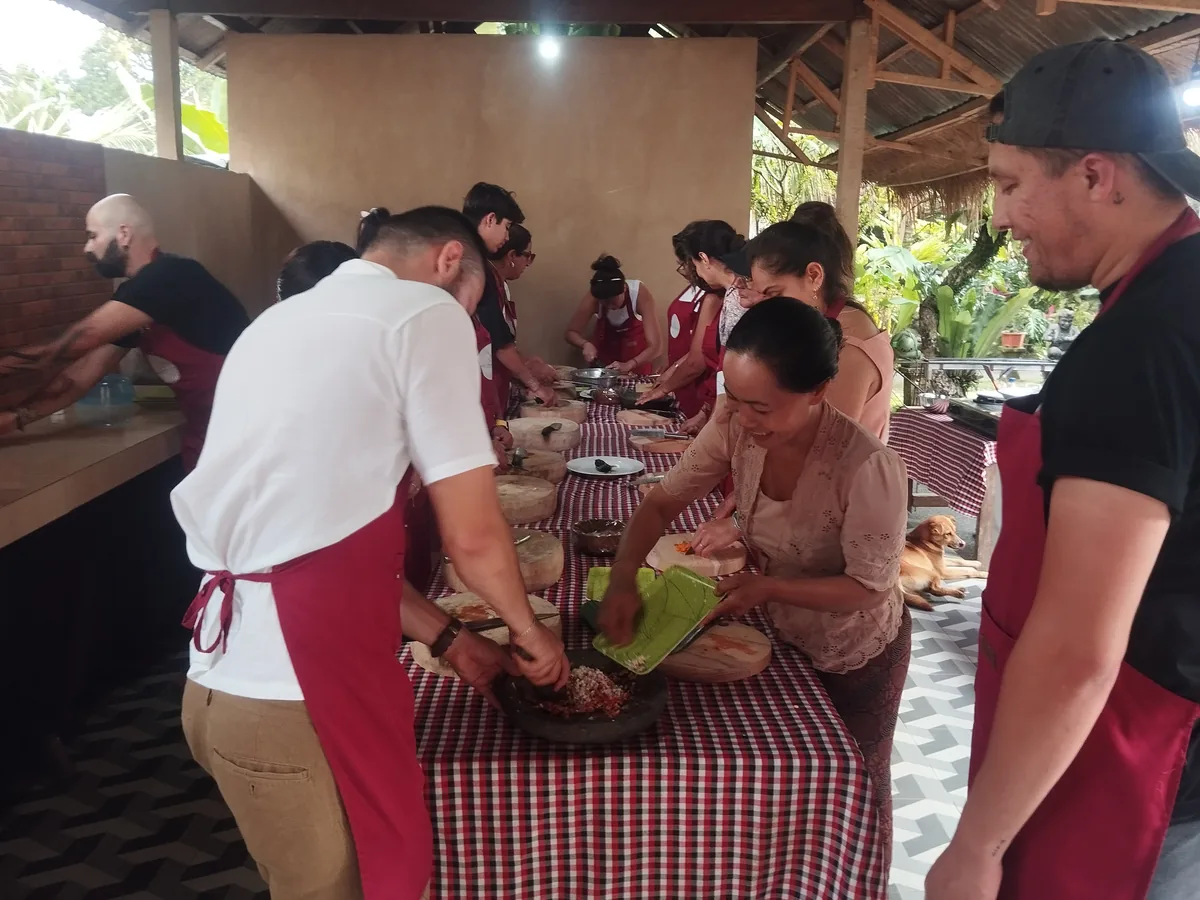
Choosing an Ubud cooking class morning or afternoon with kids comes down to the family’s rhythm, the session format and what needs to happen around the meal. A morning start may suit one group and feel rushed to another; a later session may fit a child’s routine but leave less room for another activity. Ask the host for the current time options, sequence and expected duration, then choose a session that leaves enough space before and after it.

Start with the children’s normal day
Consider breakfast, naps, snacks and the time the children usually have their main meal. A child who is hungry or tired may find it harder to listen and join in, even when the activity sounds interesting. Parents know which routine points matter most. Write those down before comparing time options rather than selecting a slot first and trying to force the rest of the day around it.
Compare the start time with travel plans
Ask the host when the cooking activity begins, whether there is any market visit or tasting in the chosen package, and when the group is expected to eat. Do not assume that every package follows the same sequence. If a market component is available, confirm its duration and whether it takes place before the cooking part. These details help a family decide whether to eat beforehand or leave room for the meal included in the experience.
Choose the session that protects the meal window
The current homepage says pickup and return within Ubud are free, while transport outside Ubud is quoted by location and paid by the guest. Give the booking contact the family’s area and ask what pickup time applies to the session you choose. If you are staying outside Ubud, confirm the transport arrangement before treating a morning or afternoon slot as convenient. A map estimate or another guest’s route may not reflect the plan for your accommodation.
Account for energy, not only the clock
Children may need time to get ready, use the bathroom or settle after a drive. Leave a buffer where possible and avoid scheduling a separate ticketed activity immediately after the class. If the session includes a market visit, transport or a meal, ask how those pieces affect the return time. The host’s current answer is more useful than a fixed itinerary written for a different group.
Ask about children’s roles at the selected time
Some families prefer an activity that ends near lunch; others want children to eat first and treat the cooking session as an afternoon plan. There is no universal best choice. Ask whether the meal is served during or after the session, and what a child should expect if the family chooses an earlier or later time. A parent can then decide whether the child needs a normal meal before arriving or whether the planned meal is likely to fit their routine.
Use a simple comparison before confirming
If children get hungry between meals, ask the booking contact what is appropriate to bring and whether breaks are part of the current format. Do not assume snacks are supplied, that a break can happen at any moment or that the host will serve food on a particular schedule unless that has been confirmed. Clear expectations help parents pack and plan without making the experience carry responsibilities it has not promised.
Confirm the details in one place
A family may have sightseeing, swimming or a long drive on the same day. Ask whether the chosen session involves standing, walking, listening, preparing ingredients or a market visit. Those activities may be enjoyable, but stacking several of them can make a child tired. Pick one main anchor for the day and make other plans optional. If the children are energetic in the morning, an earlier experience may fit them better; if mornings are slow, another session may be easier. The family’s own habits should guide the decision.
Weather and traffic can change travel plans, so avoid promising a child that the group will reach another attraction at an exact time after class. Keep a flexible window for returning, washing up or resting. If there is a specific activity the family must attend later, ask whether the cooking experience and transport fit that constraint before booking it.
Timing does not answer questions about age, supervision or kitchen tasks. Tell the host each child’s age and ask whether the session format works for them. Ask which tasks children may observe or try, whether adults need to stay beside them and whether an early or late session changes anything about the activity. Do not infer age suitability from a photograph or from the fact that a package is private.
If a child needs a nap or can become overstimulated, explain that when asking about timing. The host can describe the current sequence, while parents decide whether their child will be comfortable. If an answer about supervision is unclear, resolve it before selecting a slot; a convenient start time cannot compensate for an important question that remains unanswered.
Make two columns for the available options. In each, note the start time, the child’s meal and nap needs, pickup plan, whether a market visit is included, when the group eats and the expected return. Add a short “must fit” list such as a school pickup, medication routine or booked transfer. This is more reliable than picking the first open time and discovering later that it conflicts with the family’s day.
Once the host confirms the current options, choose the one with the fewest tight transitions. Keep the rest of the schedule light. If no time works well, ask whether another date is available instead of forcing the children through a day that has little room to adjust.
Before paying or finalising the booking, keep a written note of the experience name, selected start time, pickup area, market or tasting component, expected meal and any child-specific arrangements the host has confirmed. Recheck the group size and children’s ages if anything changes. That note gives every adult the same plan and makes it easier to explain the day to the children.
To compare the current Cooking Class Ubud experience options, begin with the format your family wants and ask the host what times are available for your date. Choose the session that fits the children’s routine and leaves the day breathing room, not the one that makes the itinerary look busiest.
How Ubud Cooking Class Morning Or Afternoon With Kids Fits Into the Wider Ubud Family Activities Framework
When travellers and home cooks look closely at ubud cooking class morning or afternoon with kids, the most helpful starting point is seeing where this specific topic sits inside our broader pillar guide on ubud family activities. While the parent overview maps out the full family of concepts, morning or afternoon? choosing an ubud cooking class with kids focuses specifically on the practical criteria, kitchen boundaries, and real-world observations that apply only to this narrower question.
Keeping ubud cooking class morning or afternoon with kids distinct from general assumptions matters because small details—such as how an ingredient is named at a Gianyar morning market, how heat or moisture affects texture, or how timing is coordinated for a private group—change the outcome on the plate. Rather than relying on generic rules of thumb, evaluating the concrete factors behind ubud cooking class morning or afternoon with kids gives you a reliable checklist you can use both in Bali and in your own kitchen at home.
Practical Kitchen Verification and Guest Planning for Ubud Cooking Class Morning Or Afternoon With Kids in Ubud
In a traditional household compound in Ubud, questions surrounding ubud cooking class morning or afternoon with kids are resolved through direct sensory checks and clear communication before cooking begins. During a private Cooking Class Ubud session with Wayan’s family, guests work exclusively with their own booking party, which means you can inspect every ingredient on the prep table, ask how local cooks judge ripeness, texture, or seasoning balance, and adjust the workflow to match your pace.
Choosing the right class format also helps you experience ubud cooking class morning or afternoon with kids in the way that best matches your travel day. For instance, booking Private Paon Table allows your group to pair up to five confirmed Balinese dishes (alongside freshly pounded Base Genep spice paste) while discussing any dietary adaptations, spice-level preferences, or ingredient questions directly with Wayan before the wok or steamer is heated.
Decision & Observation Checklist for Ubud Cooking Class Morning Or Afternoon With Kids
To help you apply the lessons of ubud cooking class morning or afternoon with kids without guesswork, the reference table below breaks down the four practical checkpoints to verify at the market, at the prep table, during cooking, and when adapting the method at home:
| Stage of Preparation | What to Check for Ubud Cooking Class Morning Or Afternoon With Kids | Why It Matters in a Balinese Paon |
|---|---|---|
| 1. Identification & Selection | Confirm the exact local name, variety, or session scope associated with ubud cooking class morning or afternoon with kids rather than assuming a generic substitute works identically. | Prevents mixing up look-alike ingredients or mismatched schedule expectations before prep starts. |
| 2. Prep & Mortar Sequence | Separate components that require fine knife slicing (rajang), stone-mortar bruising (ulekan), or advance soaking/steaming. | Controls moisture release and aromatic oil extraction so textures stay crisp or tender as intended. |
| 3. Heat, Timing & Balance | Monitor visual and aromatic cues—colour change, steam aroma, and reduction thickness—while adjusting chili heat separately for your group. | Ensures every guest enjoys the full complexity of Balinese roots and herbs without overwhelming heat. |
| 4. Home Kitchen Adaptation | Record the functional role of each element in ubud cooking class morning or afternoon with kids (acidity, starch structure, aromatic oil, or wrapping) before choosing a local equivalent at home. | Allows you to reproduce authentic Ubud flavours in Europe, North America, Australia, or East Asia. |
Comparing Ubud Cooking Class Morning Or Afternoon With Kids with Related Questions in the Same Culinary Series
A frequent point of confusion when researching ubud cooking class morning or afternoon with kids is where its boundary meets adjacent questions in the same topic family. If your next question shifts toward family cooking class vs food tour in ubud: which fits the day?, our companion guide on family cooking class vs food tour in ubud addresses that specific angle directly so you can compare both side by side without conflating their rules.
Similarly, readers who want to connect ubud cooking class morning or afternoon with kids with broader preparation choices often benefit from reviewing ubud family activities with grandparents, which explores how complementary ingredients, equipment, or scheduling choices interact across a full five-dish Balinese menu.
Frequently Asked Questions About Ubud Cooking Class Morning Or Afternoon With Kids
How do we confirm details about ubud cooking class morning or afternoon with kids before our private cooking class in Ubud?
When you send your booking inquiry to Wayan’s Paon via WhatsApp or the booking page, simply mention your interest in ubud cooking class morning or afternoon with kids along with your preferred date, session time (morning market class at 08:00, morning kitchen-only class at 10:00, or afternoon/dinner class at 17:00), group size, and Ubud pickup location. Wayan personally reviews every request so that ingredient availability, menu balance, and dietary preferences are confirmed clearly before you arrive.
Can ubud cooking class morning or afternoon with kids be adapted for vegetarian, vegan, gluten-free, or allergy-conscious guests?
Yes. Because every session at Wayan’s Paon is 100% private for your group and all spice pastes are ground fresh from whole roots and herbs using filtered potable water, we easily adapt recipes related to ubud cooking class morning or afternoon with kids to omit shrimp paste (terasi), candlenuts, peanuts, gluten, or animal products while keeping the authentic Balinese flavour profile intact.
What is the most important takeaway to write in your kitchen notes for ubud cooking class morning or afternoon with kids?
Focus on function rather than memorising a rigid formula: note how ubud cooking class morning or afternoon with kids contributes to aroma, texture, or timing in the dish, observe the visual cues Wayan demonstrates during prep, and keep the ingredient’s specific role separate from look-alike varieties when you shop at home.