FOOD & CULTURE
Its place in Balinese food culture
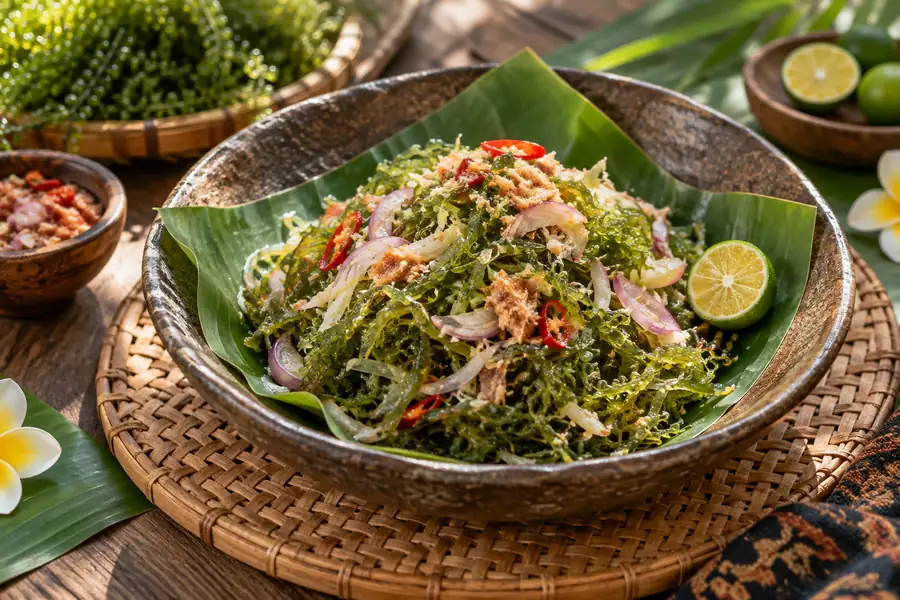
Bulung dishes use edible seaweed; different forms include sea grapes and other seaweeds. The exact seaweed matters because appearance and texture can differ substantially.
What it tastes like
Expect a marine, briny character with seasoning that adds acidity and heat. The seaweed texture is central to the experience, so it should remain distinguishable from the dressing.
Traditional technique and what you learn
Identify the supplied seaweed and learn its preparation before dressing it. The appropriate handling depends on the variety, rather than treating every seaweed product as interchangeable.
How it works in your private class
This is an advance-request choice dependent on supply. Ask Wayan which seaweed will be used and choose it when you want a distinctive coastal ingredient alongside familiar rice or cooked vegetables.
Dietary and ingredient notes
Seaweed is plant-like food material, but many bulung preparations use fish broth or shrimp paste. Confirm the full dressing for a vegan, vegetarian or shellfish-sensitive request.
Food references
These references support the food context. Class details and availability are confirmed directly with Wayan’s Paon.