FOOD & CULTURE
Its place in Balinese food culture
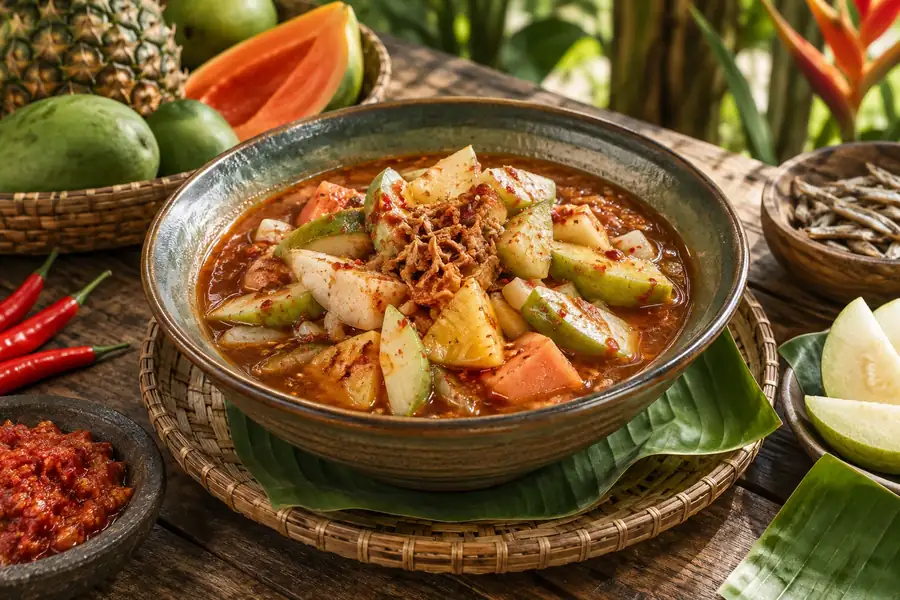
Bali's cultural preservation office describes this rujak as fruit served with pindang fish broth. That savoury liquid distinguishes it from fruit salads dressed only with sweet or peanut-based sauces.
What it tastes like
Sour or crisp fruit meets a salty, spicy dressing. The appeal lies in the contrast: it is a savoury-fruity accompaniment rather than simply a bowl of sweet dessert fruit.
Traditional technique and what you learn
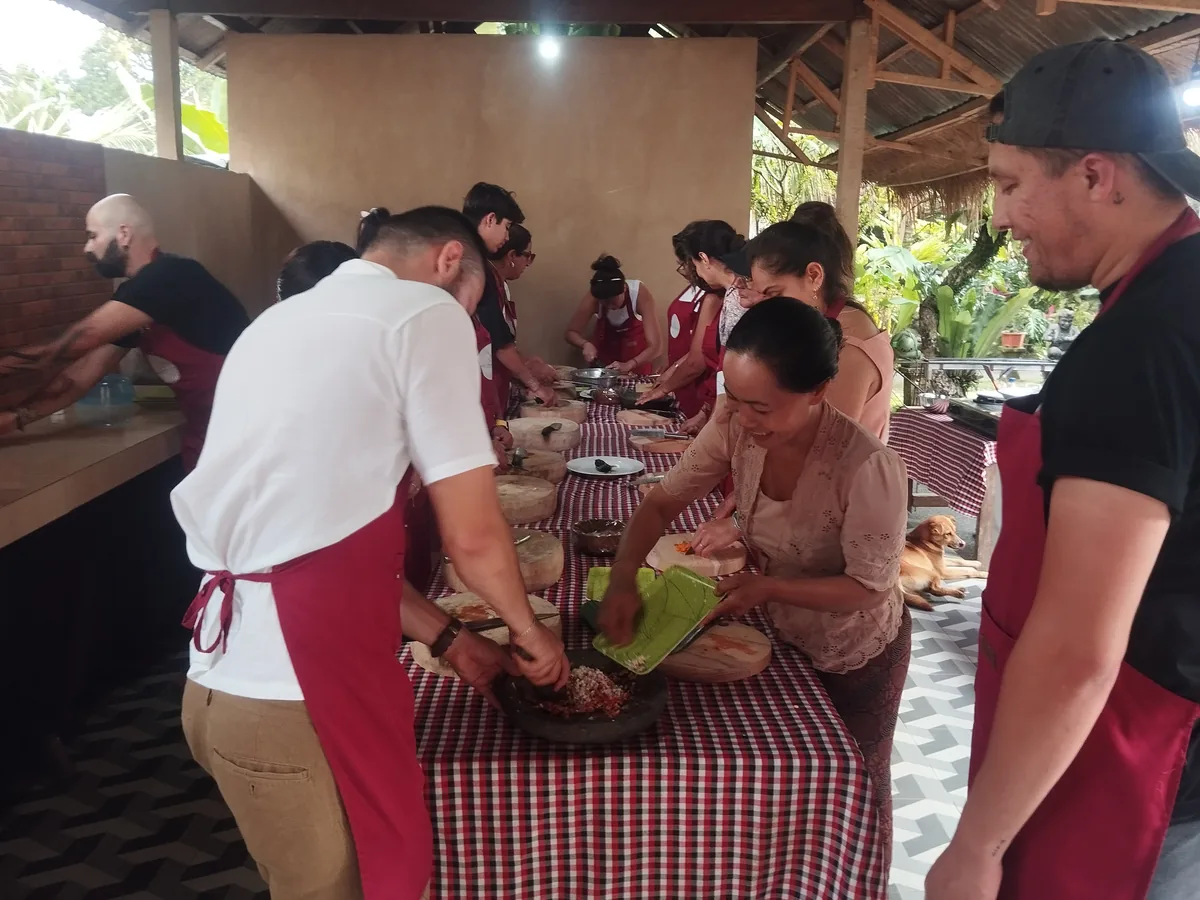
Compare the fruit's ripeness and acidity before balancing the dressing. Slice pieces for a comfortable bite and taste the combined fruit and sauce, because either component alone can be misleading.
How it works in your private class
Choose this if you enjoy unexpected flavour combinations. Fruit supply determines the confirmed selection; it makes an interesting contrast to a richer cooked dish elsewhere in the menu.
Dietary and ingredient notes
Contains fish broth and may also include shrimp paste. It is not vegetarian by default even though fruit is the visible main ingredient. State fish or shellfish allergies before selecting it.
Food references
These references support the food context. Class details and availability are confirmed directly with Wayan’s Paon.