
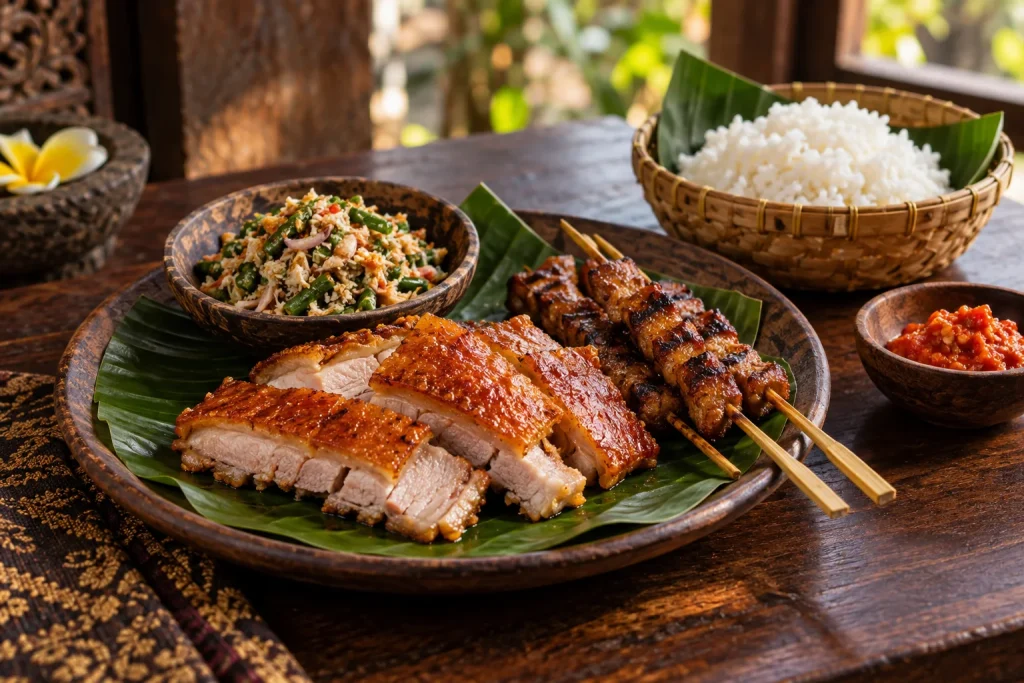

Balinese pork dishes are easier to compare by method than by a single list of ingredients. A whole roast, a sausage in natural casing, marinated satay and grilled ribs each handle heat and seasoning differently. This guide follows those differences, notes where serving styles vary, and keeps cultural examples specific instead of treating one plate as the rule for every household.
Start with the cut and the cooking method
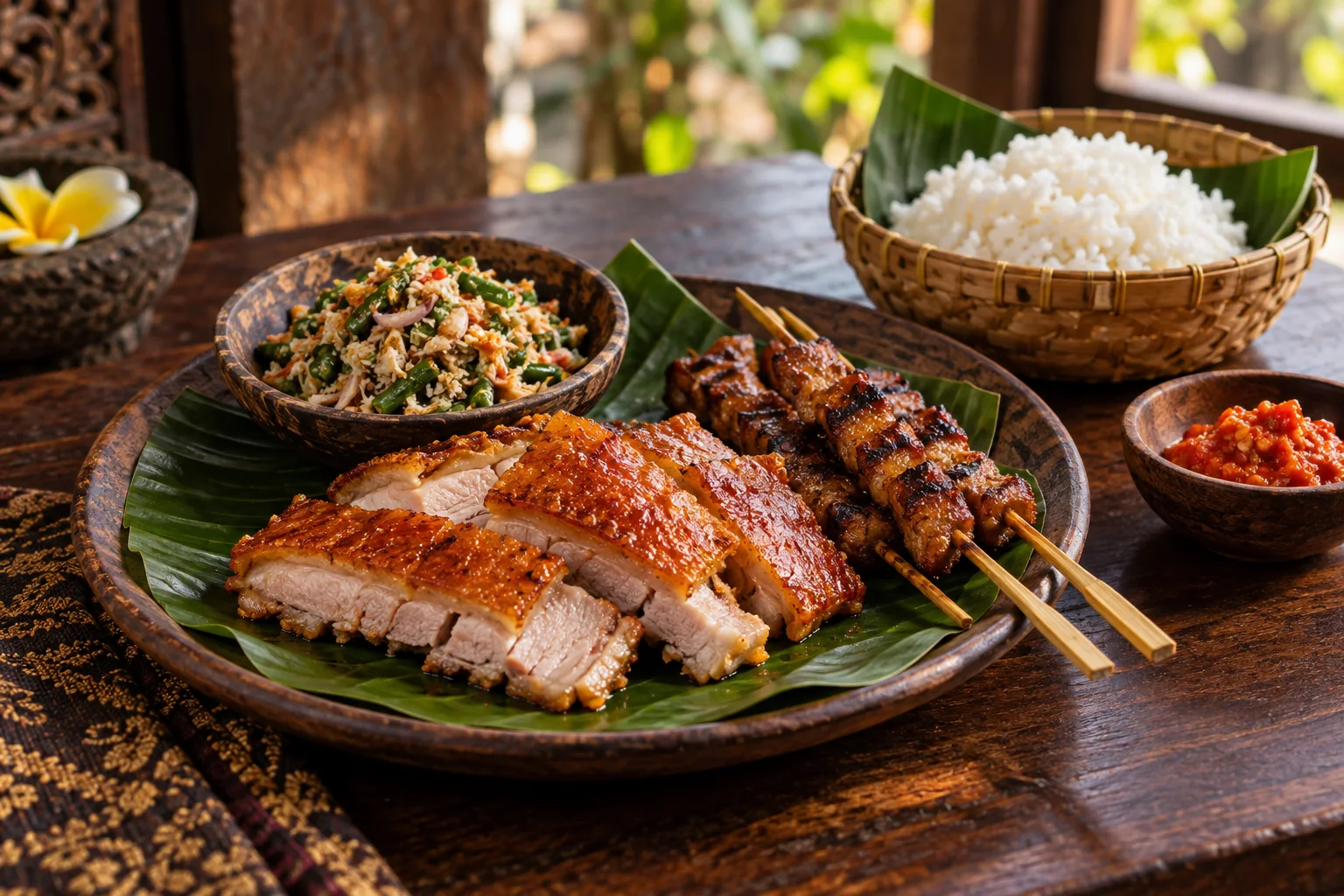
balinese babi guling is the whole-roast direction: a pig is seasoned and turned over heat until the outside and meat develop different textures. urutan babi bali takes pork in another direction, packing seasoned meat into a natural casing before it is fried or dried. One is carved from a roast; the other is sliced from a sausage.
That distinction matters more than calling one dish more authentic. Size, seasoning and serving depend on the cook and the occasion. When comparing a plate, ask how the meat was prepared and what comes with it. A name gives you a useful starting point, but it does not guarantee the same spice balance or side dishes at every stall.
Notice what the grill changes
sate manis babi bali begins with marinated pork pieces. The surface caramelises as they meet the grill, while the centre should stay moist. iga bakar base genep bali uses ribs and a spice coating; its thicker cut needs a different relationship with heat and time.
A skewer cooks quickly because the pieces are small and exposed. Ribs take longer for heat to move through the meat. Watch colour and texture rather than assuming that all grilled pork has the same finish. The grill is a method shared across dishes, not proof that their marinades or cooking instructions are interchangeable.
Compare without collapsing the differences
Readers deciding between roast and sausage can compare babi guling vs urutan babi. For two satay preparations, sate manis vs sate lilit babi looks at the meat shape and how it meets the skewer. These comparisons point back to their own dish guides rather than replacing them.
A useful comparison answers one decision at a time: do you want crisp skin or a sausage slice, a sweet marinade or minced meat bound around a skewer? The answer can change with the menu and the cook. Keep the original dish name attached to each preparation so a reader can find the right owner page later.
Read the food in its setting
A local report on a Galungan meal described a particular family selection; it is not a template for every household. balinese pork dishes for galungan separates that example from broader claims. The spice paste also travels across preparations, and base genep pork dishes compares its role in roast, sausage and grilled dishes.
Some recipes and celebrations use pork, while other households and diners choose different foods. Ask about the dish and occasion being described. A careful guide can explain one documented practice without suggesting that every Balinese family cooks or eats the same meal.
Choose sides and ordering questions
Rice, vegetables, lawar and sambal can make a plate feel complete, but the combination changes by dish and seller. See what to serve with balinese pork for pairing ideas. If you are looking locally, babi guling in ubud offers practical questions to ask before ordering.
For current class formats and confirmed menu details in Ubud, check the Cooking Class Ubud homepage. The dishes in this guide are culinary context; a class menu can vary by date. Confirm what is actually prepared before planning around a specific pork dish.